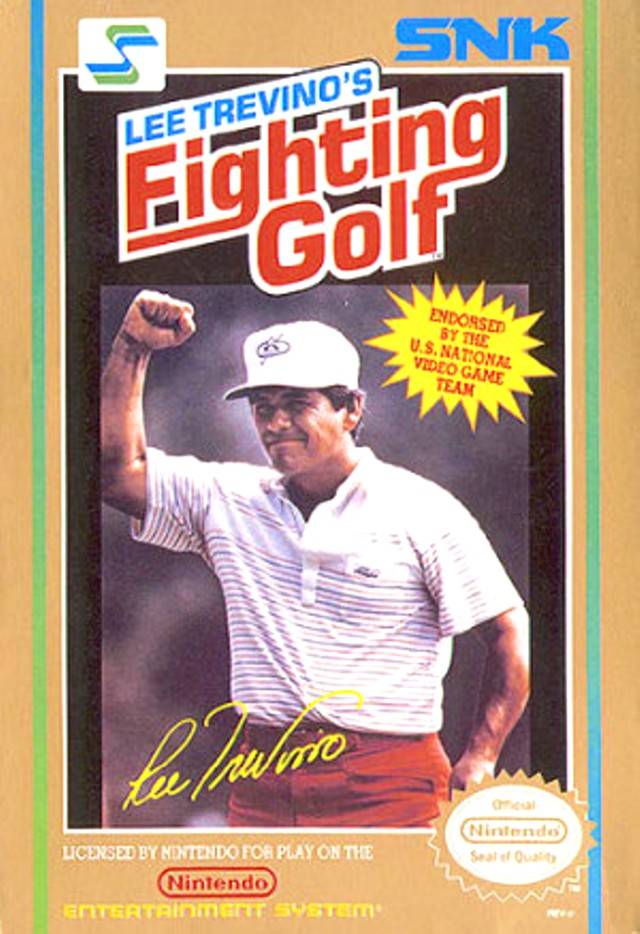
Lee Trevino's Fighting Golf (known in Japan as ファイティング ゴルフ) is a one to four-player simulation and sports game originally released by SNK in 1988. The title bridges the gap between professional athletics and interactive entertainment, capitalizing on the real-world reputation of a legendary golfing champion to establish credibility within the sports genre. By adapting the competitive spirit of the sport into a digital format, the game offers players a structured environment to experience tournament-style play. Its release during the late eighties placed it squarely within a pivotal era for arcade and home console gaming, where sports simulations were rapidly evolving to meet growing consumer demand.
Genre and Gameplay Mechanics
Categorized under the simulation and sports genres, Lee Trevino's Fighting Golf focuses on the technical demands of golf while incorporating a more direct, competitive framework. The game supports one to four players, allowing for both solo practice and local multiplayer sessions. This multiplayer capability encourages head-to-head competition, transforming a traditionally solitary sport into a shared social experience. The simulation component requires players to engage with the sport's strategic elements, emphasizing precise execution and tactical decision-making. By merging these components, the title provides a dynamic gameplay loop that distinguishes it from more traditional, single-mode sports releases of the period.
Story and Setting Overview
While the game does not feature a traditional narrative campaign, its setting is firmly grounded in the world of professional golf. Players are placed within a simulated tournament circuit, where the objective revolves around athletic competition and course mastery. The environment emphasizes the prestige and rigor of professional play, reflecting the real-world stature of the athlete whose name anchors the title. The focus remains on the sport itself, with the gameplay serving as a digital extension of the competitive golfing experience. This approach allows players to immerse themselves in the atmosphere of professional tournaments without the constraints of a scripted storyline.
Platform Availability
Lee Trevino's Fighting Golf originally debuted in arcade cabinets, where its multiplayer design and competitive pacing thrived in public gaming venues. Following its arcade run, SNK expanded the title's reach by adapting it for home systems, including the Nintendo Entertainment System. The game also became available on the PC platform, ensuring broader accessibility for home computing enthusiasts. This multi-platform distribution strategy allowed the title to transition smoothly from coin-operated machines to dedicated consoles and personal computers, capturing a diverse audience across different gaming ecosystems.
Notable Features of Lee Trevino's Fighting Golf
- Support for one to four players, enabling flexible solo and multiplayer configurations
- Simulation and sports classification, emphasizing strategic course play and athletic mechanics
- Multi-platform release spanning arcade, NES, and PC hardware
- Official 1988 release by SNK, positioning the title within a foundational era of sports gaming
- Japanese localization under the title ファイティング ゴルフ, reflecting its international development background
Who It Appeals To
Lee Trevino's Fighting Golf primarily targets players who appreciate sports simulations with a competitive multiplayer focus. Enthusiasts of classic arcade gaming will find value in its direct, head-to-head design, while retro home console collectors can explore its NES and PC versions as part of late-eighties gaming history. The title also appeals to golf fans interested in interactive athletic simulations, as well as historians documenting the evolution of sports games during the transition from arcade to home platforms. By combining the prestige of professional golf with accessible multiplayer competition, the game offers a unique experience for those interested in the intersection of athletics and early digital entertainment.