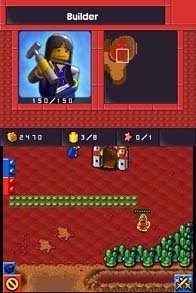
Released on June 9, 2009, Lego Battles stands out as a unique real-time strategy title designed specifically for the Nintendo DS. Bringing the tactile, brick-building charm of the iconic toy line to handheld gaming, the game successfully adapts classic RTS mechanics to a touchscreen environment. Players step into a world where resource management, base construction, and tactical combat converge, proving that strategic depth can thrive on portable hardware. With its blend of familiar Lego aesthetics and engaging tactical gameplay, it offers a robust single-player experience alongside local multiplayer options.
Lego Battles: Gameplay and Mechanics
At its core, the title revolves around the fundamental pillars of the real-time strategy genre: resource acquisition, building construction, unit production, and combat. Players begin by gathering bricks, which serve as the primary currency for constructing structures and recruiting soldiers. Resources are typically harvested by felling trees and transporting logs to your main castle or a dedicated lumber mill. Once your economy is established, you can build essential facilities such as barracks, special factories, shipyards, and defensive walls.
Commanding your forces relies heavily on the Nintendo DS’s touch screen and stylus. You tap individual units to issue commands like attack, defend, wait, or repair, while the D-pad navigates the battlefield camera. Up to nine units can be grouped together for coordinated maneuvers. The game features over thirty distinct land, sea, and air units across various themes, allowing for diverse tactical compositions. Each campaign introduces a Hero character who possesses enhanced abilities and can cast special spells, adding a dynamic layer to the battlefield that mirrors hero units found in other popular strategy franchises.
Story and Setting Overview
The experience unfolds across six distinct campaigns, each exploring a different universe within the Lego franchise. Players can choose between a guided Story mode, which introduces tutorials and narrative context, or jump straight into Free Play. The campaigns span classic Lego genres, including Medieval Castle, Pirates, Space, and Alien worlds, often featuring humorous rivalries like knights clashing with astronauts or imperial navies facing off against skeleton warriors. Missions vary widely in objectives, requiring players to explore maps to find hidden items, defend their base against incoming assaults, or outbuild opponents in a race to full-scale RTS warfare. The narrative tone embraces the whimsical, crossover-heavy charm characteristic of Lego adventures, with amusing mission briefings and light cutscenes that highlight the franchise's signature humor.
Notable Features of Lego Battles
- Extensive single-player content spanning six campaigns and approximately ninety levels
- Intuitive touch-screen controls optimized for the Nintendo DS, allowing precise unit selection and base management
- Local wireless multiplayer support for skirmish matches against friends
- Dynamic hero units capable of casting special spells and turning the tide of combat
- Deep base-building system with modular structures, including specialized factories, shipyards, and fortifications
- Seamless progression that rewards strategic planning, resource efficiency, and tactical unit deployment
Who It Appeals To
Lego Battles is tailored for players who appreciate accessible yet engaging strategy games. Its straightforward tutorials and ramping difficulty make it an excellent entry point for newcomers to the RTS genre, while its familiar mechanics will satisfy veterans looking for a portable tactical fix. The game’s lighthearted tone, recognizable Lego themes, and crossover factions also make it highly appealing to families and longtime fans of the toy line. While it may lack the complex sophistication found in PC strategy titles, its polished core loop, charming presentation, and successful adaptation of RTS gameplay to a handheld device ensure it remains a standout strategy experience on the Nintendo DS.