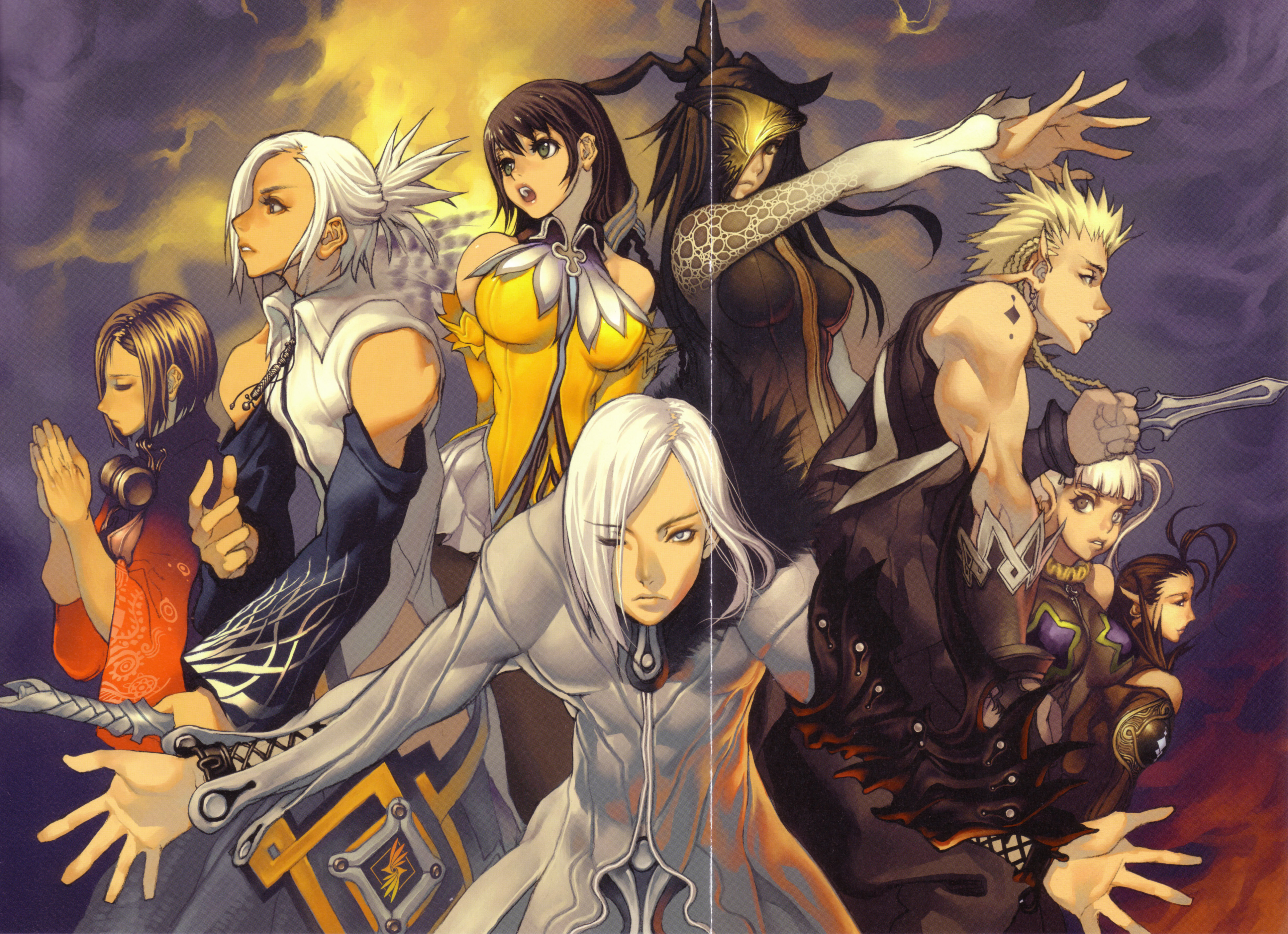
Set against a backdrop of eternal conflict and shifting elemental powers, Magna Carta (known in the West as Magna Carta: Tears of Blood) is an epic role-playing game that weaves a complex tale of war, romance, and betrayal. Originally released for the PlayStation 2 and later brought to the PlayStation Portable, this sequel to Magna Carta: The Phantom of Avalanche invites players into the sprawling, war-torn continent of Efferia.
A World Divided by War and Chi
The story takes place on the continent of Efferia, a land where humans and the Yason—a race of humanoids with distinct ear shapes and a mastery over elemental energies—exist in a state of uneasy coexistence. While humans originally arrived on Efferia to escape a fatal plague, their expansion into territories like Garute, Maracatte, Bayer, and Amabat has led to intense disputes over land and resources. This tension escalated into an endless war following the unification of the Yason tribes under Queen Amila.
Players follow Calintz, the leader of a mercenary group known as the "Tears of Blood." During a mission that goes sideways, Calintz encounters Reith, a mysterious priestess who has lost her memories and regressed to a childlike state. As Calintz protects Reith, their journey becomes intertwined with the larger fate of Efferia, forcing players to navigate a landscape filled with political intrigue and ancient elemental forces.
Innovative Elemental Battle Mechanics
What sets Magna Carta apart from traditional RPGs is its unique combat system centered around the concept of "Chi." In this world, Chi represents the flow of elemental energies, such as Water and Lightning, through the environment. The balance of these elements is not static; players can influence the battlefield by using magical items called talismende to interact with glowing orbs known as lanterns. By altering the elemental balance in a specific region, players can strengthen certain hero skills or weaken others.
Strategic depth extends beyond simple menu commands. The gameplay incorporates elements of stealth and positioning:
- Environmental Influence: Skills draw directly from the available environmental Chi; if an element is depleted, techniques become unusable or significantly weaker.
- Tactical Approach: Players can navigate fields and dungeons with weapons drawn, attempting to sneak up on enemies to execute a surprise attack before the opposition can retaliate.
- Dynamic Combat: The battle system is heavily affected by pre-combat factors, requiring players to manage resources and elemental availability carefully.
Visual Presentation and Atmosphere
Visually, Magna Carta offers a striking aesthetic. The game features highly detailed environments, ranging from desert towns and mountain kingdoms to floating castles. Designed by In-Jung Jang, the world of Efferia utilizes sharp backgrounds and impressive monster concepts to create a unique visual identity. While the presentation is noted for its high-quality graphics and spellcasting effects, the experience is paired with a soundtrack featuring wind and string instruments that help establish the game's somber, epic tone.
Who Is This Game For?
This title is ideal for fans of traditional RPGs who enjoy deep lore and complex, non-standard combat systems. If you appreciate high-fantasy settings with heavy emphasis on world-building and elemental strategy, Magna Carta offers a substantial journey that can take players anywhere from 40 to 60 hours to complete. It is best suited for players who enjoy managing intricate tactical variables and immersing themselves in an expansive, atmospheric saga.