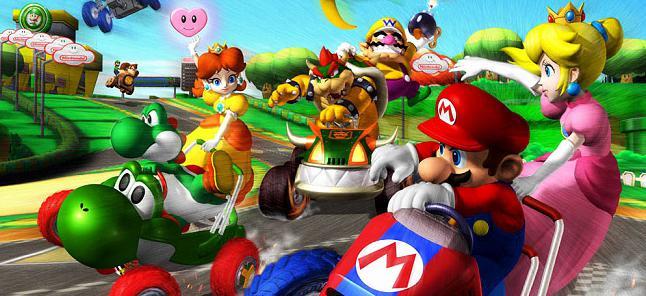
Released in 2003 for the Nintendo GameCube, Mario Kart: Double Dash stands as one of the most experimental and commercially successful entries in Nintendo's legendary racing franchise. As the fourth installment in the series and the third to arrive on a home console, it arrived during a period of significant innovation for Nintendo. While many fans expected a standard progression of new tracks and characters, this title introduced a fundamental shift in gameplay mechanics that redefined how players approach the race track.
A New Era of Cooperative Racing
The defining feature of Mario Kart: Double Dash is its namesake mechanic: two characters riding in a single kart. This system introduces a unique layer of strategy and cooperative play that remains unique in the series. In this mode, one player takes the role of the driver, while the second player manages the items. Players can switch positions at any time using the Z button, allowing for precise tactical execution during high-speed maneuvers.
This "double duty" approach extends beyond mere cooperation; it introduces a deep level of customization to the racing experience. Characters are categorized into three distinct weight classes—light, medium, and heavy—which directly impact acceleration, top speed, and weight. When pairing two characters, the heavier individual determines the kart class required. For example, pairing a light character with a heavy one necessitates the use of a heavy kart. This allows players to fine-tune their racing style, choosing between nimble, high-acceleration setups or heavy, high-impact builds capable of bumping rivals off the track.
Dynamic Characters and Special Items
With 20 selectable characters in total—including 11 newcomers to the series—the roster provides immense variety. Beyond their weight classes, each character pairing brings a unique "special item" to the race, which can be obtained through standard item boxes. These exclusive power-ups add a layer of unpredictable chaos to every lap:
- Mario and Luigi: Utilize fireballs that spread and burn opponents in their path.
- Peach and Daisy: Feature a heart shield capable of defending against three incoming items.
- Donkey Kong and Diddy Kong: Deploy giant banana peels that shatter into three smaller pieces upon impact.
- Wario and Waluigi: Rely on powerful Bob-ombs to create massive explosions.
- Yoshi and Birdo: Launch homing eggs that break apart into multiple projectiles.
- Bowser and Bowser Jr.: Utilize heavy Bowser shells to bowl over competitors.
Memorable Tracks and Competitive Play
The game's track design is widely regarded as one of its greatest strengths. Moving away from the flatter designs of previous entries, Mario Kart: Double Dash features intricate 3D environments with clever shortcuts and verticality. Iconic courses such as DK Mountain, Wario Colosseum, and the legendary Rainbow Road provide a challenging circuit of highs and lows that keep players engaged through every lap of the Grand Prix.
For those looking to compete beyond single-player modes, the game supports LAN play via the Nintendo GameCube Broadband Adapter, allowing for massive 16-player simultaneous competition. This makes it an ideal title for local multiplayer enthusiasts and competitive racing fans alike.
Technical Overview and Legacy
Critically acclaimed, the game holds a strong Metacritic score of 87.00. While some reviewers noted that certain elements of the voice acting were polarizing, the impressive graphics and innovative gameplay mechanics earned it widespread praise. Its impact is reflected in its massive commercial success, having sold approximately 7 million copies worldwide, cementing its status as the second best-selling GameCube title of all time.
Whether you are a veteran of the series or a newcomer looking for a deep, strategic racer, Mario Kart: Double Dash offers a high-octane experience that rewards both quick reflexes and tactical planning.