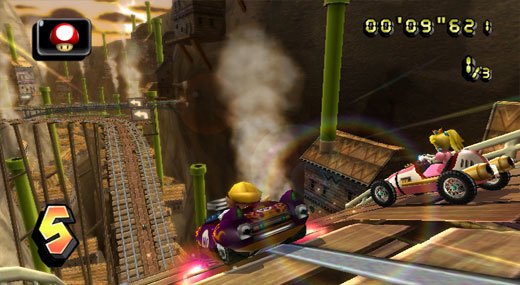
Mario Kart Wii, released for the Nintendo Wii on April 27, 2008, stands as a defining entry in the legendary kart racing franchise. With a Metacritic score of 82.00, the game successfully balances accessibility with depth, delivering a polished arcade racing experience that has maintained a strong legacy long after its launch. Players are dropped directly into the vibrant world of the Mushroom Kingdom, where the primary objective is to master high-speed circuits, outmaneuver opponents using an eclectic array of items, and claim victory across various race modes.
Core Gameplay and Mechanics
At its core, Mario Kart Wii functions as a pick-up-and-play racing title that supports both solo campaigns and intense local multiplayer sessions. The game structures its racing content around three primary Grand Prix speed classes—50cc, 100cc, and 150cc—alongside additional unlockable difficulties. Players can choose from a diverse roster of characters, each paired with distinct karts and bikes that fall into light, medium, or heavy weight classes. The racing mechanics have been refined to emphasize precise control, featuring power slides, bunny hops, and the ability to wobble the controller for an airborne speed boost. Beyond standard circuits, the game includes dedicated battle arenas where competitors utilize turtle shells, bananas, and bombs to eliminate rivals in tactical, item-driven combat.
Track Design and Setting
The setting brings the whimsical and chaotic energy of the Mushroom Kingdom to life across a meticulously designed track list. Mario Kart Wii introduces sixteen brand-new courses that blend environmental hazards with creative level design. Riders will navigate the pastoral pastures of Moo Moo Meadows, dodge giant Wigglers on Maple Treeway, and tackle the vertical climbs of DK Summit. Complementing these fresh circuits are sixteen retro courses, carefully curated from previous entries in the series. These nostalgic tracks range from the sharp, hairpin-heavy layouts of Super Mario Kart to the expansive, obstacle-laden designs of earlier Nintendo systems. The visual presentation maintains a bright, cartoonish aesthetic that remains highly readable, even during fast-paced four-player split-screen races.
Notable Features and Accessibility
Several technical and hardware innovations set this installment apart from its predecessors. The game was built around motion controls, allowing players to tilt their Wii Remotes to steer with intuitive, physical responses. For those seeking a more traditional feel, the nunchuck controller or standard button inputs offer precise alternatives. The introduction of motorbikes fundamentally shifts cornering physics, rewarding players who master their tighter turning radius and speed advantages. A dedicated Wii Wheel accessory is available to house the remote, providing a more realistic steering wheel experience, though the game functions flawlessly with any standard controller. Additionally, the title supports Mii characters for both on-track avatars and menu customization, personalizing the racing experience. It is worth noting that while Nintendo Wi-Fi Connection services were retired in May 2014, the game remains fully functional for offline play.
Target Audience
Mario Kart Wii appeals to a broad spectrum of players, from casual families looking for accessible party gaming to dedicated racers seeking competitive depth. The inclusion of multiple speed classes, varied vehicle weights, and track-specific secrets ensures that newcomers can enjoy the whimsical chaos while veterans can chase ghost times and refine their drifting techniques. Its emphasis on local multiplayer makes it an ideal choice for couch co-op sessions, while the extensive track roster and unlockable cups guarantee long-term replay value. Whether players are chasing the crown in the Mushroom Kingdom or engaging in frantic battle mode matches, the game delivers a consistently engaging racing experience that remains a benchmark for the genre.