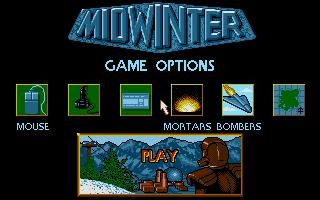
Mastering Survival in Midwinter
Released in 1989 by Microplay Software, Midwinter stands as a landmark title that helped define the boundaries of the post-apocalyptic genre. Designed by the legendary Mike Singleton, this ambitious project blends first-person action role-playing with deep strategy and survival elements. As an early pioneer of immersive gameplay, it offered players a complex, atmospheric experience that was remarkably ahead of its time.
The game functions as a sophisticated hybrid, moving beyond the limitations of standard RPGs of the era. While much of the immediate experience is driven by first-person action, the title is heavily underpinned by intricate strategy and simulation mechanics. This unique genre blend ensures that players are not merely traversing a map, but are actively managing resources and navigating a landscape that demands careful consideration of movement and survival tactics.
A Desolate Post-Apocalyptic Setting
Set in a desolate, post-apocalyptic landscape, the game places players directly into a world struggling for existence. In this environment, the setting serves as more than just a backdrop; it is a central component of the gameplay loop. Players must navigate a harsh world where survival is the primary objective, constantly balancing tactical decision-making with the immediate threats encountered during exploration.
The atmosphere is driven by the game's ability to marry large-scale strategic planning with the visceral tension of a survival simulation. This creates a high-stakes environment where every choice carries weight, and the landscape itself acts as a constant adversary.
Deep Gameplay Mechanics
What distinguishes this title from its contemporaries is the depth of its design. By integrating survival elements into an action-oriented framework, Singleton created a system that rewards foresight just as much as quick reflexes. Players are challenged to think like a strategist while simultaneously reacting like a survivor. This layering of systems provides a level of complexity rarely seen in 1989, making the gameplay experience both cerebral and intense.
Notable features of the experience include:
- Hybrid Genre System: A seamless blend of first-person action, strategy, and simulation.
- Resource Management: Constant pressure to manage supplies within a harsh environment.
- Tactical Exploration: Navigating a complex landscape where movement requires careful planning.
- Atmospheric Survival: A world where the setting is an active participant in the gameplay struggle.
Platform Availability and Appeal
Midwinter was originally released for several prominent home computer systems of its era, including:
- PC
- Commodore / Amiga
- Atari ST
This title appeals to players who enjoy deep, systemic simulations and those who appreciate the roots of immersive, atmospheric storytelling. It is particularly suited for fans of survival horror and strategy games that prioritize environmental tension and long-term planning over simple combat. The success of these mechanics eventually paved the way for its 1991 sequel, Flames of Freedom.