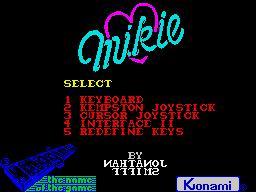
Discovering Mikie: A Quirky Arcade Classic
Mikie is a distinctive 1984 arcade video game originally developed by Konami that later found its way to home computer systems, including the Commodore and Amiga platforms. Produced as a wildly experimental entry during the golden age of arcades, the title stands out as a bold departure from the space shooters and fantasy adventures that dominated the era. At its core, the game challenges players to navigate a rigid school environment while collecting hidden objects to impress a distant love interest. Despite its unconventional premise and notoriously clunky controls, Mikie has earned a lasting reputation as a cult classic, remembered today for its fearless creativity and unexpected musical choices.
Genre and Gameplay Mechanics
Blending action, platforming, and light puzzle elements, Mikie tasks players with guiding its protagonist through various school locations. The primary objective is to gather heart-shaped items scattered across classrooms, hallways, and the locker room. These hearts collectively form the name of the character's girlfriend, Mandy. To survive the oppressive environment, players must utilize Mikie's combat moves, which include head-butting approaching figures and throwing basketballs to temporarily stun them. A unique mechanic involves approaching seated classmates from the side and repeatedly striking them with Mikie's rear end to force them out of their desks, revealing the hidden hearts beneath. The game's deliberately awkward controls and punishing difficulty curve make progression a test of persistence rather than precision.
Story and Setting Overview
The game is set in a fictionalized American high school, drawing inspiration from teenage culture and dramatic romantic tropes. Mikie is portrayed as a bored student who has grown tired of academic routine and decides to take matters into his own hands. He discovers that his fellow students are hoarding black-market hearts under their seats and resolves to claim them as his own. As he makes his way through the institution, he is relentlessly pursued by authority figures including teachers, coaches, and cafeteria chefs. At the end of each stage, players are rewarded with a glimpse of Mandy, who can be seen practicing cheerleading routines while waiting for him outside the school gates.
Platform Availability
While Mikie debuted as an arcade cabinet in 1984, its legacy was cemented through numerous home computer conversions. The title was officially ported to several major systems of the mid-to-late 1980s, including the Sega SG-1000, ZX Spectrum, Commodore 64, Amstrad CPC, Acorn Electron, and BBC Micro. The Commodore and Amiga versions brought the arcade experience to home desks, allowing a new generation of players to experience its challenging gameplay. The game was notably published by Imagine Studios for several of these home conversions, ensuring wide distribution across the European and North American markets. Though originally intended to help the financially struggling publisher Centuri recover from the 1983 video game crash, the title's unique charm ultimately secured its place in retro gaming history.
Notable Features
- Unlicensed Beatles Soundtrack: The game features unauthorized chip tune adaptations of famous Beatles tracks, including "A Hard Day's Night" and "Twist and Shout," a rare and audacious choice for the time.
- Experimental Genre Blending: Mikie defies easy categorization, seamlessly mixing chase sequences, environmental traversal, and resource collection into a cohesive but chaotic experience.
- Punishing Difficulty: The intentionally awkward controls and relentless enemy AI create a steep challenge that demands memorization and trial-and-error mastery.
- Cult Classic Status: Despite only achieving mild commercial success during its original run, Mikie has been celebrated by retro gaming communities for its fearless design and nostalgic charm.
Who Mikie Appeals To
Mikie is best suited for retro gaming enthusiasts, arcade historians, and players who appreciate unconventional game design. Its quirky premise, challenging mechanics, and nostalgic pixel art make it an ideal title for collectors seeking authentic 1980s arcade experiences. Gamers who enjoy puzzle-platform hybrids, unorthodox protagonists, and games that prioritize atmosphere and experimentation over traditional balance will find this title particularly rewarding. It also serves as an interesting historical artifact for those studying the evolution of arcade publishing and the creative risks taken during the post-crash gaming industry recovery.