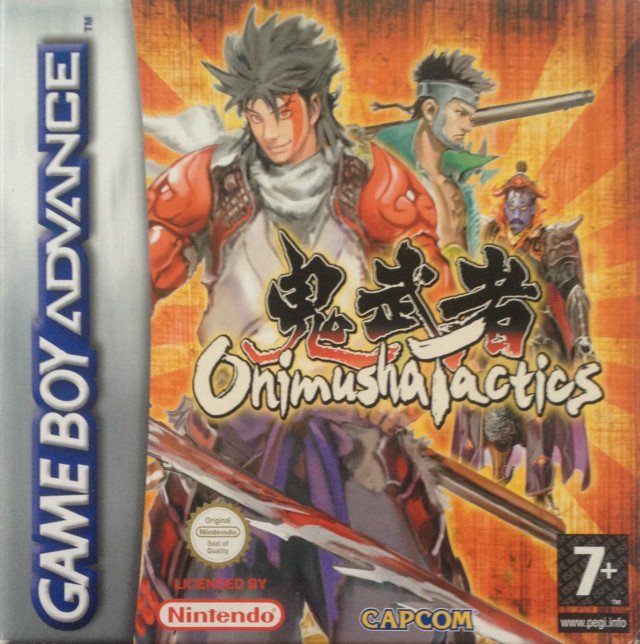
Onimusha Tactics stands as a unique entry in Capcom's legendary franchise, bringing the feudal Japanese demon-slaying action to the Game Boy Advance. Released in July 2003, this tactical role-playing game diverges from the action-adventure roots of its console predecessors while retaining the core themes of the series. It serves as a side story within the Onimusha chronology, offering a fresh strategic experience on Nintendo's handheld system that adapts the series' lore for a new audience.
Gameplay Mechanics of Onimusha Tactics
The game unfolds through a series of linear episodes set on isometric battlefields. Players command a party of up to eight characters, including the protagonist Onimaru, across a grid-based map. Unlike complex titles like Final Fantasy Tactics, Onimusha Tactics emphasizes accessibility and approachability. Characters are divided into four distinct pseudo-classes, though the game's design allows for significant flexibility as units are largely interchangeable in their roles:
- Swordsman: Close-quarters combatants who hack through enemies.
- Ninja: Units capable of throwing shurikens or using knives.
- Archer/Gunner: Ranged specialists who strike from a distance.
- Healer: Support roles that repair unit damage, though less critical due to the lack of permanent death.
A key strategic element is the equipment system; each unit has only two slots for items, forcing players to carefully manage healing herbs and buffs during the heat of combat. The game also introduces the "Issin" command, a unique mechanic that allows a unit to completely destroy an enemy attempting a physical attack, though counterattacks are otherwise absent. If players take too long clearing a stage, random reinforcements will appear at the opposite end of the map.
Narrative and the Demon War
The story follows Onimaru, a warrior descended from the Oni Clan who wields the powerful Oni Gauntlet capable of absorbing the souls of demons. The narrative picks up as Onimaru returns home to find his village ravaged by the Genma, an army of Japanese demons led by the resurrected and possessed warlord Nobunaga Oda. While the game does not follow the direct plot of the PlayStation 2 releases, it shares the overarching conflict of Onimaru and his allies fighting to stop Nobunaga's demon army from ransacking feudal Japan. Players progress through a world map between battles, encountering narrative events and preparing for the next engagement.
Item Crafting and Progression
Onimusha Tactics features a robust crafting system that replaces traditional shops. During battles, defeating Genma yields various "Genma stones." Between episodes, players can use discovered recipes to transmute these stones into weapons, armor, and accessories. This system encourages experimentation, as recipes are randomly acquired from defeated foes or stolen from stronger enemies. Furthermore, crafted gear can be enhanced using the souls of defeated demons, allowing players to upgrade early-game items to higher ranks.
The game also includes a "phantasmal plane" mode accessible between episodes, where players can fight waves of enemies for experience points and special bonuses. This progression loop ensures that even if the battle difficulty becomes trivial later in the game due to powerful attacks, the crafting and item management systems provide continuous engagement.
Platform Availability and Target Audience
Originally developed and produced by Capcom for the Game Boy Advance, Onimusha Tactics offers a distinct take on the SRPG genre tailored for the portable format. The game is ideal for fans of the Onimusha series who wish to explore the lore surrounding the Oni Clan and Nobunaga's demon invasion. It also appeals to players seeking a more approachable tactical experience. With mechanics that remove permanent character death—defeated units simply return after the battle concludes—the game lowers the stakes compared to hardcore strategy titles like Fire Emblem, making it a welcoming entry point for newcomers to the genre while providing satisfying progression through its crafting and item management systems.