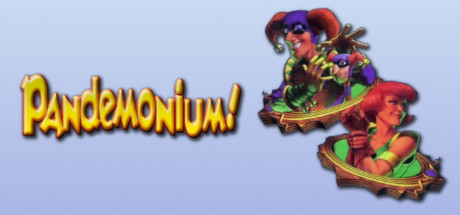
Pandemonium stands as a fascinating relic from one of the most transformative eras in gaming history. Released during the mid-90s transition from the golden age of 2D sprites to the rise of polygonal, three-dimensional environments, this title by Crystal Dynamics offers a unique 2.5D experience that bridges the gap between two generations of hardware. It captures the experimental spirit of an era where developers were first learning to navigate the complexities of the Z-axis, providing a polished, colorful adventure that remains memorable decades later.
Mastering the 2.5D Dimension in Pandemonium
At its core, the gameplay is a precision platformer that utilizes clever camera work to create a convincing illusion of depth. While character movement is fundamentally restricted to a two-dimensional path—moving only left and right—the game uses panning cameras, twisting corridors, and rotating environments to simulate a three-dimensional world. This "on-rails" style of gameplay is perfectly suited to its platform-centric level design, preventing the player from feeling lost in an expansive 3D space while still providing a sense of scale.
Gameplay revolves around technical movement, specifically jumping, bouncing off springy platforms, and maintaining balance on precarious cliffs. To navigate the various challenges, players can switch between two distinct protagonists, each bringing specialized abilities that are essential for overcoming environmental obstacles:
- Fargus the Jester: A nimble character designed for quick maneuvers, capable of delivering a special spinning attack.
- Nikki the Acrobat: An agile hero whose unique skills, including a vital double jump, are necessary for solving specific puzzles.
This dual-character system encourages multiple playthroughs, as branching paths and hidden treasures throughout the levels often reward players who master the unique skill sets of both Fargus and Nikki.
A World of Whimsical Adventure
The journey in Pandemonium takes players through a series of wild platforms and oddball enemies. The primary objective is to navigate various stages to reach the "wish place," where players must ultimately confront a formidable monster. The experience is defined by its atmosphere—a mix of quirk, humor, and "Shrek-level" snark that was characteristic of Crystal Dynamics' 90s output. While the path can be treacherous, featuring blind leaps of faith and unexpected enemies, the vibrant environments provide a sense of constant discovery.
Notable Features and Platform Legacy
While originally gaining traction on the Sony PlayStation, the game's legacy extends to various platforms and unique features, particularly through its mobile iterations. Notable elements include:
- Two-Player Modes: Support for one to two players, including racing modes in specific versions.
- Shadow Racing: An online feature available via N-Gage Arena, allowing players to compete against recorded level times from around the globe.
- Multi-Platform Availability: Originally released for the PlayStation, with later iterations appearing on PC, N-Gage, and even iPhone.
This title appeals most strongly to fans of retro platformers and those interested in the evolution of 3D graphics. If you enjoy high-precision movement, character-swapping mechanics, and the nostalgic charm of mid-90s experimental design, this classic remains a quintessential example of the "2.5D" era.