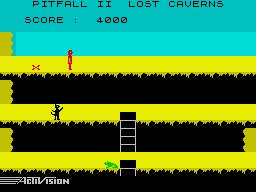
Pitfall II: Lost Caverns stands as a landmark entry in the platform video game genre, originally released by Activision in 1984 for the Atari 2600. Designed and programmed by David Crane, this sequel to the 1982 classic Pitfall! follows jungle explorer Pitfall Harry on a perilous quest. Released during the waning years of the Atari 2600's lifecycle, just after the North American video game crash of 1983, the game remains one of the most technically impressive and memorable experiences of the console's golden age.
Gameplay Mechanics and Objectives
The core gameplay builds upon the foundation of its predecessor while introducing significant innovations. Players navigate Harry through a sprawling jungle environment using a flip-screen mechanic for horizontal movement, supplemented by vertical scrolling as Harry descends deeper into the earth. The primary objective is to locate a specific diamond ring, rescue Harry's niece Rhonda, and free his pet mountain lion, Quickclaw, who have become trapped within the depths of the Lost Caverns.
Exploration is central to the experience, requiring players to collect gold bars and other treasures to achieve a perfect score. The game introduces a revolutionary checkpoint system, marked by "X" symbols on the ground, which allows Harry to resume his adventure from the last safe spot rather than restarting the entire game. This feature, along with the absence of a strict countdown timer in the original release, offers a unique pacing compared to contemporary titles. However, the caverns are fraught with hazards, including scorpions, poison frogs, bats, electric eels, and falling stalactites. Encountering these dangers triggers a reset to the nearest checkpoint, adding tension to the exploration.
Story and Setting Overview
Pitfall II: Lost Caverns shifts the setting from the surface-level jungle to a multi-layered underground world. Harry begins on the surface, swinging on vines over crocodile-infested swamps and dodging falling logs and fireballs. As he ventures below, the environment transforms into a treacherous network of caves filled with new obstacles like mine carts, descending brick walls, and icy ponds. The narrative draws inspiration from the Pitfall cartoon series, incorporating characters like Rhonda and Quickclaw to establish a rescue mission that drives the player through the diverse biomes of the Lost Caverns.
Platform Availability and Ports
Following its debut on the Atari 2600, the game was widely ported across multiple systems, ensuring broad accessibility. Platform availability includes:
- Atari 5200
- Apple II
- Atari 8-bit
- Commodore 64
- ColecoVision
- PCjr
- Tandy Color Computer
- MSX
- Sega SG-1000
- Arcade
Notably, the arcade version released by Sega in 1985 expanded the scope significantly. Licensed from Activision, this iteration added new levels, a life counter, and a timer, while introducing features like balloon rides essential for accessing the final treasure. It is considered one of the first console games to receive such an arcade treatment, blending elements from both Pitfall titles with original additions.
Notable Technical Features
The original Atari 2600 cartridge is renowned for its technical prowess. To overcome the console's audio limitations, David Crane designed a custom chip that enabled four-channel music, a significant upgrade from the system's standard two-channel capability. This enhancement provided a richer atmospheric soundtrack that complemented the game's immersive exploration. The game's visual effects, including the swimming mechanics in rivers and the dynamic movement of the mine carts, also showcased the technical creativity of the era.
Who Should Play Pitfall II: Lost Caverns?
This title appeals strongly to retro gaming enthusiasts and fans of classic platformers who appreciate the evolution of the genre. Players interested in the history of home computing and console development will find the game's technical achievements noteworthy. Its emphasis on exploration, checkpoint innovation, and challenging hazard design makes it a must-play for those seeking a deep dive into the golden age of video games. The diverse ports ensure that fans of various classic systems can experience Harry's underground adventure.