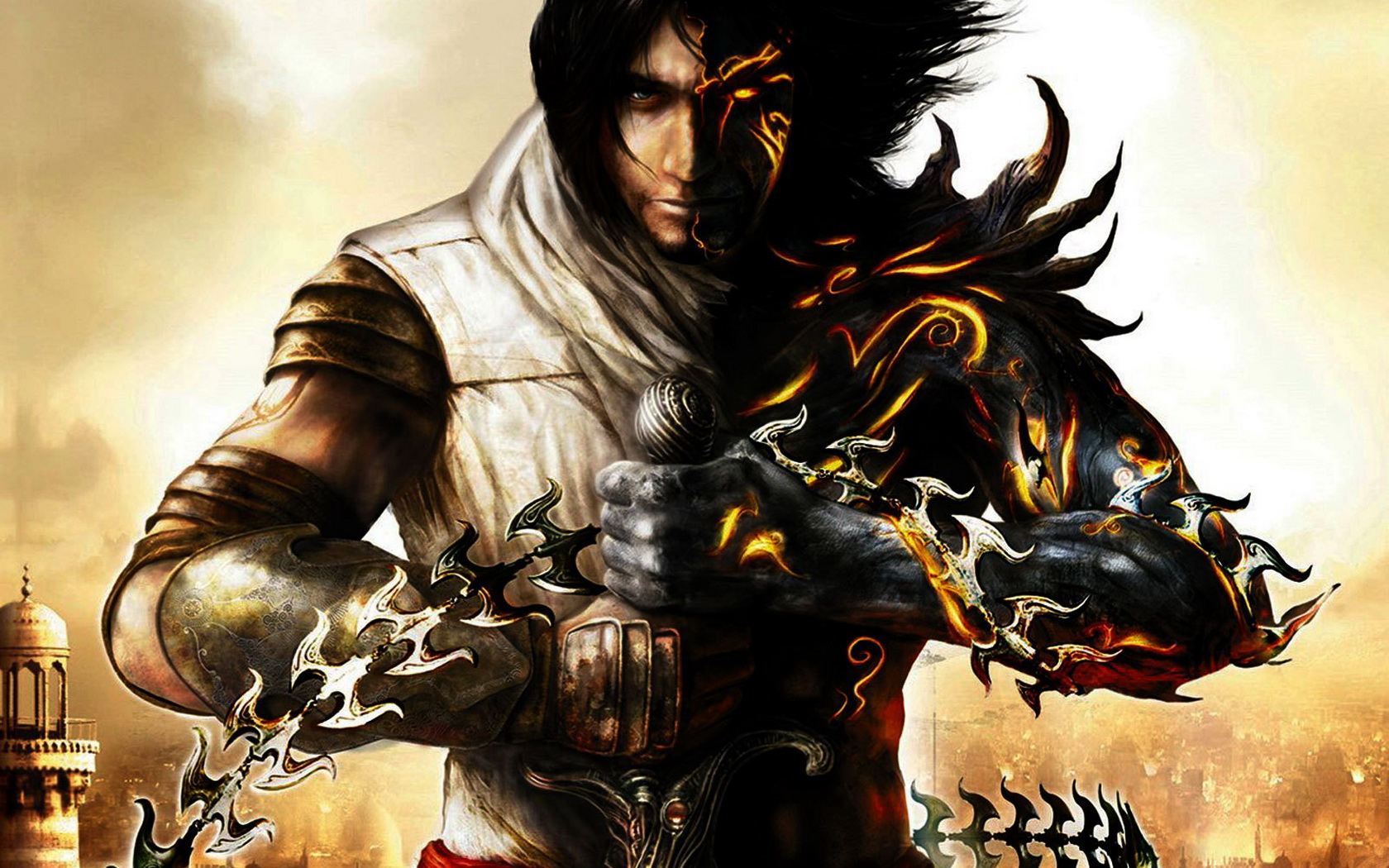
Prince of Persia: The Two Thrones serves as a high-stakes conclusion to the celebrated Sands of Time trilogy. Developed by Ubisoft, this third installment brings the saga full circle, blending the acrobatic platforming and environmental puzzles that defined the first game with the visceral combat mechanics introduced in Warrior Within. Set against the backdrop of an embattled Babylon, the game delivers a cinematic experience where players must navigate shifting timelines and internal struggles to save what remains of a broken world.
A Tale of Two Destinies
The story picks up following the events of the previous adventures. Having altered his fate, the Prince arrives in Babylon accompanied by Kaileena, only to find the city under heavy attack. The situation takes a dire turn when Kaileena is kidnapped, prompting the Prince to embark on a desperate rescue mission. However, the consequences of his past actions have resurfaced; by changing his destiny, the Prince inadvertently prevented the creation of the Sands of Time, causing the timeline to fracture.
As the narrative unfolds, players experience a deeply personal conflict. The Prince is torn between self-serving vengeance and the noble duty to protect his people. This internal struggle is personified through a dark, talkative alter ego that lives within his mind, bickering with him during moments of heroism and congratulating him after bloody battles. It is a story of redemption, where the player must fix the broken timeline while facing the physical manifestation of their own darker impulses.
Mastering Acrobatics and Combat
Gameplay in Prince of Persia: The Two Thrones leans heavily into the series' roots of precision movement. While the combat system remains robust and improved from its predecessor, the emphasis on acrobatics is more prominent than ever. Players must master wall-running, jumping, flipping, and vaulting to navigate fiendishly designed environmental puzzles and climb ancient structures.
The combat toolkit has also seen significant changes. For the first time in the series, the Prince lacks his signature swords, relying instead on a dagger that eventually evolves into the Dagger of Time. Players can utilize two weapons—a main blade and a temporary secondary weapon—to execute devastating combos. New "speed kills" add a layer of stylish execution; when approaching an unsuspecting enemy, time slows down, allowing for a precise, cinematic strike if timed correctly.
The Emergence of the Dark Prince
One of the most notable features of this entry is the transformation into the Dark Prince. At scripted points in the story, the Prince's dark ego manifests physically, drastically altering the gameplay loop. As the Dark Prince, combat becomes much faster and more aggressive, moving away from tactical precision toward pure, unadulterated carnage.
- The Daggertail: The Dark Prince wields a unique bladed chain weapon that can mow down enemies and act as a grappling tool to traverse impossible gaps.
- Sand Dependency: Unlike the standard Prince, the Dark Prince's health continuously depletes. Players must aggressively hunt for sand from defeated enemies or breakable objects to stay alive.
- The Transformation Limit: To maintain balance, these transformations are tied strictly to the plot, and players can return to their normal state by entering pools of water.
Game Overview
- Genre: Action, Adventure
- Release Date: December 1, 2005
- Platforms: PC, PlayStation 2, PlayStation 3, Xbox, PSP
- Key Features: Dual-protagonist mechanics, environmental puzzles, speed kills, and advanced wall-running acrobatics.
Whether you are a fan of the classic platforming seen in the original Sands of Time or the gritty combat of Warrior Within, Prince of Persia: The Two Thrones offers a polished blend of both. It is an ideal title for fans of action-adventure games who enjoy high-mobility gameplay and complex, atmospheric settings.