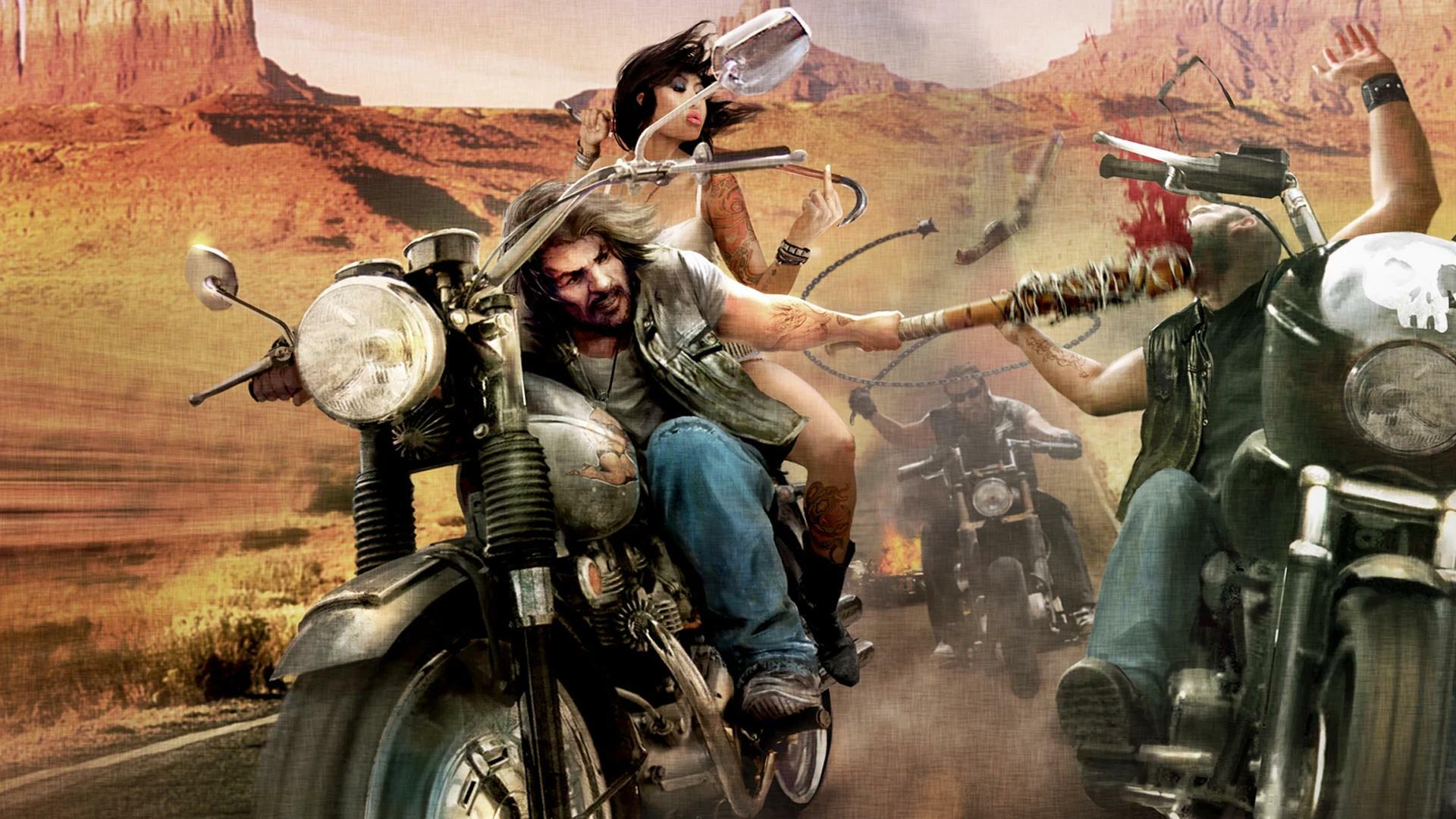
Ride to Hell: Retribution Overview
Ride to Hell: Retribution is a gritty, revenge-driven action title that blends racing, shooting, and adventure elements into a single experience. Released on June 25, 2013, the game follows Jake Conway, a Vietnam veteran who returns home to discover his younger brother has been brutally murdered by a rival motorcycle gang known as The Devil’s Hand. Driven by a desire for vengeance, Jake embarks on a bloody quest that takes him through the outlaw era of America in the 1960s, tackling enemies both on his motorcycle and on foot.
Story and Setting Overview
Set against the backdrop of the 1960s counterculture and outlaw lifestyle, Ride to Hell: Retribution establishes a dark, revenge-fueled narrative. Jake Conway’s journey is not merely about combat but also about navigating the dangerous world of motorcycle gangs during a transformative decade in American history. The game’s premise centers on Jake’s relentless pursuit of the Devil’s Hand, forcing him to confront anyone or anything that stands in his way. This gritty tone permeates every moment of the experience, grounding the gameplay in a story of loss, retribution, and survival.
Genre and Gameplay Mechanics
Classified as a hybrid of racing, shooter, and adventure genres, Ride to Hell: Retribution attempts to merge vehicular combat with on-foot action and investigation. The gameplay loop heavily revolves around Jake’s interactions with various characters to gather information about his targets. A significant portion of the early experience involves approaching women, resolving minor personal conflicts for them, and receiving intelligence as a reward. The source material notes that these interactions are handled through a controversial and poorly implemented intimate mini-game, which lacks proper character models and has drawn criticism for its execution and tone. Beyond these interactions, the game features linear progression through combat scenarios where players engage enemies using motorcycles and firearms.
Notable Features and Development Context
When Ride to Hell: Retribution was first announced in 2008, it was pitched as an ambitious open-world sandbox title. The original vision included a vast Western United States setting, deep motorcycle customization, photography mechanics using a Polaroid camera, and a system for climbing the ranks within a brutal motorcycle gang. However, years of development significantly altered this scope. The final release ultimately delivers a linear, underdeveloped experience that strays far from its initial ambitious design. Critics and reviewers have highlighted the stark contrast between the original concept and the disjointed, unfinished state of the final product, noting that the game feels like a hastily assembled collection of mechanics rather than a cohesive world.
Platform Availability and Target Audience
Ride to Hell: Retribution was released for PC, Xbox 360, and PlayStation 3, making it accessible across the major home gaming platforms of its era. The title primarily appeals to players interested in gritty revenge narratives, motorcycle-centric gameplay, and gaming history. While the game’s controversial mechanics, linear structure, and noted technical shortcomings may not align with mainstream expectations, it remains a notable case study in development cycles and the challenges of realizing ambitious open-world concepts. Fans of niche action titles, cult gaming history, and players curious about the evolution of mid-2010s game development will find its premise and release context noteworthy.