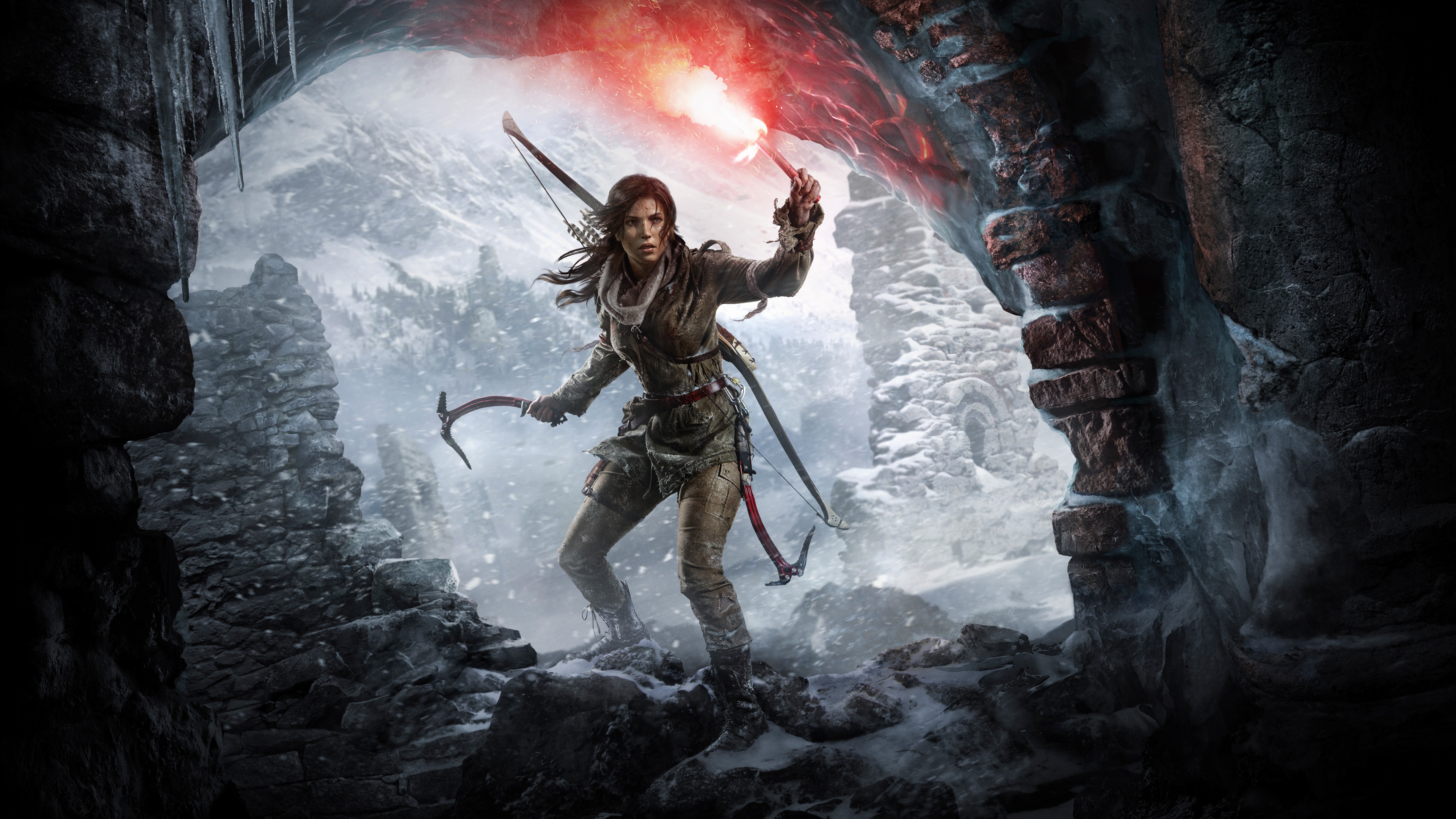
Rise of the Tomb Raider stands as a pivotal entry in the long-running franchise, serving as a direct sequel to the acclaimed 2013 reboot. Released on November 10, 2015, this third-person action title pushes the series into harsher environments and more complex scenarios. Available on PC, Xbox One, PlayStation 4, and macOS, the game expands on the foundation laid by its predecessor, delivering a more refined experience with larger environments, deeper combat systems, and heightened stakes.
Rise of the Tomb Raider: Story & Setting
Set one year after Lara Croft’s harrowing ordeal in Yamatai, the narrative follows the archaeologist as she pursues the legendary city of Kitezh in the frozen expanses of Siberia. Rooted in twelfth-century folklore, Kitezh is said to hold a mystical gift granting immortality. Lara’s quest to uncover the city’s secrets is driven by her late father’s notes, but she is not alone in her pursuit. A shadowy organization known as Trinity actively works to seize the artifact for themselves, forcing Lara to navigate a dangerous race against time. The journey spans brutal, snow-covered landscapes where survival is just as critical as discovery. Players will also experience additional content through downloadable expansions, including Baba Yaga, the Temple of the Witch, Cold Darkness Awakened, which delves into a secret biological weapon, and Blood Ties alongside Lara’s Nightmare, which explores the history of the Croft estate.
Genre & Gameplay Mechanics
Positioned firmly within the action-adventure genre, Rise of the Tomb Raider blends cinematic storytelling with strategic, player-driven combat. The game introduces a progressive combat system that rewards tactical decision-making. Players can choose to evade enemies by hiding in tall grass, execute stealth takedowns using a bow and arrows, or engage in open firefights utilizing shotguns, pistols, and other firearms. As Lara gains experience, players can allocate points across three distinct skill trees: Hunter, Survivor, and Brawler. Each specialization offers unique advantages, from utilizing environmental traps and local fauna to improving accuracy and close-quarters effectiveness.
- Tomb Raiding: Nine optional tombs plus story-critical dungeons feature expansive layouts requiring environmental manipulation.
- Tool-Based Puzzles: Players must creatively use Lara’s signature gear, such as the rope arrow to navigate flooded chambers and the pickaxe for traversal.
- Crafting System: Collected materials allow Lara to craft essential items, ammunition, and survival gear directly in the field.
Platform Availability & Notable Features
Rise of the Tomb Raider is accessible across multiple generations of hardware, launching originally on Xbox One and PC before expanding to PlayStation 4 and macOS. The title is celebrated for its atmospheric environments, particularly the unforgiving Siberian wilderness that tests both the player and Lara’s survival instincts. Notable features include death-defying escape sequences, high-octane automated set pieces, and a quasi-open world design that constantly rewards curiosity. The game utilizes an experience point system that scales Lara’s capabilities, ensuring that progression feels tangible. Points of interest are clearly marked to assist navigation, though solving the underlying environmental puzzles still requires observation and lateral thinking.
Who It Appeals To
This title is tailored for fans of cinematic action-adventure games who appreciate a strong narrative backbone paired with methodical exploration. Players who enjoy deciphering ancient mechanisms, mastering stealth approaches, and upgrading character abilities will find the progression systems deeply satisfying. The semi-open world structure appeals to those who like to take their time uncovering secrets rather than rushing through linear corridors. Additionally, the game’s emphasis on survival against harsh weather and hostile wildlife makes it an excellent fit for enthusiasts of grounded, high-stakes adventure narratives.