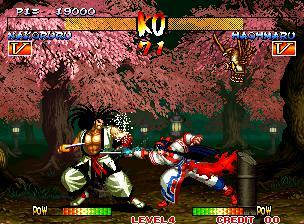
Overview of Samurai Shodown III: Blades of Blood
Developed by SNK and released on November 15, 1995, Samurai Shodown III: Blades of Blood marks a pivotal evolution in the legendary fighting series. While it carries the third installment's number, the game serves as a prequel, with its events taking place chronologically between the first game and Samurai Shodown II. This entry introduced a darker, more somber aesthetic to the franchise, shedding the lighthearted humor of its predecessors in favor of a gritty, intense atmosphere that redefined the series' identity.
Gameplay Mechanics and Strategic Depth
The combat in Samurai Shodown III: Blades of Blood emphasizes tactical precision and strategic variety. A defining feature of this release is the introduction of selectable modes for each fighter: "Slash" (chivalry) and "Bust" (treachery). Players can switch between these versions during matches, fundamentally altering the character's moveset, appearance, and color palette. The Slash mode retains the classic style familiar to long-time fans, while the Bust mode offers a more aggressive approach with unique techniques.
SNK also overhauled the control scheme, dedicating three buttons to weapon attacks and a single button to kicks, allowing for more nuanced weapon usage. The game replaces the free movement system of earlier titles with a restrained "Parry (fencing)" system, adding a layer of depth regarding positioning and special move priority.
Story and Setting: The Hunt for Zankuro
The narrative diverges from the tournament formats of the past. Instead, the plot revolves around a collective quest to hunt down and destroy Zankuro, a sadistic killer whose sole ambition is to slaughter others to become the world's most powerful warrior. Each fighter is driven by personal motivations to cross swords with this ultimate antagonist.
The spotlight shifts to Shizumaru Hisame, a mysterious young man who wields an umbrella rather than a sword. Shizumaru seeks to slay Zankuro, whom he believes is responsible for the death of his family. The game's atmosphere is reinforced by dynamic backgrounds that morph from defined states into ghostly or spiritual realms multiple times during a match, alongside musical scores that adapt to the stage and character themes.
Notable Features and Character Roster
- Visual Overhaul: All characters received complete redraws to match the grim tone. Kyoshiro Senryo, once a flamboyant kabuki master, is reimagined as a muscular, grim-faced warrior.
- New Fighters: The roster introduces Shizumaru Hisame, Rimururu (Nakoruru's sister who utilizes ice magic), Basara (an undead warrior wielding a chain-attached shuriken), and Gaira (a massive fighter using giant prayer beads).
- Roster Shifts: Returning legends like Haohmaru, Galford, and Amakusa (now playable) appear with redesigns. However, characters such as Earthquake, Cham Cham, and Gen-an are absent from this installment.
Platform Availability
Samurai Shodown III: Blades of Blood was originally released for the arcade, followed by SNK's Neo Geo AES and Neo Geo CD home consoles. The game also saw ports to major third-party systems of the era, including the PlayStation and SEGA Saturn. A Game Boy version was released exclusively in Japan by Takara, featuring a slightly adjusted roster and gameplay features.
Who Should Play Samurai Shodown III?
This title appeals to enthusiasts of classic fighting games who appreciate strategic combat and deep mechanical variety. Players who enjoy the "Bust" and "Slash" dynamic will find a rich layer of customization and replayability. Those drawn to a darker, more serious narrative within the fighting genre will appreciate the shift in tone and the compelling backstory surrounding the hunt for Zankuro. It remains an essential experience for collectors and fans of SNK's golden era of arcade fighters.