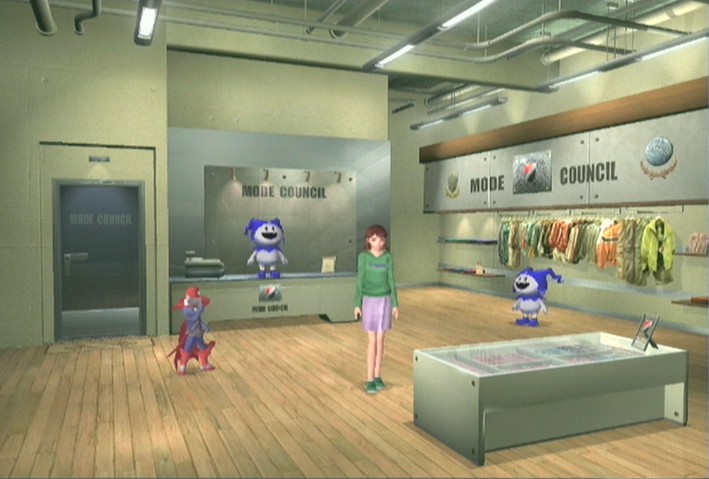
Shin Megami Tensei: NINE stands as a unique experimental entry in the long-running franchise, originally launching for the Xbox on December 5, 2002. Developed by Atlus and NexTech, this action role-playing game diverges from traditional console entries by delivering a fully three-dimensional experience set within a virtual reality framework. As the first Megami Tensei title to embrace the Xbox hardware, it attempts to bridge classic tactical demon summoning with real-time navigation, carving out a distinct space in early 2000s gaming history.
Story and Setting
Set chronologically between the events of the original Shin Megami Tensei and its sequel, the narrative unfolds in the aftermath of Tokyo's destruction. Survivors of the nuclear holocaust have taken refuge in underground bunkers, constructing a virtual sanctuary known as the Idea Space. When this digital network begins to overflow into reality, demonic entities referred to as "noise" threaten to consume the remaining safe zones. Players assume the role of a Debugger, a specialized hunter tasked with navigating the cyberspace version of 1990s Tokyo and routing these demonic incursions. The silent protagonist allows players to customize their name, gender, hair, and skin color, a rare feature that grants unprecedented personalization within the series.
Gameplay Mechanics
NINE reimagines the franchise's formula by shifting exploration to a third-person perspective. Players traverse the digitized districts of Tokyo, utilizing a dedicated fast-travel menu to navigate between zones efficiently. Each excursion is accompanied by one assigned demon that follows the player character directly. Combat shifts away from the series' traditional turn-based system, implementing a real-time command-based battle structure. This design choice demands faster reflexes and positioning, as players and their summoned demons engage enemies in active, three-dimensional arenas. The moral alignment system remains a core pillar, with the title directly referencing the nine distinct moral paths available to players. Decisions made during quests will permanently shape the protagonist's alignment, influencing both the narrative trajectory and available gameplay options.
Notable Features and Development of Shin Megami Tensei: NINE
Development commenced in 2001, spearheaded by established franchise veterans including producer Kouji Okada, demon designer Kazuma Kaneko, character designer Yasuomi Umetsu, and composers Masaki Kurokawa and Takahiro Ogata. Originally conceived as a fully online multiplayer experience, technical challenges eventually forced a pivot. The project was split into single-player and online versions, with the online component ultimately cancelled due to development difficulties. The single-player release met with mixed critical reception and sold below Atlus' commercial expectations. Despite its commercial struggles, the abandoned online code and concepts were repurposed, eventually evolving into the PC title Shin Megami Tensei: Imagine.
- First Megami Tensei title released for the Xbox console
- First entry in the franchise to fully utilize 3D graphics
- Selectable player gender, offering unprecedented character customization
- Nine distinct moral alignment paths that dictate narrative outcomes
Who It Appeals To
Shin Megami Tensei: NINE primarily targets veteran fans of the franchise who are interested in its experimental design phases and early 3D transition. Players who enjoy tactical demon summoning, complex moral alignment systems, and atmospheric world-building will find its core loop compelling, even if the real-time combat diverges from series norms. The game's historical significance as the first Megami Tensei title on Xbox, combined with its ambitious attempt to merge traditional dungeon crawling with virtual world exploration, makes it a valuable title for collectors and enthusiasts of early 2000s gaming history.