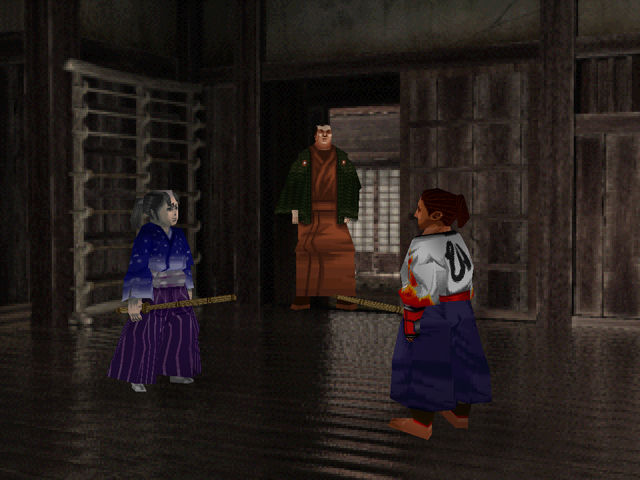
Soul of the Samurai, known in Europe as Ronin Blade and in Japan as Shin Jidaigeki Action Rasetsu no Ken, is an action-adventure title developed and published by Konami for the PlayStation. Released on April 28, 1999, the game distinguishes itself by blending tactical swordplay with the atmospheric presentation of survival horror. Set in a nameless fiefdom during the late-Edo period, the game offers a unique dual-campaign experience that explores a conspiracy involving stolen Shogun gold, corrupt officials, and supernatural threats. It stands as a distinctive entry in the PS1 library, appealing to fans of historical fantasy and complex combat mechanics.
Genre and Gameplay Mechanics
Soul of the Samurai is primarily a third-person action game that emphasizes timing, strategy, and command inputs over brute force. The combat system is robust, allowing players to perform various slashes, lunging stabs, and reverse strikes by combining button presses with directional inputs. Success in battle relies on parrying enemy attacks and executing a highly effective guard counter, which can disrupt opponents and open them up to damage. The game also features an experience system that unlocks powerful magic moves, adding depth to the fighting mechanics.
Visually, the game utilizes fixed camera angles and beautiful pre-rendered backgrounds, a design choice reminiscent of Resident Evil. While the map is confined to a small village and immediate surrounding areas, players have the freedom to roam and collect items between set objectives. Despite the horror aesthetic, puzzles are nearly nonexistent, keeping the focus on action. The gameplay varies significantly between the two protagonists: Kotaro's style is slow and conservative, focusing on guarding and tactical attacks, while Lin offers a quicker, more aggressive approach with ninja weapons and throwing tools, drawing comparisons to stealth-action titles.
Story and Setting Overview
The narrative unfolds over the course of six days, each serving as a distinct level within the game's limited but atmospheric map. Players control two protagonists whose paths initially diverge before eventually intersecting toward the end of the game. Kotaro Hiba is a wandering ronin returning to the village to visit his parents' graves, while Lin is a skilled kunoichi searching for her missing brother. Both characters become entangled in a plot that threatens the country, uncovering secrets involving undead samurai and demons. Completing both campaigns is required to face the true final boss, encouraging players to explore the story from multiple perspectives.
Soul of the Samurai's Legacy and Influence
Released during a period when Resident Evil had popularized the mix of 3D characters and fixed cameras, Soul of the Samurai helped pave the way for future samurai-themed action games. It shares significant DNA with Capcom's Onimusha, which was announced the month after Soul of the Samurai's release in Japan. While Onimusha would go on to refine and popularize the genre, Soul of the Samurai is often viewed as a solid precursor, blending elements of Bushido Blade and Tenchu to create a "new period drama" experience. Its combination of tactical swordplay and horror elements established a niche that resonated with the gaming community of the era.
Platform Availability and Notable Features
- Platform: Available exclusively for the original PlayStation.
- Dual Campaigns: Two distinct storylines with unique bosses, areas, and combat variations.
- Command-Based Combat: Advanced fighting mechanics including guard counters and magic moves.
- Fixed Camera Perspective: Cinematic angles that enhance the atmospheric horror presentation.
- Horror Themes: Encounters with evil monks, zombies, and demons within the Edo period setting.
Who It Appeals To
Soul of the Samurai appeals to players who appreciate tactical combat systems, classic survival-horror aesthetics, and deep historical settings. Fans of samurai action games, those interested in the evolution of the genre that led to titles like Onimusha, and veterans of the PS1 era will find this Konami title to be a worthy exploration. It is particularly suited for players who enjoy mastering complex move sets and experiencing multiple perspectives within a single narrative.