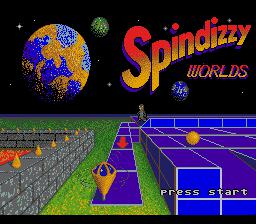
The Legacy of Spindizzy Worlds
Spindizzy Worlds represents a fascinating evolution in the puzzle video game genre, originally published by Activision. Released initially for the Amiga and Atari ST in 1990, the game serves as the direct sequel to the 1986 cult classic, Spindizzy. While the original game carved its niche in the late 80s, Spindizzy Worlds brought its distinctive mechanical charm into the early 90s, offering players a fresh perspective on logic-based gameplay. The title challenges the player to engage with a unique environment where physics and navigation are the primary tools for progression.
Gameplay Mechanics and the Spinning Top
At the heart of the gameplay is the control of a robotic device named GERALD, which stands for a Geographical Environmental Reconnaissance And LandMapping Device. Unlike traditional platformers where a character runs or jumps on foot, Spindizzy Worlds tasks the player with maneuvering GERALD as a spinning top. This fundamental shift in the protagonist's nature dictates the entire gameplay loop.
The game utilizes an isometric view to present the levels, a perspective that was becoming increasingly popular for its depth and clarity during the era of the Amiga and Atari ST. This visual style allows players to see the terrain from an angle, providing a three-dimensional feel on a two-dimensional screen. The isometric view is crucial for the puzzle mechanics, as it helps players plan their trajectories and understand the spatial relationships between platforms and obstacles. The core objective is to navigate GERALD through various stages, utilizing his spinning momentum to overcome challenges and reach the goal.
A Mission to Save the Star System
The narrative setting of Spindizzy Worlds provides a clear motivation for the action. GERALD is not merely exploring for the sake of adventure; he is on a critical mission. The player is tasked with exploring and mapping a vast star system before it faces destruction. This urgency adds a layer of purpose to the puzzle-solving gameplay.
The "LandMapping Device" aspect of GERALD's acronym suggests that the gameplay focuses on data collection and environmental awareness. Every sector mapped contributes to the larger goal of preserving the star system. The game immerses the player in a sci-fi setting where exploration is the key to survival, requiring the player to carefully observe the surroundings to identify the correct path forward.
Platform Availability and Release History
Spindizzy Worlds enjoyed a robust release history across multiple hardware platforms, catering to a wide audience of retro gaming enthusiasts. The game was available on several major systems, each seeing the title at different times.
- Amiga and Atari ST: The game was first released on these platforms in 1990.
- Super Famicom: The sequel was ported to the Japanese Super Famicom in 1992.
- NEC PC-9801 and Sharp X68000: In 1992, the game was released on these Japanese computer systems by Arsys Software under the title Spindizzy II.
- Super Nintendo Entertainment System (SNES): The game made its way to the West on the SNES in 1993, published by Ascii Entertainment.
Who It Appeals To
This title is specifically designed for fans of the puzzle genre who appreciate unique control schemes and mechanical protagonists. It appeals to players who enjoy the strategic depth of isometric navigation and those with a nostalgia for the golden age of the Amiga and Atari ST. The game is also a must-play for enthusiasts of the Spindizzy series, offering a chance to see how the franchise evolved its mapping and exploration mechanics in the early 1990s.