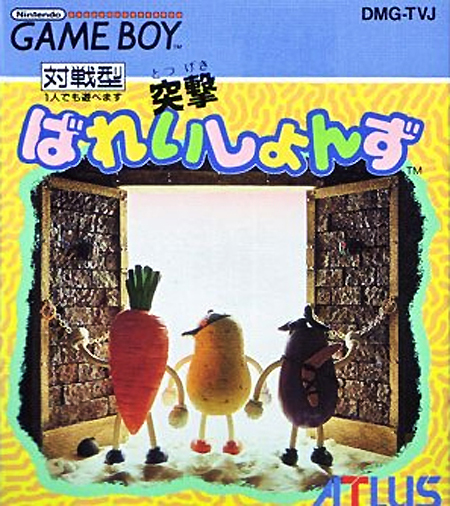
Spud's Adventure: A Rare Handheld Classic
Spud's Adventure stands as a quirky and highly sought-after entry in the early handheld gaming landscape. Released for the Game Boy on January 25, 1991, this title blends action and adventure gameplay with deep role-playing elements. Developed and published by Atlus, it quickly carved out a niche by featuring a vegetable-themed cast, centering on a cap-wearing potato hero named Spud.
Genre and Gameplay Mechanics
The game is structured around navigating a series of interconnected stages that challenge players with a mix of puzzles, mazes, and direct combat. As Spud progresses through each level, players must solve environmental puzzles to advance, often requiring strategic thinking and pattern recognition. The adventure RPG mechanics introduce character progression and item management systems typical of Atlus's catalog from that era. Players will encounter various obstacles that demand both quick reflexes and careful planning, creating a balanced loop that keeps the handheld experience engaging.
Core Gameplay Elements
- Environmental puzzle solving to unlock new paths
- Maze navigation requiring careful route planning
- Heavy role-playing mechanics including character progression and inventory management
- Action sequences that test reflexes and strategic positioning
Story and Setting Overview
Set in a whimsical world populated entirely by anthropomorphic produce, the narrative follows Spud on a quest to rescue Princess Mato, a tomato princess, from the villainous Devi. The story unfolds across multiple distinct zones, each presenting unique visual and mechanical challenges. The vegetable-centric world provides a lighthearted backdrop for a classic heroic journey, emphasizing exploration and problem-solving over complex dialogue or heavy narrative exposition.
Platform Availability and Collector Status
Originally launched for Nintendo's iconic Game Boy, Spud's Adventure was part of a specific wave of titles that pushed the portable system's capabilities. Despite its charming premise, the game was subject to a notoriously small initial print run, a common practice for Atlus during the early nineties. Because the title was never reprinted or re-released on later hardware, finding a complete copy in good condition has become exceptionally difficult. Market data consistently identifies it as one of the rarest and most expensive Game Boy releases available. Mint-condition sets have historically commanded extraordinary prices, with some sealed copies fetching values that far exceed standard collector benchmarks. A new copy has never sold publicly, cementing its status as a grail title for retro enthusiasts.
Who It Appeals To
This game is primarily aimed at veteran handheld collectors, Atlus history enthusiasts, and fans of early puzzle-adventure hybrids. Players who appreciate the charm of early portable gaming titles, enjoy tackling intricate maze navigation, or want to own a piece of gaming rarity will find particular value in this release. While its steep market value and niche gameplay loop may not suit casual players, it remains a fascinating artifact of early Game Boy experimentation.