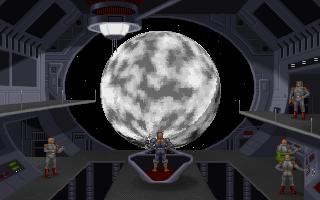
Mastering the Digital Board Game: An Overview of Starlord (1993)
Released in 1993, Starlord (1993) stands as a distinctive entry in the library of 1990s strategy gaming. Developed by Third Millennium Software and published by the legendary MicroProse, this title offers a unique experience by bridging the gap between traditional tabletop gaming and digital strategy. For players seeking a deep, tactical challenge that harkens back to the roots of board wargaming, Starlord provides a sophisticated simulation that stands apart from the real-time strategy games that would later dominate the genre.
Genre and Gameplay Mechanics
At its core, Starlord is a science-fiction strategy game that functions as a digital simulation of a complex board game. Unlike the pixel-bashing action or rapid-fire RTS titles of the era, the gameplay focuses on slow-paced, turn-based tactical decision-making. The mechanics revolve around classic elements of empire building and fleet management, presented through the lens of a physical board game brought to life on screen.
Players command vast interstellar fleets, navigating a galaxy map to expand territory, gather resources, and engage in combat with rival factions. Because the mechanics are rooted in the simulation of the physical board game of the same name, the gameplay involves several core pillars:
- Grid-Based Navigation: Moving units across a structured map to control specific sectors.
- Economic Management: Managing an economy to fund fleet expansion and sustain your empire.
- Tactical Combat Resolution: Resolving battles using probability and strategy rather than player reflexes.
- Mouse-Driven Interface: Interacting with the game board by clicking on sectors to move ships or initiate diplomatic and military actions.
This hybrid approach creates a "thinking man's" experience where long-term planning and resource allocation are just as vital as immediate combat prowess.
The Starlord Setting and Strategic Depth
Starlord places players in the center of an interstellar struggle, utilizing a science-fiction setting to facilitate grand-scale empire management. The game demands that players act not just as military commanders, but as heads of state responsible for the survival and prosperity of their factions. Through its digital simulation of board game mechanics, it provides a level of calculated tension rarely seen in more action-oriented titles.
Platform Availability and Target Audience
As a product of the early 90s strategy boom, Starlord was released for several key platforms of the era, including:
- PC
- Commodore / Amiga
This title is specifically designed to appeal to fans of traditional wargaming and turn-based strategy. It is an ideal match for players who prefer cerebral gameplay over twitch reflexes, offering a rewarding experience for those who enjoy managing complex systems, calculating risks, and executing long-term geopolitical maneuvers in a digital space.