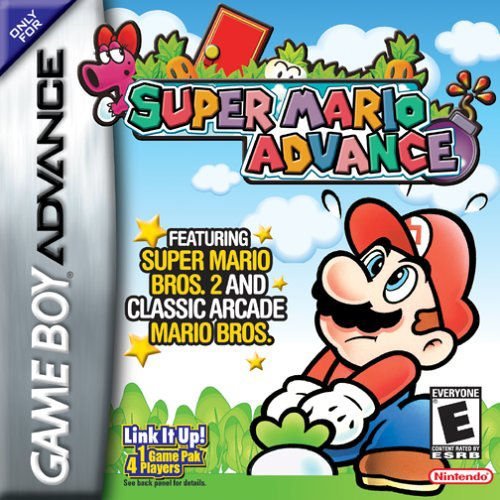
Introduction to Super Mario Advance
Super Mario Advance stands as a landmark title in Nintendo’s handheld history, making its debut on the Game Boy Advance on June 11, 2001. Rather than introducing a completely new adventure, this compilation delivers a meticulously upgraded version of Super Mario Bros. 2 alongside a faithful remake of the classic Mario Bros. arcade game. By bundling these two experiences into a single cartridge, the title effectively showcases the graphical and functional capabilities of the GBA while preserving the core mechanics that made the originals iconic.
Genre and Gameplay Mechanics
Classified as a side-scrolling platformer, Super Mario Advance diverges significantly from the traditional Mario formula. Instead of relying on jumping to defeat foes, players must grab and hurl enemies or pluck vegetables from the ground to use as projectiles. The game introduces a strategic character selection system where players choose from Mario, Luigi, Princess Peach, or Toad at the start of each stage. Each hero possesses distinct attributes: Toad moves quickly but jumps lower, Peach can temporarily float through the air, Luigi boasts superior height but reduced speed, and Mario offers a balanced middle ground. This multi-character approach requires players to adapt their tactics to the specific demands of each level.
Story and Setting Overview
The adventure takes place in Subcon, a mysterious dream world left in ruins by a tyrannical ruler named Wart. After initially stumbling upon this surreal landscape during a nap, Mario and his companions later discover the same realm and resolve to free its enslaved inhabitants. While the narrative remains straightforward, the dreamlike setting provides a distinct backdrop that justifies the game’s unconventional mechanics and vibrant, otherworldly environments.
Notable Features and Platform Details
Released exclusively for the Game Boy Advance, the title brings several quality-of-life improvements and new challenges to the original software. The enhanced visuals highlight the handheld’s improved color palette and sprite rendering. Key additions include:
- Strategic Character Switching: Players can change heroes between stages to exploit unique strengths.
- Enhanced Visuals and Enemies: The GBA hardware allows for brighter colors, new stage layouts, giant turnips, and enlarged enemy variants.
- Time-Attack Secrets: Hidden reversed worlds challenge players to collect coins and mushrooms within tight time limits.
- Multiplayer Support: The included Mario Bros. mode supports up to four players via the link cable.
Additionally, the life meter system has been supplemented with numerous life-replenishing hearts, ensuring smoother progression through the increasingly difficult stages.
Who It Appeals To
This title caters to a broad spectrum of players, from longtime fans seeking a polished introduction to Super Mario Bros. 2 to newcomers curious about its unique mechanics. The methodical pacing and vertical level design reward careful observation and strategic character switching, making it a rewarding challenge for veteran platformer enthusiasts. Meanwhile, the accessible controls and clear visual design ensure that first-time players can grasp the throwing-based combat and heart-collecting progression without frustration. Ultimately, Super Mario Advance remains a definitive handheld package that successfully bridges classic design philosophy with early 2000s portable gaming capabilities.