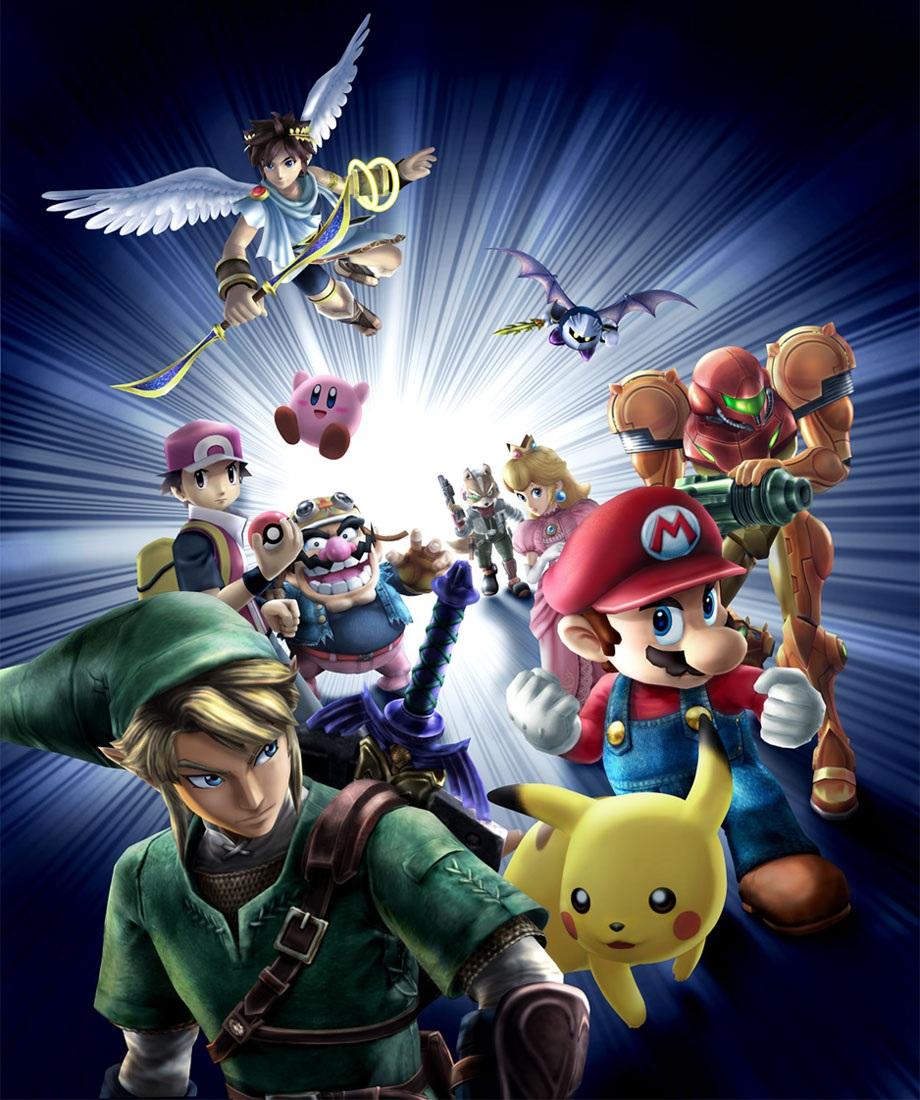
Released in 2008 for the Nintendo Wii, Super Smash Bros. Brawl stands as a massive expansion of the crossover fighting franchise. As the third entry in the series, it moved far beyond its predecessors by offering an unprecedented amount of content, ranging from a sprawling single-player campaign to the inclusion of iconic third-party legends. Developed by an ad hoc team including Sora Ltd, Game Arts, Monolith Soft, HAL Laboratory, and Paon, the title brought together much of Nintendo's history into one chaotic, high-energy arena.
Unorthodox Fighting Mechanics
Unlike traditional fighting games that rely on depleting a health bar, Super Smash Bros. Brawl utilizes a unique damage percentage system. As fighters take hits, their damage percentage increases; the higher the number, the further they are launched when struck. The ultimate goal is to knock opponents off the screen entirely. The gameplay loop involves a mix of regular attacks, directional "Smash" attacks, and character-specific special moves that can range from defensive maneuvers to transformations.
The combat experience is further layered by randomized items that appear throughout the stages. Players can utilize food for healing, various weapons like laser swords, or even Pokéballs to summon powerful Pokémon. Two major additions to the gameplay toolkit include:
- Assist Trophies: Items that allow players to temporarily summon characters from various franchises to assist in battle.
- Smash Balls: Rare items that, when broken, grant a fighter the ability to unleash a devastating ultimate attack against their opponents.
An Expanded Roster and Third-Party Icons
One of the most significant leaps from previous installments is the sheer scale of the roster. Super Smash Bros. Brawl features 35 playable characters, significantly more than the 12 in the original N64 title or the 26 found in Melee. While many fan favorites returned, the game introduced several new faces to the fray, including Pit from Kid Icarus, Olimar from Pikmin, Wario, Lucas from Mother 3, and Ike from Fire Emblem.
Crucially, this was the first entry in the series to break Nintendo's "walled garden" by introducing third-party guests. The inclusion of Sonic the Hedgehog from SEGA and Solid Snake from Konami’s Metal Gear series marked a historic moment for the franchise, bringing even more variety to the stage selection and combat dynamics.
The Subspace Emissary Story Mode
Beyond the multiplayer mayhem, Brawl offers a massive single-player experience known as the Subspace Emissary. This mode features an eight-plus hour campaign presented through crisp, colorful full-motion animation sequences. It tells an epic story of a battle involving dozens of characters from across the Nintendo multiverse, providing a cinematic narrative depth that was absent in earlier entries.
Notable Features and Appeal
With its massive scale, Super Smash Bros. Brawl appeals to both casual players looking for fun party mechanics and hardcore competitive fans seeking deep technical gameplay. Key highlights include:
- Orchestrated Soundtrack: A high-quality score featuring contributions from nearly 40 legendary musicians, including Koji Kondo.
- Customizable Rulesets: Players can create custom matches by disabling items or adjusting win conditions for team battles and free-for-all modes.
- Diverse Stages: Over 40 different levels that serve as throwbacks to classic franchise locations, including iconic settings like Shadow Moses Island.