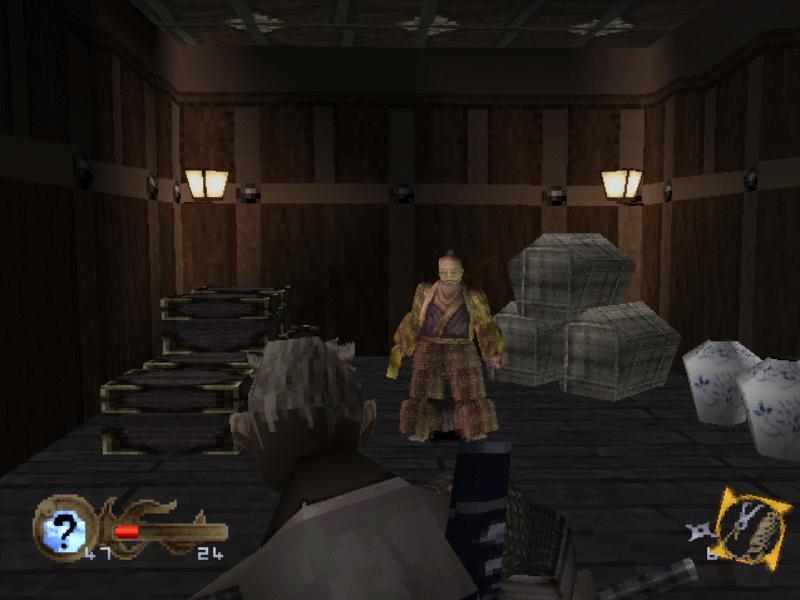
Released in 1998 for the PlayStation, Tenchu: Stealth Assassins stands as a landmark title in the action-adventure genre. Developed by Acquire and published by Sony Music Entertainment Japan and Activision, this title was a pioneer of the "Stealth Holy Trinity" of 1998—a group of games including Metal Gear Solid and Thief: The Dark Project that effectively defined the stealth genre. By prioritizing evasion and shadows over brute force, Tenchu offered players a revolutionary way to experience the life of a shinobi.
A Grounded Approach to Ninjutsu
Unlike many ninja-themed media of its era that relied heavily on extreme mysticism, Tenchu: Stealth Assassins provides a relatively realistic take on the profession. While the game incorporates elements of historical fantasy, Japanese mythology, and occasional magical items or monstrous enemies, it remains fundamentally grounded in its execution. This sense of realism makes the high-stakes missions feel much more impactful.
Players navigate the eerie settings of feudal Japan, assuming the roles of two distinct characters from the Azuma ninja clan, who serve Lord Gohda:
- Rikimaru: The quintessential, stoic, and stern shinobi.
- Ayame: A brash, sarcastic, and hot-blooded kunoichi who provides a sharp character contrast to Rikimaru's reserved nature.
Core Gameplay Mechanics
The gameplay focuses on the essential aspects of ninjutsu: scouting, planning, and executing precise strikes. The level design emphasizes verticality, encouraging players to climb rooftops, leap between structures, and use the environment to stay out of sight. Key mechanics include:
- Stealth Systems: Rather than relying on a modern radar, the game utilizes a "ki-meter." When an enemy is nearby, a question mark appears on the meter, signaling the player to stop and investigate their surroundings.
- Tactical Movement: Players can use crouching to hide from lines of vision and utilize tools like the grappling hook to navigate complex environments (though mastery of the hook requires careful timing).
- Satisfying Executions: When stealth is maintained, the game rewards players with visceral stealth kills that feature impressive gore effects for its era.
- Environmental Navigation: The game lacks a rotating mini-map or directional arrows, forcing players to rely on their own observations and memory of the terrain.
Who This Game Appeals To
Tenchu: Stealth Assassins is an essential experience for fans of classic stealth titles and those interested in the historical atmosphere of the Sengoku era. It appeals strongly to players who enjoy high-stakes tension, tactical planning, and the "cat-and-mouse" gameplay found in modern hits like Splinter Cell or Dishonored. While the combat is secondary to stealth, the presence of intense boss battles provides a challenge for those who can master the game's more difficult movement mechanics.
For fans of retro PlayStation classics, Tenchu remains an underrated gem that captures the true essence of being a ninja—relying on shadows, precision, and the art of the unseen strike.