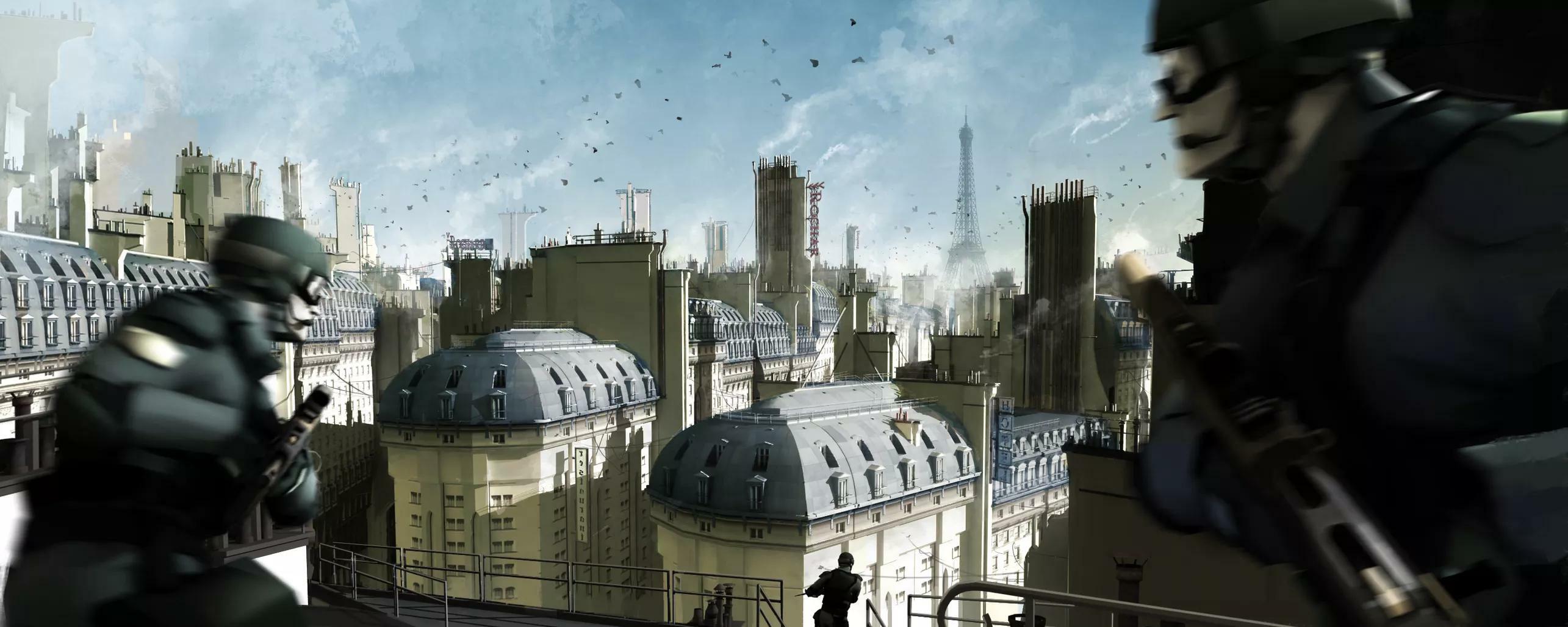
The Crossing represents one of the most ambitious "what if" scenarios in modern gaming history. Developed by the renowned Arkane Studios—the creative powerhouse behind legendary titles like Dishonored and Deathloop—this project was designed to push the boundaries of how we perceive online interaction. While ultimately canceled, the game's core concept aimed to bridge the gap between solitary storytelling and competitive tension in a way that could have fundamentally shifted industry standards.
A Revolutionary Approach to Gameplay
At the heart of The Crossing was a groundbreaking mechanic known as CrossPlayer mode. Unlike traditional titles that keep single-player campaigns and multiplayer arenas strictly separated, this game sought to merge two distinct realities into one seamless experience. The gameplay was designed around the concept of integrated coexistence, where players progressing through the narrative campaign were never truly alone.
The mechanics were built on a delicate balance of power and unpredictability:
- Integrated Combat: Players navigating the main story could encounter enemies controlled by other human players at any moment, turning every corner into a potential life-or-death struggle.
- Asymmetrical Balancing: To maintain the integrity of the single-player narrative, multiplayer participants were designed to be significantly weaker than the heavily armed protagonists of the story mode.
- Critical Encounter Points: While much of the gameplay allowed both groups to operate independently, developers planned "critical points" where the two modes would collide, forcing intense, high-stakes battles between the story-driven characters and the multiplayer forces.
Immersive Setting and Design Challenges
The vision for The Crossing required a massive undertaking in level design. To prevent players from simply camping or over-analyting opponent movements, maps had to be constructed dynamically. The goal was to ensure that single-player characters could move through the world without being trapped in one location, while simultaneously keeping multiplayer players positioned near engagement zones to facilitate sudden, impactful encounters.
The complexity of this design was so great that Arkane Studios even brought in Max Hoberman—the specialist responsible for Halo 2’s iconic matchmaking system—to assist with the immense challenges of gameplay balancing. The project's goal was to create a world where the victory of the "other side" was never predetermined, despite the numerical advantages often held by multiplayer groups.
Who is This Game For?
While The Crossing remains an unreleased legend, its design DNA appeals to several distinct types of gamers:
- Immersive Sim Enthusiasts: Fans of Arkane’s signature atmospheric storytelling and complex mechanics would have found a new frontier in this integrated world.
- Competitive Players: Those who enjoy high-stakes, asymmetrical combat and the thrill of disrupting a narrative with tactical precision.
- Experimental Gamers: Players looking for something beyond the standard "lobby-based" multiplayer, seeking a more organic way to interact with a living game world.
Though the project did not reach completion, the concepts explored in The Crossing continue to serve as a blueprint for how developers might one day successfully fuse single-player depth with multiplayer unpredictability.