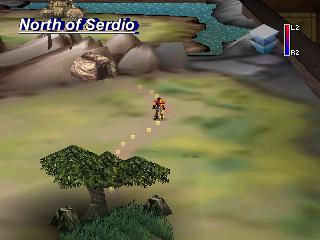
Released in late 1999, The Legend of Dragoon stands as a landmark title for the PlayStation, developed by SCE Japan Studio and published by Sony Computer Entertainment. As a turn-based role-playing game (RPG) spanning four discs, it offers an expansive, high-stakes journey through a world filled with magic, dragons, and imperial conquest. While it entered the market alongside heavyweights of the genre, its unique combat mechanics and atmospheric storytelling have earned it a lasting legacy among PlayStation enthusiasts.
An Epic Tale of Dragons and Empire
The story follows Dart, a traveling mercenary from the town of Seles. The narrative begins with a personal tragedy: after being attacked by a dragon in a nearby forest and rescued by a mysterious warrior, Dart returns to find his home ransacked by Imperial soldiers. With his close friend missing and taken to an "impenetrable" imperial fortress, Dart is thrust into a worldwide mission that evolves from a quest for vengeance into a struggle to save the world itself.
The game's setting is noted for its dark, mature atmosphere. As players progress through the four-disc epic, the world expands from sparse environments into intricately designed towns and dungeons featuring detailed animations, such as flowing rivers and waterfalls. This sense of scale is bolstered by a stellar musical score that complements the game's more serious narrative tones.
Innovative Combat via the Addition System
What sets The Legend of Dragoon apart from other contemporary RPGs is its "Addition" battle system. While the core gameplay remains turn-based, combat requires active engagement through timed button presses. These Additions allow players to extend attacks and increase damage by hitting specific buttons at precise moments.
Key features of the combat mechanics include:
- Skill Progression: Each character possesses a unique set of Additions that expand as they level up.
- Increasing Difficulty: While basic Additions may only require a single well-timed press, higher-powered moves demand faster and more complex button sequences.
- Visual Feedback: An on-screen pointer serves as an indicator of an enemy's remaining health, providing vital tactical information during encounters.
Visual Presentation and Technical Features
The game utilizes a classic RPG aesthetic, featuring real-time characters set against pre-rendered backgrounds. While some early environments may appear sparse, the visual quality reaches impressive heights in later stages of the game. A major highlight for many players is the inclusion of Full Motion Video (FMV) sequences. Though these breathtaking cinematic clips do not appear frequently in the early hours of the story, they provide a high-quality, "breathtaking" experience once unlocked.
Who Should Play The Legend of Dragoon?
This title is an ideal choice for fans of classic PlayStation-era RPGs who enjoy deep, character-driven stories and mechanical complexity. If you are a fan of the Final Fantasy series or enjoy gameplay that rewards player dexterity through rhythmic combat, this epic saga offers a rewarding challenge. It is perfect for players looking for a mature, atmospheric adventure that rewards patience with grand cinematic scale and intricate world-building.