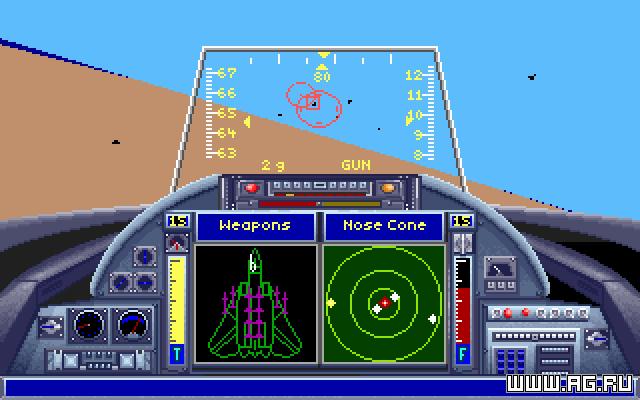
Top Gun: Danger Zone stands as a definitive entry in the early canon of licensed flight simulation titles, bringing the high-octane spirit of the iconic 1986 film to personal computers. Released in late 1991 for PC (DOS), this title was developed by Distinctive Software and published by Konami. As a dedicated flight combat simulation, it captures the essence of naval aviation and aerial warfare, allowing players to step into the cockpit of a fighter jet and experience the thrill of modern aerial dogfighting. Whether you are a long-time enthusiast of retro PC gaming or a fan of the Top Gun franchise, this release offers a compelling blend of tactical gameplay and cinematic atmosphere.
Flight Combat and Mission Structure
At its core, the game operates as a dedicated flight simulation that emphasizes tactical aerial combat and mission-based progression. The experience is divided into two primary modes: a campaign of eight distinct missions and a dedicated challenge mode featuring twelve one-on-one dogfight scenarios. Players must master aircraft handling, weapon systems, and situational awareness to succeed in these high-stakes environments. The simulation mechanics require careful management of altitude, speed, and targeting angles, rewarding players who can anticipate enemy movements and execute precise maneuvers. The dogfighting challenges serve as both a skill-building exercise and a direct test of the pilot's combat proficiency, providing a focused arena for aerial tactics without the pressure of broader campaign objectives.
Setting and Narrative Context
Set against the backdrop of the Top Gun universe, the game immerses players in a realistic military aviation environment. While it does not retell the film's exact narrative, it captures the professional and competitive atmosphere of naval fighter training and deployment. Players are tasked with executing critical aerial operations, navigating hostile airspace, and engaging enemy aircraft in controlled yet intense combat scenarios. The setting emphasizes the precision and discipline required of elite pilots, translating the cinematic excitement of the Top Gun brand into an interactive simulation. The missions are designed to test a pilot's ability to operate under pressure, mirroring the rigorous standards of real-world naval aviation programs.
Platform Availability and Features of Top Gun: Danger Zone
Originally developed for the PC (DOS) platform, the title was designed to leverage the processing capabilities of early 1990s home computers. The game supports both single-player campaign progression and local multiplayer experiences. Notably, it features offline versus multiplayer capabilities, including split-screen functionality that allows two pilots to compete directly against each other in dogfighting challenges. This local multiplayer support makes it a standout title for retro gaming setups and LAN-style sessions, offering a competitive edge that was highly valued during the DOS era.
Key Features and Target Audience
- Eight Unique Campaign Missions: Each mission presents distinct tactical objectives and varying levels of aerial threat.
- Twelve One-on-One Dogfight Challenges: Focused combat scenarios designed to test raw piloting and weapon-handling skills.
- Split-Screen Multiplayer: Local versus mode allows two players to engage in direct aerial combat on a single system.
- Authentic Flight Simulation Elements: Emphasis on aircraft dynamics, targeting mechanics, and mission planning.
The game is best suited for players who appreciate classic flight simulation mechanics and the historical context of early PC gaming. It appeals strongly to enthusiasts of the Top Gun franchise, fans of tactical aerial combat games, and collectors of DOS-era simulation titles. The title's focus on precise controls, mission-based progression, and local multiplayer competition ensures it remains a notable entry for those who value strategic depth and retro gaming authenticity. Its enduring appeal lies in its straightforward yet challenging simulation design, which captures the intensity of naval aviation without relying on modern graphical conveniences.