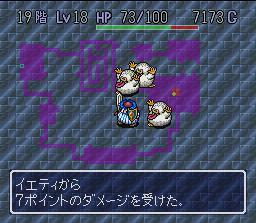
Torneko's Great Adventure: Mystery Dungeon is a pioneering role-playing video game developed by Chunsoft, released for the Super Nintendo Entertainment System (SNES) on September 19, 1993. Standing as the inaugural title in the long-running Mystery Dungeon franchise, this game serves as a unique spinoff of the legendary Dragon Quest series. It introduces players to Torneko (known as Taloon in the unreleased North American localization), a weapon merchant originally featured in Dragon Quest IV. The title is celebrated for its successful fusion of traditional JRPG elements with the challenging, unpredictable structure of the roguelike genre.
Story and Setting
The narrative begins in the town of Lakanaba, where Torneko lives with his wife, Tessie, and their son, Tipper. Torneko's primary ambition is to establish his own store and make it the finest in the land. Driven by rumors of a bountiful treasure hidden within a mysterious dungeon, he decides to embark on a perilous journey. After a long trek across oceans and mountains, the family arrives near the dungeon and sets up a shop near a large tree in a new village.
While Torneko is eager to explore the depths, the local King initially refuses permission, citing the danger involved. However, the monarch offers a reprieve: if Torneko can retrieve a specific jewel box from a smaller "Small Mystery Dungeon," he will be granted access to the main labyrinth. This setup allows the player to transition from a narrative-focused merchant into a dungeon-crawling adventurer.
Torneko's Great Adventure: Mystery Dungeon Gameplay and Mechanics
The game adopts a roguelike framework that relies heavily on randomized dungeon layouts and turn-based combat. The gameplay mechanics draw clear inspiration from classic PC roguelikes like Rogue, featuring a "Dragon Quest skin" over a complex system of resource management and exploration. Players navigate through procedurally generated floors filled with monsters recognizable from the Dragon Quest universe.
Combat is turn-based, but strategy involves more than just attacking. Players must manage Torneko's inventory carefully, as items often require identification scrolls to reveal their properties. A hunger mechanic adds pressure, requiring players to eat food to survive, though certain equipment can negate this need. The game introduces several distinct mechanics to the genre:
- Facing Mechanics: The direction Torneko is facing affects vulnerability; attacks from the side or back deal more damage.
- The Run Move: This command allows the character to traverse a straight line instantly, skipping items or enemies in the path.
- Map System: A toggleable map overlay helps players track their location and explore the fog of war, though paths must be discovered manually.
- Item Throwing: Most items in the inventory can be thrown at enemies, adding a layer of versatility to combat.
Progression and Features
Unlike traditional RPGs where gold is used to purchase new gear, the economy in Torneko's Great Adventure: Mystery Dungeon focuses on meta-progression. Gold earned from defeating monsters is converted upon exiting a dungeon and used to upgrade Torneko's home and shop. These upgrades eventually unlock features like a vault to store items between runs.
Death in the dungeon results in losing progress and returning to the village, though the player retains half of their gold. This "permadeath" loop encourages careful planning and makes every run tense and engaging. The game also includes a bonus dungeon with 30 floors that serves as a high-level challenge for veterans.
Who It Appeals To
This title is a must-play for fans of the Dragon Quest series who are interested in the game's expansive lore. It also appeals to veterans of the roguelike genre who appreciate the challenge of randomized dungeons and the tension of permanent death. With its unique blend of turn-based combat, item management, and a lighthearted story, Torneko's Great Adventure: Mystery Dungeon remains a classic of the SNES library.