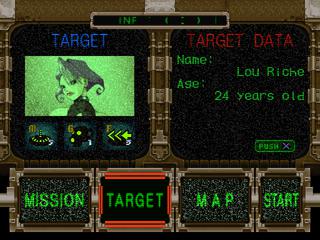
Released on August 6, 1998, Trap Gunner stands as a unique blend of strategy, action, and puzzle elements on the original PlayStation. Also known in Europe as Trap Runner and officially titled Trap Gunner: Countdown to Oblivion in North America, this title was published by Atlus and developed by the then-named Racdym. At first glance, the game might appear to be a straightforward fighting title, but it quickly reveals itself as a complex tactical experience. Players engage in one-on-one combat where positioning, resource management, and environmental control are just as vital as raw reflexes.
Genre and Core Gameplay Mechanics
Describing Trap Gunner requires looking past traditional genre boundaries. The game operates as a hybrid strategy, shooting, and fighting experience designed for one or two players. Combat takes place on structured arenas where opponents must outmaneuver each other while managing limited tactical resources. Rather than relying solely on health bars and combo strings, victory demands strategic trap placement and timing. Each match revolves around controlling space, predicting enemy movements, and executing devastating tactical setups. The tutorial mode provides narrated breakdowns of these core concepts, making it accessible for newcomers while still offering advanced tactical depth for veteran players.
Story and Setting
The game is set in a high-stakes, covert operations environment where players control highly trained special agents. These operatives are specifically skilled in assassination and demolitions, pitting them against one another in a fight to the death. The narrative framework serves primarily as a backdrop for the competitive and story modes, emphasizing the lethal precision and tactical expertise required to survive. While not heavily focused on cinematic exposition, the setting reinforces the game's intense, methodical combat loop, where every decision carries permanent consequences.
Notable Features and Character Roster
At the heart of the experience is its deep tactical customization. Players can choose from nine distinct operatives, including six main characters and three unlockable sub-bosses. Each agent features unique walking speeds, attack rates, health pools, and specialized projectile weapons. More importantly, every character begins with a distinct set of traps that define their playstyle. The game introduces six different trap types, with the most prominent including:
- Switch Detonator: A remotely triggered explosive that allows players to detonate traps at will, making it one of the most lethal options in the game.
- Mine: A ground-based hazard that activates automatically when an opponent steps on it.
- Bomb: A secondary explosive that requires a Switch Detonator or nearby mine explosion to trigger.
- Force Panel: A directional launcher that propels opponents into different areas, often setting them up for deadlier traps.
This system encourages players to experiment with different agents and develop personalized tactical approaches. The combination of projectile combat, melee strikes, and environmental manipulation creates a highly dynamic battlefield where adaptability is key.
Platform Availability and Target Audience
Trap Gunner was exclusively released for the original PlayStation, making it a notable entry in the console's late-era library. Despite its innovative design, the game received minimal marketing during its initial run, allowing it to slip under the radar alongside other quietly released titles from 1998. Today, it remains a cult classic for fans of tactical combat and retro gaming. The game is best suited for players who enjoy strategic depth, competitive one-on-one matchups, and games that reward careful planning over button-mashing. Its straightforward controls, coupled with complex tactical layers, make it an enduring title for enthusiasts of hybrid strategy-action games.