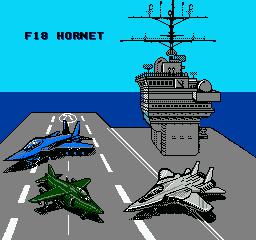
Overview of Ultimate Air Combat
Ultimate Air Combat stands as a unique entry in the library of 8-bit aviation titles, developed and published by Activision for the Nintendo Entertainment System and the Family Computer. Released in the United States on August 7, 1992, this semi-realistic combat flight simulator represents a late-era effort to bring complex dogfighting mechanics to the classic console. While the NES is often celebrated for its platformers and role-playing games, this title attempts to bridge the gap between arcade action and technical flight simulation, offering players a challenging aerial experience that pushes the boundaries of the hardware.
The game distinguishes itself from other similar titles of its era through a distinct visual approach. Most flight simulators on the NES were limited to a single perspective, but Ultimate Air Combat allows players to switch between a cockpit view and an isometric view throughout the missions. This dual-perspective system is central to the gameplay, allowing players to balance the immersion of piloting the aircraft with the tactical awareness needed to manage the battlefield.
Gameplay Mechanics and Viewpoints
The core of Ultimate Air Combat lies in its "semi-realistic" classification. This genre designation implies that the game attempts to simulate the physics and management of flight, rather than simply being a shooter where the plane flies itself. Players must manage their aircraft's performance while engaging enemy forces in dogfights. The inclusion of the isometric view is a notable mechanic that sets this title apart. By allowing the camera to switch from the first-person cockpit perspective to a top-down tactical view, the game provides a layer of strategic depth. This isometric angle helps players track multiple targets and navigate the airspace more effectively than a cockpit view alone would allow.
The simulation aspect requires players to engage with the mechanics of flight, making it a distinct challenge compared to the more arcade-heavy shooters available on the platform. The controls are designed to reflect the sensitivity of a jet, demanding precision from the player as they maneuver through combat scenarios.
Story and Setting
The narrative backdrop of Ultimate Air Combat is set in a near-future timeline. This setting is crucial to the game's design, as it serves to justify the presence of modern-day aircraft equipped with highly advanced weapons systems. The blend of recognizable airframes with futuristic technology creates a unique aesthetic, allowing for weaponry and combat dynamics that exceed the limitations of contemporary military aviation at the time of the game's release. This near-future setting provides a backdrop for missions that require players to utilize cutting-edge technology to achieve victory.
It is important to note the game's history in its home market. In Japan, the game was released under the title Aces: Iron Eagle III. While the Japanese release shares its name with a film of the same period, the source material indicates that the game is barely based on the movie. The connection is primarily thematic, sharing a focus on military aviation and aircraft, rather than a direct narrative adaptation of the film's events.
Notable Features
- Dual View System: The game features a distinctive switch between a cockpit view for immersion and an isometric view for tactical awareness.
- Visuals: Activision aimed to maximize the NES hardware, resulting in relatively good graphics for the console that distinguish the jets and environments.
- Semi-Realistic Simulation: The game attempts to balance arcade action with the technical management required of flight simulators.
Platform Availability and Appeal
Ultimate Air Combat is available exclusively for the Nintendo Entertainment System (NES) and the Family Computer (Famicom). As a title released in 1992, it occupies a specific place in the console's history, arriving during the final years of the 8-bit era. This timing makes it a notable piece of hardware for retro gaming historians and collectors.
The game appeals primarily to flight simulation enthusiasts who enjoy the technical challenge of managing aircraft mechanics within the constraints of older hardware. It is also a must-play for completists of the Activision library and fans of the NES who appreciate titles that attempt complex genres like simulation on 8-bit technology. The unique isometric perspective ensures that even years after its release, the game offers a distinct gameplay experience that remains relevant for those interested in the evolution of aviation games.