Uplink: The Definitive Hacker Experience
Uplink stands as a monumental title in the history of independent game development, offering players an unparalleled immersion into the world of cyber-espionage. Released initially in September 2001 by the British studio Introversion Software, this strategy and simulation game cast players as freelance computer hackers operating in a near-future setting. Unlike traditional games that abstract the mechanics of computing, Uplink places you directly behind the keyboard, where every keystroke and click mirrors the actions of your digital alter ego. This unique design philosophy creates a tense, high-stakes atmosphere that remains relevant decades after its original release, solidifying its status as a genre-defining classic.
Gameplay Mechanics and Immersive Interface
The core gameplay loop of Uplink revolves around performing legally dubious jobs for major corporations. You begin as a novice agent on the Uplink Internal Services server, a high-tech bulletin board system where clients post contracts and hire hackers. Your tasks range from the simple to the incredibly complex, including stealing research data, sabotaging rival companies, laundering money, erasing evidence, and framing innocent individuals.
What truly sets the game apart is its interface. The screen is your screen, and the game does not hide the complexity of the process. To avoid being traced and punished with fines or a game-over scenario, players must meticulously "bounce" their signal off various servers around the world before connecting to the target. This requires navigating a world map and chaining connections to obscure your origin. The tension is palpable, amplified by the audio cues of your trace tracker beeping as the target’s security system homes in on your gateway computer. This mechanic demands patience and strategic planning, as taking shortcuts can lead to immediate failure.
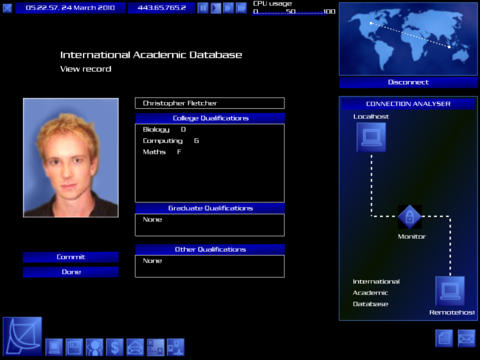
As your experience level increases, you unlock more dangerous and profitable missions. The game also features a fully working stock market that you can speculate on and even influence through your hacking activities. Additional features allow you to modify academic or criminal records, divert money from bank transfers into your own accounts, and engage in the construction of deadly computer viruses. Profits earned are reinvested into upgrading your computer systems, purchasing new software, and acquiring hardware tools necessary to tackle higher-security targets.
Story, Setting, and Platform Availability
Set a few years in the future, the narrative of Uplink is driven by the contracts you accept and the reputation you build within the underground digital economy. There is no traditional linear plot; instead, the story emerges from the consequences of your actions. Whether you are breaking into the Global Criminal Database or crippling a corporation with a virus, every decision impacts your standing in the cyber world. The setting serves as a period piece of its time, reflecting the early 2000s fascination with hacking culture and the dawn of the modern internet age.
Originally a rare commodity available only in boxed copies, Uplink is now widely accessible across multiple platforms. It is available for PC, macOS, Linux, and iOS, allowing a new generation of gamers to experience this indie milestone. The game has been preserved and distributed through major digital storefronts like GOG and Steam, ensuring its longevity. Its availability on modern operating systems, coupled with community-created mods that update its user interface, ensures that the gameplay remains smooth and enjoyable for contemporary audiences.
Notable Features and Target Audience
Uplink appeals to players who enjoy deep simulation, strategy, and tech-focused narratives. It is particularly suited for those interested in cybersecurity concepts, even if presented in a gamified and simplified manner. The game’s success lies in its ability to make the technical process of hacking feel tangible and urgent. It requires no prior coding knowledge but rewards logical thinking and careful execution.
- Realistic Hacking Simulation: The bounce system and trace mechanics provide a challenging and authentic feel to cyber-espionage.
- Economic Systems: The dynamic stock market and upgrade systems add layers of strategy beyond simple mission completion.
- Indie Heritage: As a product of a tiny British team produced on a shoestring budget, it represents the pinnacle of early indie innovation.
- Cross-Platform Support: Available on PC, Mac, Linux, and iOS, making it accessible to a wide range of users.
While its Metacritic score of 75.00 reflects its solid, if niche, appeal, the game’s legacy far exceeds its numerical rating. It is a testament to the power of immersive design and remains a must-play for fans of strategy and simulation genres who appreciate the roots of modern gaming indie culture.