Warhammer 40,000: Gladius – Relics of War Overview
Warhammer 40,000: Gladius – Relics of War stands as the first 4X turn-based strategy game set within the expansive universe of Games Workshop’s iconic tabletop franchise. Released on July 11, 2018, by Proxy Studios and Slitherine, this title invites players into the grim darkness of the 41st Millennium on the war-torn planet of Gladius Prime. Originally built on an improved version of the Pandora game engine, the game offers a digital adaptation of the "explore, expand, exploit, and exterminate" gameplay loop, tailored specifically for the violent and unforgiving nature of the Warhammer 40K setting.
Genre and Core Gameplay Mechanics
At its heart, Gladius is a 4X sandbox strategy game that prioritizes tactical combat over the complex diplomatic negotiations found in traditional 4X titles. The gameplay revolves around commanding one of several factions to dominate the planet’s resources and territory. The map settings are highly customizable, allowing players to adjust variables such as map size, wildlife density, resource distribution, and biome types to suit their preferred difficulty and playstyle.
Unlike many strategy games where diplomacy plays a central role, Gladius strips away these elements to focus purely on conflict. Players must construct cities, build fortifications, and harvest resources to fuel their war machine. A key mechanic involves securing powerful ancient artefacts scattered across the randomly generated world, which provide significant advantages in battle. Additionally, the game features a robust technology tree that progresses through different tiers, requiring players to research prerequisites to unlock advanced units and capabilities.
Combat is the central pillar of the experience. Units do not stack, and battles take place on a hex-based grid. Players can command a wide array of devastating weaponry, issue city edicts, and deploy tactical operations. The game allows for queuing multiple units simultaneously, enabling players to watch their armies move and attack in a fluid, cinematic sequence. While the base game lacks a preset campaign, it includes a questline option that guides players through emergent narrative events, nudging them toward specific strategic objectives.
Story and Setting: The War for Gladius Prime
The narrative backdrop is one of terror and survival. Gladius Prime was once a planet of archaeological interest, known to Imperial scholars for the ancient relics unearthed there. However, the colonization of this world awakened an unspeakable horror from an ancient past, trapping its citizens in a terrible war for survival. Now, the planet is a battlefield where four major factions engage in a brutal struggle for dominance.
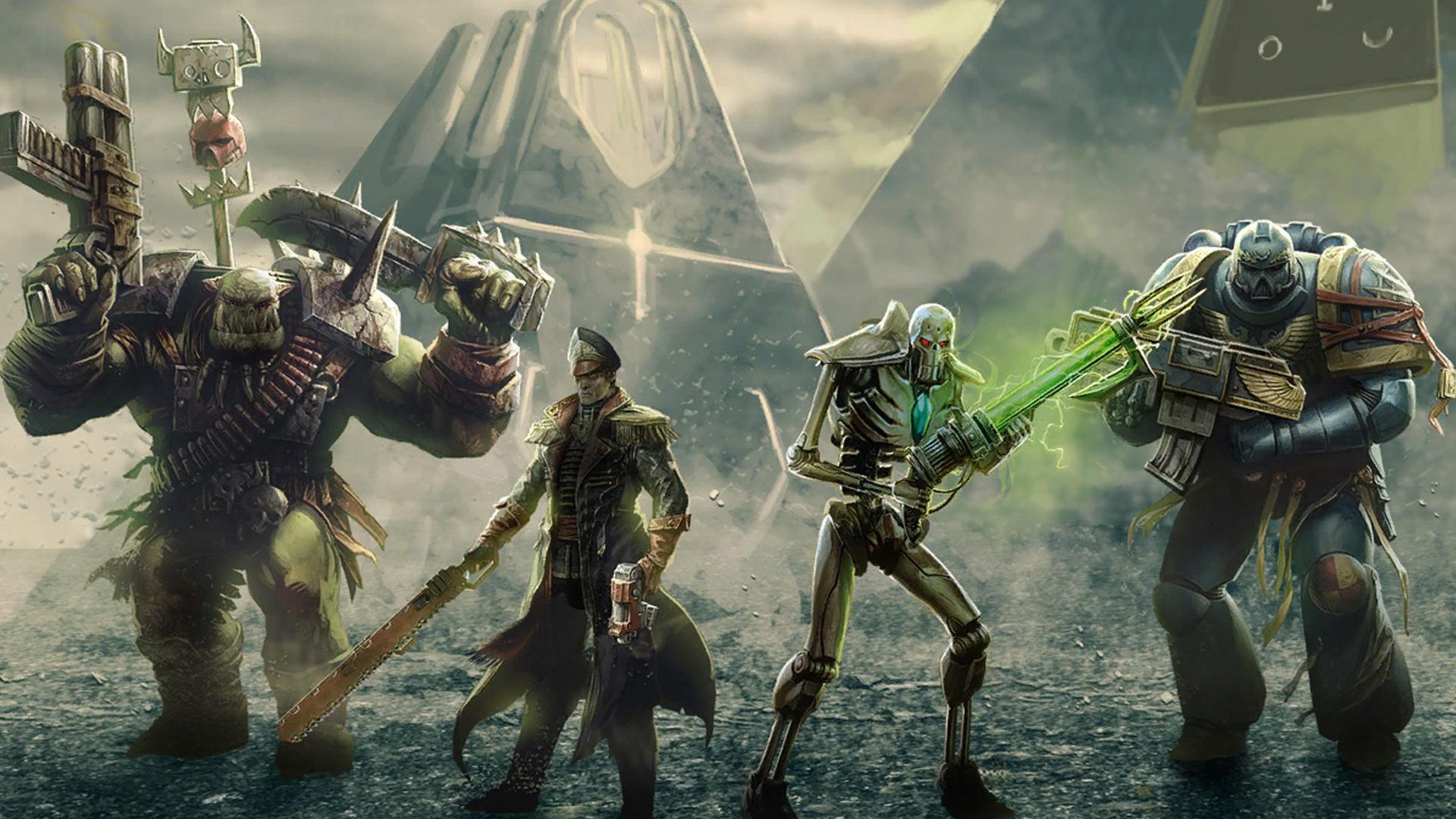
Each faction in the base game has a distinct destiny and storyline that unfolds as the war progresses. The available factions include:
- Astra Militarum: The vast, cannon-fodder infantry of the Imperium. They rely on overwhelming numbers, artillery, and mechanized support rather than individual super-soldier prowess.
- Space Marines: Genetically engineered super-soldiers who represent the pinnacle of humanity’s military might. They are tough, fast, heavily armored, and heavily armed, offering a more aggressive and resilient playstyle.
- Orks: Fungal brawlers known for their resilience, bloodthirstiness, and unique "waaagh!" energy. They bring a chaotic, melee-focused style of warfare to the table.
- Necrons: Ancient, undead robot warriors with a tragic history involving the Old Ones and the C’Tan. They offer a high-tech, durable approach to combat.
As the dust settles on Gladius Prime, tainted by the warp, only one faction can emerge victorious. The game’s narrative is deeply embedded in the lore, with each faction’s technology tree and units reflecting their canonical characteristics.
Notable Features and Platform Availability
Warhammer 40,000: Gladius – Relics of War is available on PC and Linux. While the base game features four iconic factions, the title has been supported by extensive DLC that introduces additional armies, such as the Chaos Space Marines and the Tyranids, expanding the strategic depth. The game features hero units that possess distinct special abilities and can be equipped with items ranging from advanced grenades to powerful weaponry.
The presentation is a standout feature, with units rendered in high detail and animations designed to be visually satisfying. The soundtrack complements the grimdark ambiance of the Warhammer universe, enhancing the immersion of the constant state of war. Although the game shares visual similarities with later entries in the Civilization series, its lack of diplomacy and focus on pure military engagement distinguishes it as a unique entry in the 4X genre. It appeals to fans of turn-based strategy who prefer direct conflict over political maneuvering, as well as long-time adherents of the Warhammer 40K lore looking for a digital battlefield to test their tactical prowess.