Overview
Released on October 24, 2017, Yomawari: Midnight Shadows stands as a compelling entry in the atmospheric horror genre, developed by Nippon Ichi Software, Inc. While it carries the legacy of its predecessor as a follow-up title, it introduces players to a completely new narrative that functions as a soft reboot. The experience centers on dread, exploration, and suspense, offering a distinct journey that requires no prior knowledge of earlier installments. By blending top-down adventure mechanics with psychological tension, the game establishes itself as a unique title that prioritizes lingering unease over traditional combat or graphic terror.
Story and Setting
The narrative follows two best friends, Yui and Haru, who are enjoying a summer fireworks display before their journey home. A mysterious attacker suddenly separates them, forcing each girl to navigate the dark, spirit-infested town alone. Players alternate between Yui and Haru, exploring haunting and bizarre locations while searching for clues to reconnect. The setting shifts from a warm, communal event into an isolating environment where familiar neighborhoods become labyrinths of danger. The story unfolds gradually through environmental storytelling and item discovery, building a mystery that lingers long after the credits roll.
Yomawari: Midnight Shadows Gameplay Mechanics
Categorized under Strategy, Adventure, and Action, the title utilizes a top-down perspective to guide players through its suspenseful world. The core gameplay revolves around exploration, puzzle-solving, and item management rather than direct confrontation. Armed primarily with a flashlight and a limited inventory, players must track down keys, tools, and notes to progress the story. Encounters with ghostly entities demand strategic responses based on their specific behaviors. Some creatures can be repelled by shining a light, others passively slow movement speed, and some require careful route planning to hide or escape their gaze. This variety of mechanics encourages players to observe, adapt, and think carefully before making their next move.
Notable Features
- Atmospheric Tension: The game deliberately avoids relying on frequent jump scares, instead cultivating a persistent sense of dread through silence, environmental storytelling, and psychological horror.
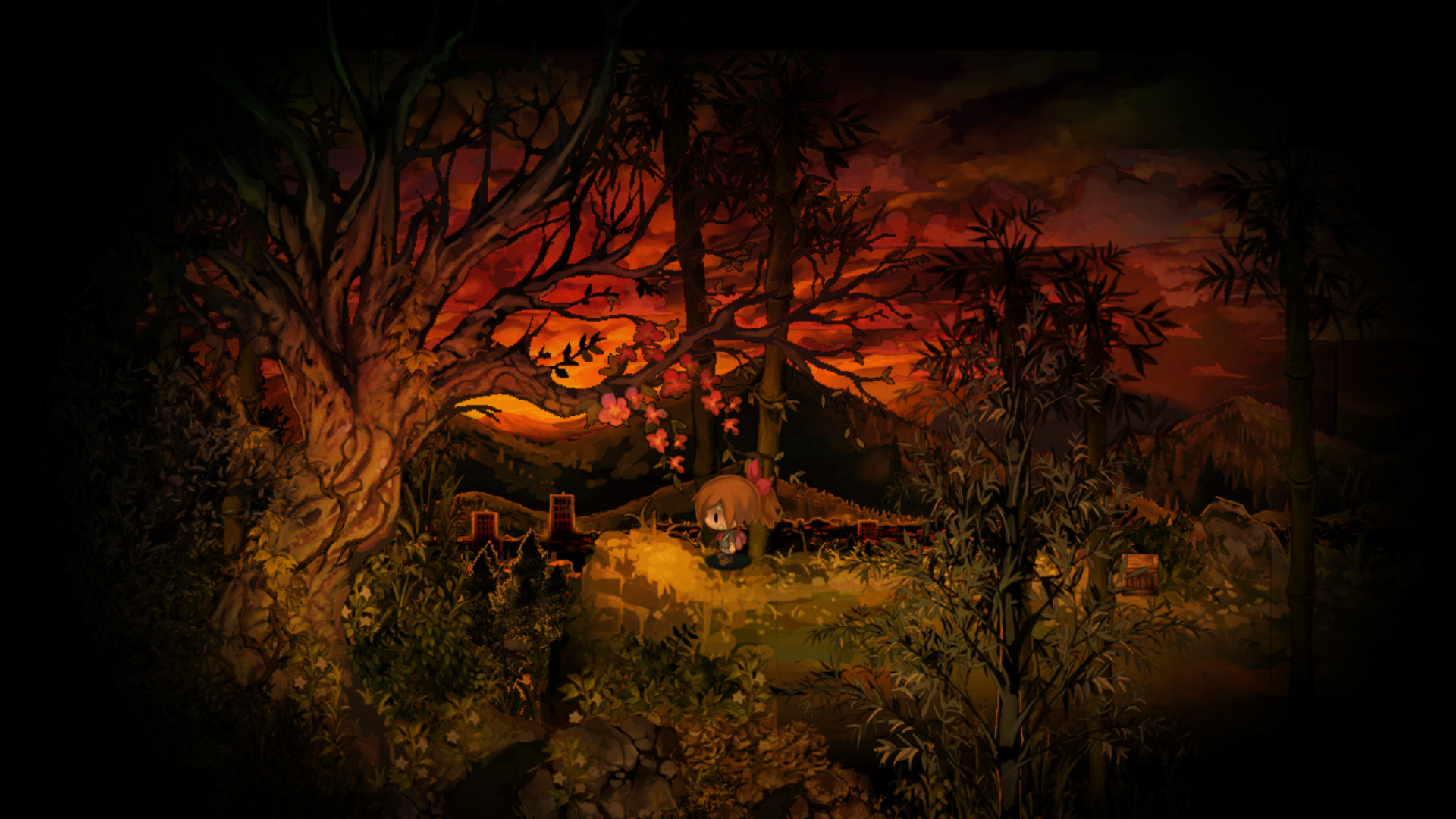
- Contrasting Art Style: Characters are rendered in a chibi, cutesy aesthetic that sharply contrasts with the dark, richly colored, and heavily shadowed environments, emphasizing the intrusion of terror into innocence.
- Immersive Sound Design: With minimal background music, the experience leans heavily on ambient noises, unidentifiable skitters, and sudden audio cues to heighten suspense and guide player awareness.
- Accessible Progression: The tutorial is straightforward yet impactful, setting clear expectations while introducing the core mystery that drives the entire narrative forward.
Platform Availability
Yomawari: Midnight Shadows is available across multiple systems, including PC, PlayStation 4, and PS Vita. The game has been optimized to deliver its atmospheric experience across different screens. On larger displays like the PlayStation 4, the dark environments, rich color palettes, and shadow work become particularly immersive. Meanwhile, the PS Vita version maintains the same haunting visuals and tight controls, making it a strong choice for portable horror adventures. PC players benefit from a responsive top-down interface that enhances puzzle-solving and exploration.
Who It Appeals To
- Fans of psychological and atmospheric horror who prefer lingering dread over graphic imagery
- Players who enjoy top-down adventure games with a focus on exploration, puzzles, and item tracking
- Audiences seeking a suspenseful, story-driven experience that emphasizes atmosphere and sound design
- Those who appreciate contrasting art styles and environmental storytelling in indie and niche horror titles