007 First Light joins an ever-expanding list of 2026 games without up-to-date AMD FSR or Intel XeSS support
If you own a recent Nvidia GeForce RTX graphics card, you likely haven't given much thought to the fact that every major game release this year supports the full suite of DLSS AI technology. On the flip side, if your gaming PC is powered by an AMD Radeon or Intel Arc card, it probably feels like today's biggest titles are short-changing you yet again.
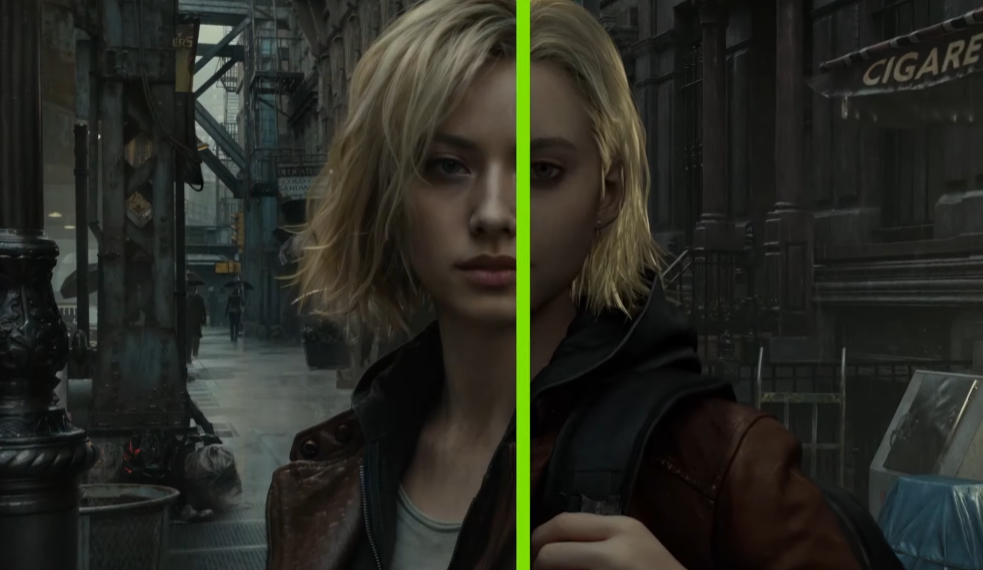
IO Interactive’s latest Bond adventure, 007 First Light, is another entry to add to the list of 'Where's my FSR 4/XeSS?' games. Now that the title is out in the wild, we can finally see exactly which upscaling and frame generation systems it supports. As Nvidia highlights in its latest blog post, RTX owners get full access to DLSS 4.5 Super Resolution and Multi Frame Generation.
The game's options interface may be slightly clunky, but it allows players to easily switch between DLAA for pixel-perfect anti-aliasing or scale the frame down with Ultra Performance upscaling. Unfortunately, that isn't the case for AMD FSR. The game only offers Quality, Balanced, and Performance modes—there is no native AA or Ultra Perf mode available. Even worse, there is no FSR Frame Generation included. For owners of the RX 9000-series, this means you don't get the newer FSR 4; instead, you are limited to version 3.1.5. Intel's XeSS support is notably absent entirely.
A Growing List of Limited Support in 2026
007 First Light isn't the only major release this year to offer such restrictive options. Other prominent titles are showing similar limitations regarding modern upscaling technologies:
- Forza Horizon 6: Features a decent spread of FSR and XeSS modes, including Native AA, but it is limited to FSR 3.1.5 with no AMD or Intel frame gen algorithms.
- Pragmata: Includes FSR 4.1 but lacks both frame generation and XeSS support.
- Resident Evil: Requiem: Offers the full suite of FSR (versions 3 and 4) alongside DLSS 4, yet it still omits XeSS.
The issue extends beyond simple upscaling as well; utilizing path tracing or AI-based ray tracing denoisers remains difficult on AMD and Intel GPUs. While Intel lacks high-end hardware to support both features simultaneously, the latest Radeon cards certainly have the capability—though AMD has yet to release its FSR Redstone denoiser.
Is Nvidia Blocking Competitor Technologies?
The more conspiratorial among us might view this as a deliberate plot by Nvidia to contractually exclude competitors' technologies. However, you can doff those tinfoil hats for now. Keita Iida, Nvidia's vice president of developer relations, clarified the situation:
"Nvidia does not and will not block, restrict, discourage, or hinder developers from implementing competitor technologies in any way," says Iida. "We provide the support and tools for all game developers to easily integrate DLSS if they choose and even created Nvidia Streamline to make it easier for game developers to add competitive technologies to their games."
The decision not to fully support the latest version of AMD FSR or XeSS, along with their full set of performance-enhancing features, is entirely up to the developers. IO Interactive and Playground Games simply chose to skip FSR 4 and AMD's frame gen in 007 First Light and Forza Horizon 6, respectively.
While one could argue that Nvidia's sheer dominance of the discrete graphics card market makes it logical for a studio to only target the most common GPU feature set, it begs the question: if you have already done some of the work to implement FSR or XeSS, why not include the full suite?
FSR 3.1 frame generation may not be the best on the market—every other system produces noticeably superior results—but it is better to let gamers choose for themselves. If a player prefers superior frame rates over perfect graphics, that option should be there. As things currently stand, only one group of PC gamers has that freedom, and it's the RTX crowd.