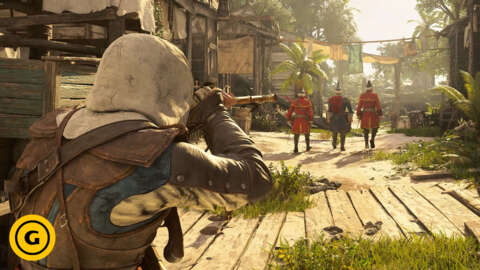
The Caribbean sun glints off the turquoise waves, but a thunderous broadside volley shatters the peace. For many players, this scene represents the definitive era of the franchise, where naval exploration and stealth intersected with unparalleled grit. With the announcement of the 10 Biggest Changes to Assassin's Creed 4: Black Flag Resynced, it has become clear that Ubisoft is not merely polishing old textures; they are fundamentally rebuilding the experience from the ground up.
Analyzing the 10 Biggest Changes to Assassin's Creed 4: Black Flag Resynced
Unlike previous efforts that focused on simple remasters, Resynced represents a full-scale remake designed to modernize the mechanics of Edward Kenway's journey. The most significant departure from the 2013 original lies in the fundamental rhythm of engagement. The combat has been reworked into an action-oriented system that prioritizes speed and momentum.
Where the original could occasionally feel heavy or encumbered by its own weight, this new iteration emphasizes a much faster pace. This transition aims to eliminate the stagnation often found in mid-tier pirate skirmishes, replacing it with more fluid, high-stakes encounters. The scale of combat has been expanded to allow for grander fights, suggesting that enemy density and engagement patterns have been rebalancing to match this new velocity.
Expanded Arsenals and Tactical Depth
One of the most persistent criticisms of the original Black Flag was the lack of meaningful variety in the player's toolkit. One of the 10 Biggest Changes to Assassin's Creed 4: Black Flag Resynced is the introduction of a more robust weapon system to rectify this. The implementation of new weaponry changes the tactical landscape of both land and sea through several key improvements:
- Diversified Melee Options: Moving beyond the standard saber to include implements that offer different reach and damage profiles.
- Enhanced Tool Utility: A greater emphasis on using the environment and specialized gear during boarding actions.
- Strategic Depth: New weapons require players to adapt their approach to different enemy types, preventing a repetitive combat loop.
Modernizing the Interface and Navigation
Navigating the vast waters of the West Indies requires precision, and the original HUD often struggled to provide clarity during chaotic naval battles. The developers have introduced a double-edged HUD, a sophisticated UI overhaul that utilizes two distinct mini-map indicators. This dual-system approach allows players to maintain situational awareness of both their immediate surroundings and the broader maritime horizon simultaneously.
This interface redesign is paired with improved environmental fidelity, ensuring that the legendary vistas of the Caribbean remain the centerpiece of the experience. By reducing visual clutter and providing more intuitive navigational cues, Resynced attempts to bridge the gap between classic pirate fantasy and modern technical requirements.
The Verdict on a Reimagined Era
The transition from a remaster to a full remake is a massive undertaking that carries significant risk. However, the early indicators for the 10 Biggest Changes to Assassin's Creed 4: Black Flag Resynced suggest a necessary evolution. By addressing core mechanical limitations—specifically regarding combat speed and weapon depth—Ubisoft is attempting to preserve the soul of the franchise while discarding its aging bones. If the promised fluidity in both naval and terrestrial combat holds true, this remake may well set the new standard for how legacy titles are resurrected.