A Necromantic War: Skull Horde Combines Vampire Survivors Tactics with Teamfight Tactics Strategy
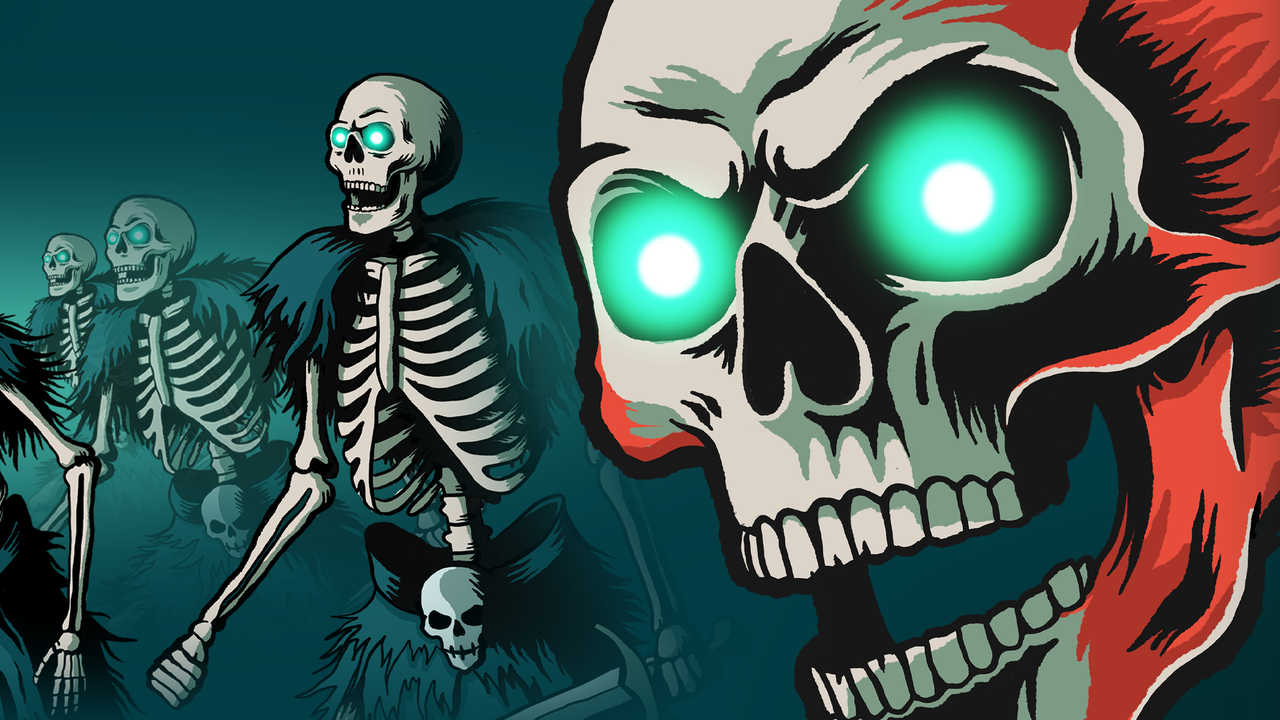
In Skull Horde, a floating magical skull goes to war with his own headless body in this necromantic roguelike that combines Vampire Survivors-like combat with Teamfight Tactics-inspired army building. The premise is unique: after a necromancer's body betrays its head, burying it to pursue immortality, the skull rises to summon a skeletal army against its former self. This setup defines the core loop where you gather skeleton warriors, fight weird fleshy monsters, and battle your way back to your own body.
Building Your Bone Legion Through Strategic Synergies
The gameplay functions as a hybrid between an auto-battler and a rogue-like. You float through bleak dungeon levels followed by minions that automatically attack nearby enemies. Between floors, you can recruit more skeletons and organize your army, managing a roster of unit types ranging from armoured warriors to ice mages to skeletal rat swarms.
However, army composition requires tough choices:
- An army is limited to hosting only six different types of units at once.
- Combining three of the same kind of minion creates a stronger veteran.
- Merging three veterans unlocks a champion, which can activate powerful set bonuses if they share keywords like Vanguard, Siege, or Horde with two other champions.
The shop offers limited choices, meaning you cannot always grab exactly what you need to complete your ideal synergy chain.
The Risk of Time and the Floating Skull's Vulnerability
Time is a critical resource in Skull Horde; the longer you spend on a floor, the more enemies spawn, leading to potential overwhelm. In my first run, I attempted a mostly Vanguard-based force of tough warriors backed by healing clerics, but this endurance build forced me to be ruthless and efficient rather than defensive.
While you cannot directly control your skeletons, you can command them to gather on your position or cast a fury spell to enhance their combat stats temporarily. The optimal strategy involves racing between priority targets like treasure chests and elite enemies before cutting losses for the portal. However, your floating skull is vulnerable; any damage taken by the skull is shared across all minions without regard for their individual defenses.
This mechanic forces you to weigh risk versus reward constantly:
- Is it better to charge ahead to save time?
- Should you hide behind your boney pals to minimize skull damage?
Unlocking New Paths Beyond the Vanguard Archetype
My initial attempt ended in defeat against a disgusting flesh tower creature that spawned minions to slow my army. While skill points unlocked allow for specialization, I felt funneled into repeating similar Vanguard-heavy builds rather than exploring other possibilities. Although there are multiple unlockable characters, the next one, Garg, requires a high armor multiplier, which naturally pushes players toward tanky strategies.
Despite this perceived limitation, the potential for diverse strategies remains intriguing:
- Horde builds that sacrifice waves of minions to trigger death-based buffs and respawn timers.
- Wizards who drop arcane debuffs supported by Troupe units using magical song and dance.
While I feel a slight disadvantage trying these paths early on, the depth of the Vanguard archetype still holds promise for those returning to their MMO guild days. Skull Horde is available on Steam now and is currently 25% off until April 24.