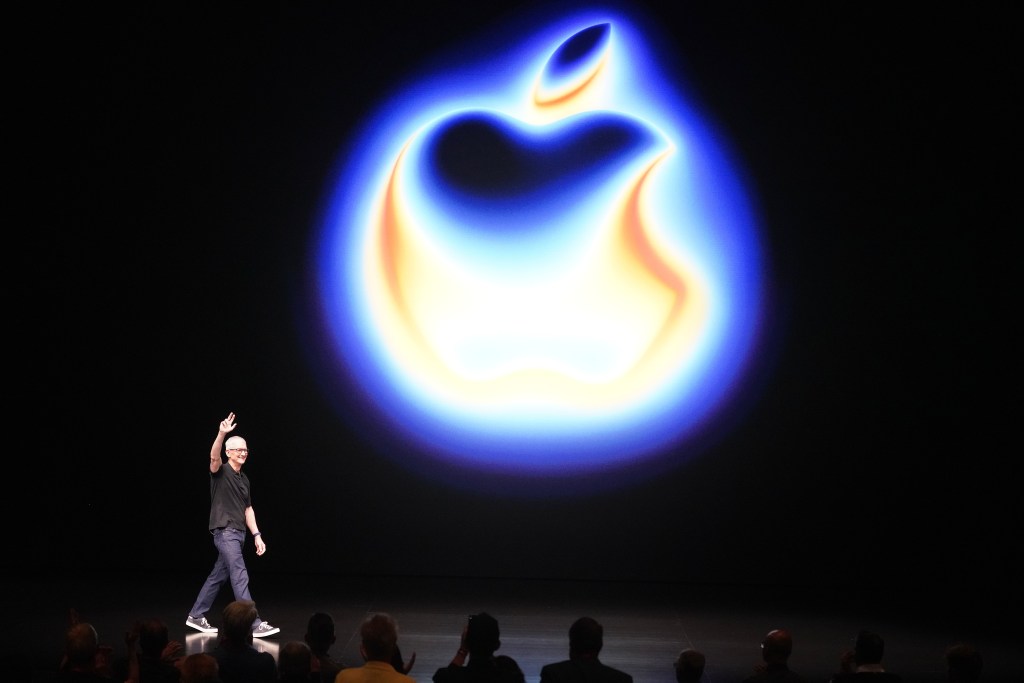
Examining Tim Cook’s 15-year legacy as CEO of Apple reveals a masterclass in operational excellence and scale. While the industry often credits Steve Jobs with Apple's creative identity, Cook proved that supply chain mastery can build a $4 trillion empire. As he prepares to step down on September 1, handing the reins to hardware engineering veteran John Ternus, his impact on the tech landscape remains undeniable.
From Logistics Mastery to a $4 Trillion Empire
When Cook assumed the role of CEO in 2011, Apple was a formidable player with a market capitalization sitting just under $350 billion. He did not merely maintain that momentum; he accelerated it with precision. Drawing on his background as the company’s former Chief Operations Officer, he transformed Apple's global reach.
Under his leadership, Apple’s valuation crossed the $1 trillion mark in 2018 and eventually surged to an unprecedented $4 trillion by 2025. This growth was the result of optimizing the most complex supply chain in the world.
The financial results of this optimization are staggering:
- Net Income: Apple reported a net income of $112 billion by the end of the 2025 fiscal year.
- Retail Expansion: Despite global pandemic disruptions, Cook added roughly 200 stores to the global network.
- Market Resilience: The company navigated extreme macroeconomic volatility and U.S.-China geopolitical tensions successfully.
Defining Tim Cook’s 15-year legacy as CEO of Apple through Hardware
While critics often argued that Cook lacked a "product visionary" label, his tenure saw the expansion of the Apple ecosystem far beyond the iPhone and Mac. He transitioned the company from a device-centric manufacturer to a multi-category powerhouse. This evolution is a central pillar of Tim Cook’s 15-year legacy as CEO of Apple.
Key milestones in hardware diversification include:
- Wearables: The 2015 launch of the Apple Watch turned the brand into a leader in health and fitness.
- Audio: The 2016 introduction of AirPods disrupted the wireless headphone market.
- Computing Evolution: The transition from Intel processors to proprietary Apple Silicon between 2020 and 2023 redefined Mac performance.
- Spatial Computing: The 2024 release of Apple Vision Pro attempted to move the company into a new era of computing.
Strategic acquisitions, such as the purchase of Beats in 2014, helped solidify Apple's presence in the audio space. By diversifying the lineup with various iPad sizes and affordable iPhone SE models, Cook ensured the ecosystem remained accessible while maintaining premium prestige.
The Services Engine and the AI Frontier
Perhaps the most significant pillar of his leadership is the construction of a massive, high-margin services business. As hardware markets matured, Apple pivoted toward recurring revenue through platforms like Apple Pay, Apple Music, and Apple TV.
This segment became an economic juggernaut, generating $109.16 billion in revenue during the 2025 fiscal year alone. By turning the App Store into a cornerstone of digital commerce, Apple ensured consistent profitability even when users weren't buying new hardware.
However, the end of the Cook era arrives during a moment of intense technological pressure. The emergence of generative AI placed Apple in a defensive position after being absent from the initial arms race ignited by OpenAI’s ChatGPT.
The launch of Apple Intelligence in 2024 marks the company's attempt to reclaim the narrative, utilizing partnerships with entities like Google—specifically to integrate Gemini—to bolster AI capabilities. As John Ternus prepares to take over, he inherits a company that is more profitable than ever, yet faces an uncertain future in the age of autonomous intelligence. Ultimately, Tim Cook’s 15-year legacy as CEO of Apple will be remembered as the period when Apple became the very infrastructure upon which modern digital life operates.