With Intel riding high at the moment, thanks to its excellent Panther Lake and Arrow Lake Refresh processors, any news about its forthcoming Nova Lake chips is worth paying attention to. Point in case: it's rumoured that Team Blue will release a 100% E-core mobile chip, with a big integrated GPU, with its next-generation architecture.
Admittedly, there's not an awful lot to go with Golden Pig Upgrade Pack's post on Weibo (via Wccftech), but what's there is interesting. The alleged processor will comprise eight E-cores and a 12 Xe-core GPU, and in the case of the latter, that's actually more than enough to run plenty of games at 1080p with a decent frame rate.
Intel's current E-cores in Arrow Lake are also surprisingly capable, so if we assume that the next (and possibly last) iteration of them is even better, but whatever the funky little chip is using, it could be an excellent low-power option for handheld gaming PCs.
Except there's a wee fly in the ointment in the fact that the leak suggests this chip will be purely for edge computing. Unlike Nvidia, which now classifies everything but AI and data centres as 'edge', Intel uses the term for any computational work that's essentially done where the data is generated. For example, robotic systems in a production line or autonomous driving.
When I visited Intel last year in Arizona, I spent a little time chatting with a development engineer about Panther Lake's NPU being used in AI edge applications. That part of the processor is great for low-power situations, but anything more demanding really needs a GPU behind it. We both agreed that an ideal chip for such situations would have a very low-power CPU section, but a really beefy iGPU.
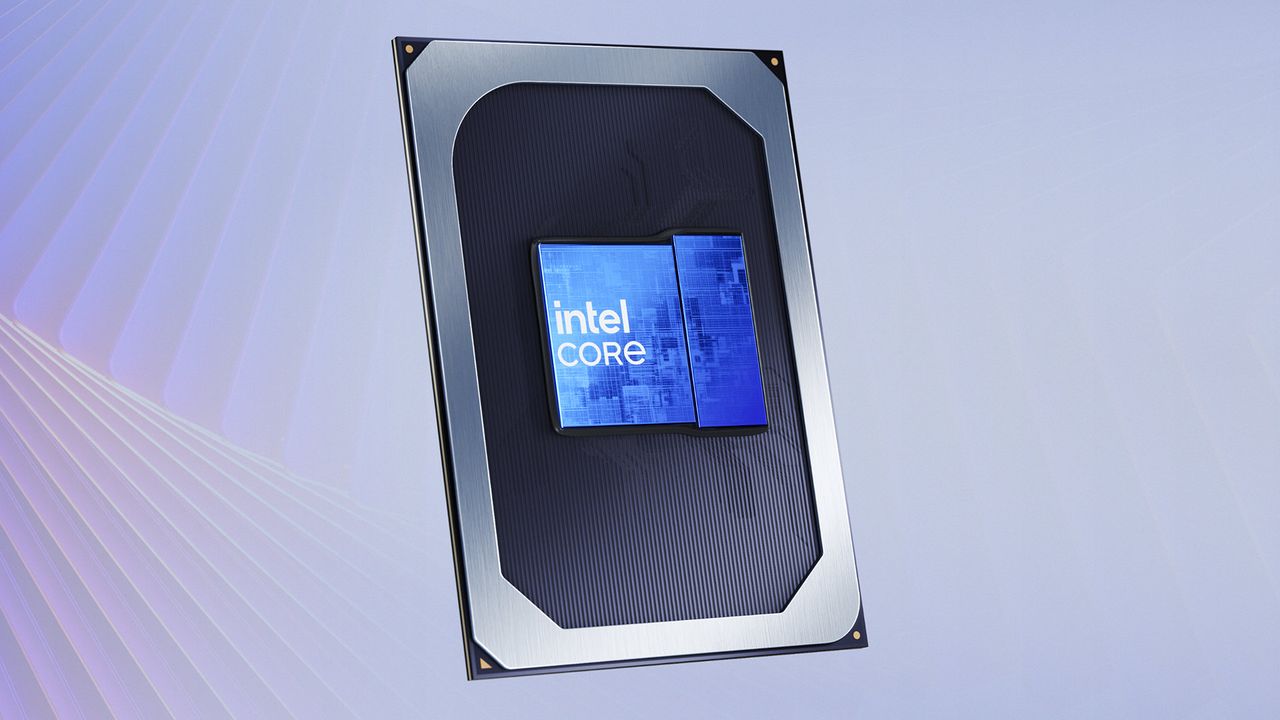
Panther Lake's 'big' iGPU is good, so here's hoping that Nova Lake's is too (Image credit: Intel)Well, this is what we appear to be getting here, and I can't help but feel that it would actually be really good in a handheld. Alas, that's unlikely to ever happen, given its intended market, but you never know. One enterprising firm might create something experimental with such an edge chip and surprise us all.
The RAMpocalypse will almost certainly kill off any notion of such a venture, though, because prices for chips in the edge market are considerably higher than the domestic one. The combination of a unique, slightly odd processor that's expensive to buy, coupled with ludicrously pricey DRAM, would just make such a handheld unfeasibly costly. Bah, we never get anything nice these days.