PC gamers (and PC users as a whole) find themselves in an increasingly expensive landscape, in part due to the AI data centre industry's apparently bottomless appetite for memory. And yet, AMD CEO Lisa Su reckons "AI PCs will become more important" for the average consumer.
Lisa Su told investors during AMD's most recent earnings call, "As we go into 2027, I think we have a strong product portfolio that is coming on board to address not just the traditional notebook and desktop markets, but also as you think about a more AI-centric PC experience, like what we have been talking about with the Ryzen AI Halo."
To be fair to Su, at the start of the year we did describe the Ryzen AI Max+ 388 as a chip that looks perfect for the ultimate in handheld PC gaming. For more context, AMD has just reported record-breaking total revenue of $11.5 billion in Q2 alone. A decent chunk of that is down to demand from data centres. Even so, AI PCs feel like an odd play when consumers are staring down increasingly runaway hardware costs.
Su seemed undaunted speaking to investors, saying, "I remain optimistic about the PC market as an important way for us to reach a broader set of users and our ability to grow ahead of the market."
For a little more context, the gaming section of AMD's business has shrunk by 31% in part due to high hardware costs (though the company likely saw that coming). It's perhaps less surprising then that AMD has been selling a lot of lower-end and mobile Ryzen processors this past quarter, rather than the newest gamer-geared GPUs and CPUs.
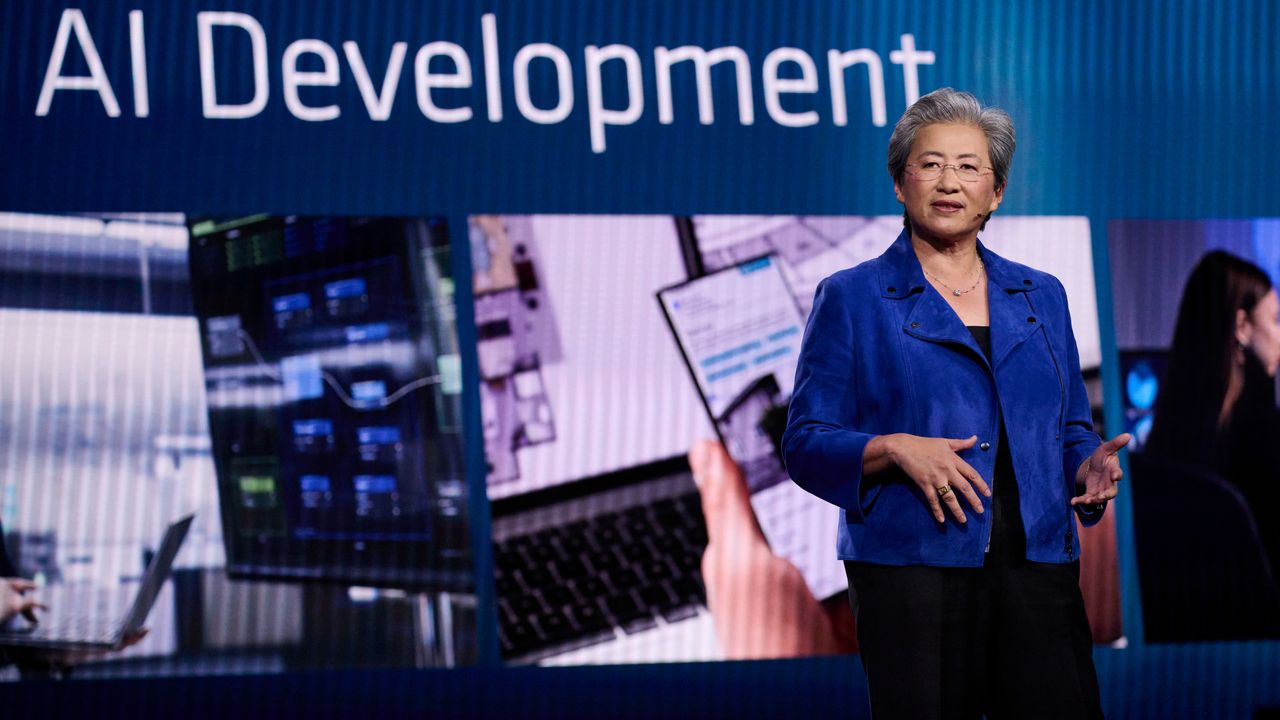
(Image credit: AMD)Su reflected on the current volatility of hardware pricing, saying, "The market itself will depend a bit on some of the components. We’re all watching the component costs and how that will play out over the next couple of quarters."
The client segment of AMD's business, "which primarily includes CPUs, APUs, chipsets for desktops and notebooks," made around $3.1 billion outside of gaming hardware (the client and gaming parts of the business "do not qualify as [...] separate reportable operating" segments, though AMD does still report their financials separately).
As such, Su told investors that the client business's "first half performance has been very strong." Though AMD expects the market to see a decline in the second half of 2026, Su went on to say she expects to see year-on-year growth in this more consumer-focussed sector. Even if it doesn't meet these expectations, data centre demand will likely more than buoy the company.
Su said, "I think our portfolio and our rising content in enterprise are very positive for our client mix."
That's all very well and good, but if big tech continues with its AI infrastructure build-out, that's just going to continue to drive up the price of memory and more besides. If AMD truly believes NPU-equipped AI PCs are the future, who does it think will be able to afford them?