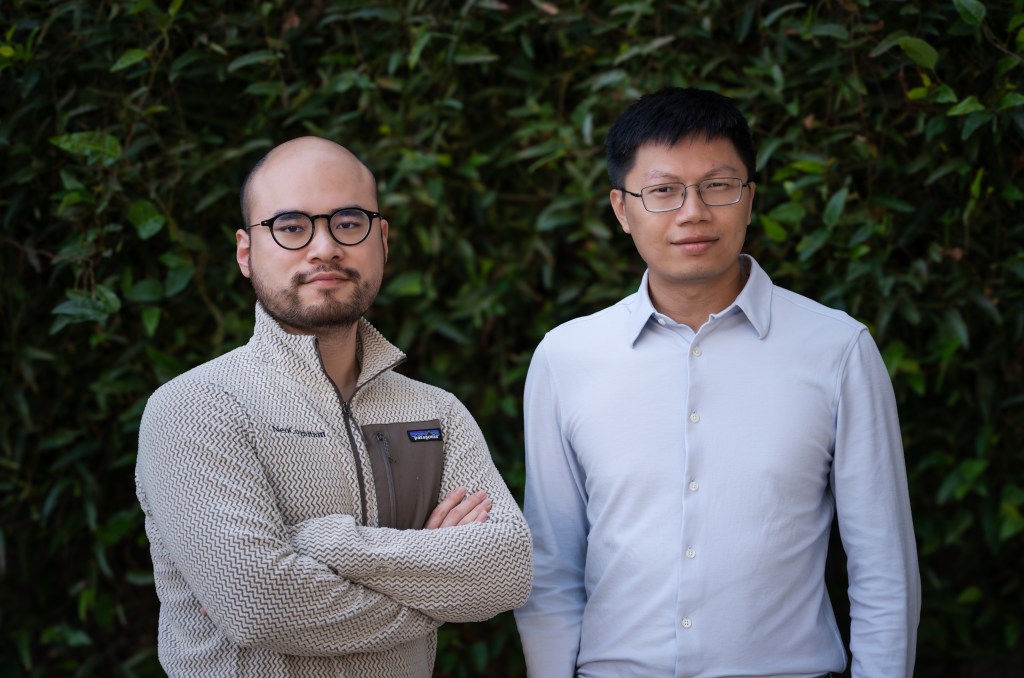
A user instructs an autonomous agent to process a complex spreadsheet, only to watch as the system hallucinates a formula and fails mid-task. This moment of friction is common in the current era of artificial intelligence, where the promise of automation is frequently undermined by unpredictable outputs. To bridge this gap between conversational fluency and functional reliability, NeoCognition, an AI research lab emerging from stealth, has secured $40M in seed funding to develop agents that learn with human-like efficiency.
The funding round was co-led by Cambium Capital and Walden Catalyst Ventures. The venture also drew significant interest from industry heavyweights, including Intel CEO Lip-Bu Tan and Databricks co-founder Ion Stoica.
Why NeoCognition Aims to Fix the AI Reliability Crisis
The current landscape of AI agents—ranging from Claude Code to Perlysity’s toolsets—suffers from a fundamental lack of consistency. According to Yu Su, an Ohio State professor and the founder of NeoCognition, today's most advanced agents function primarily as generalists. This generality comes at a steep cost: when a user delegates a task, they are essentially taking a "leap of faith" regarding the outcome.
Current industry benchmarks suggest that these autonomous tools successfully complete complex tasks only about 50% of the time. This volatility makes them unsuitable for high-stakes environments where error is not an option. Su argues that true autonomy does not require larger models, but rather specialized mastery.
The core tension in modern AI development involves three key pillars:
- Current Agents: Act as broad generalists that struggle with the nuanced rules of specific professional domains.
- NeoCognition’s Vision: Focuses on agents that can autonomously build "world models" for any given micro-environment or profession.
- The Engineering Gap: Moving away from pre-engineered, vertical-specific instructions toward a system capable of self-directed learning.
The Architecture of Autonomous Specialization
Unlike traditional approaches that require engineers to manually train agents for specific tasks, the lab is building a system centered on self-learning. The company's thesis rests on the observation that human intelligence derives power from the ability to rapidly specialize. When humans enter a new profession, they build mental models of the rules, relationships, and consequences inherent to that environment.
NeoCognition intends to replicate this by developing agents that can autonomously construct world models for any given micro-world. By learning the unique constraints of a specific domain without human intervention, these agents could move from unreliable generalists to dependable experts.
The technical ambition of this approach requires high-density specialized talent. The company’s current workforce consists of approximately 15 employees, comprised largely of PhD-level researchers, signaling a heavy focus on foundational breakthroughs rather than simple application layering.
Enterprise Integration and Market Strategy
The commercial roadmap for the startup is as much about distribution as it is about research. The company intends to target enterprise clients and established SaaS companies, providing them with tools to integrate agentic workers into existing product ecosystems.
This strategy leverages a significant advantage provided by one of their lead investors, Vista Equity Partners. As a dominant force in software private equity, Vista’s involvement provides the startup with direct access to a massive portfolio of companies looking to modernize through AI integration.
The ultimate goal is not merely to sell a standalone tool, but to provide the underlying intelligence that allows SaaS platforms to evolve into autonomous service providers. If NeoCognition can prove that self-learning agents can move success rates beyond the current 50% mark, they may well define the next era of the automated workforce.