The Memory Crisis and AMD's Optimistic Outlook for DDR5 Supply Growth
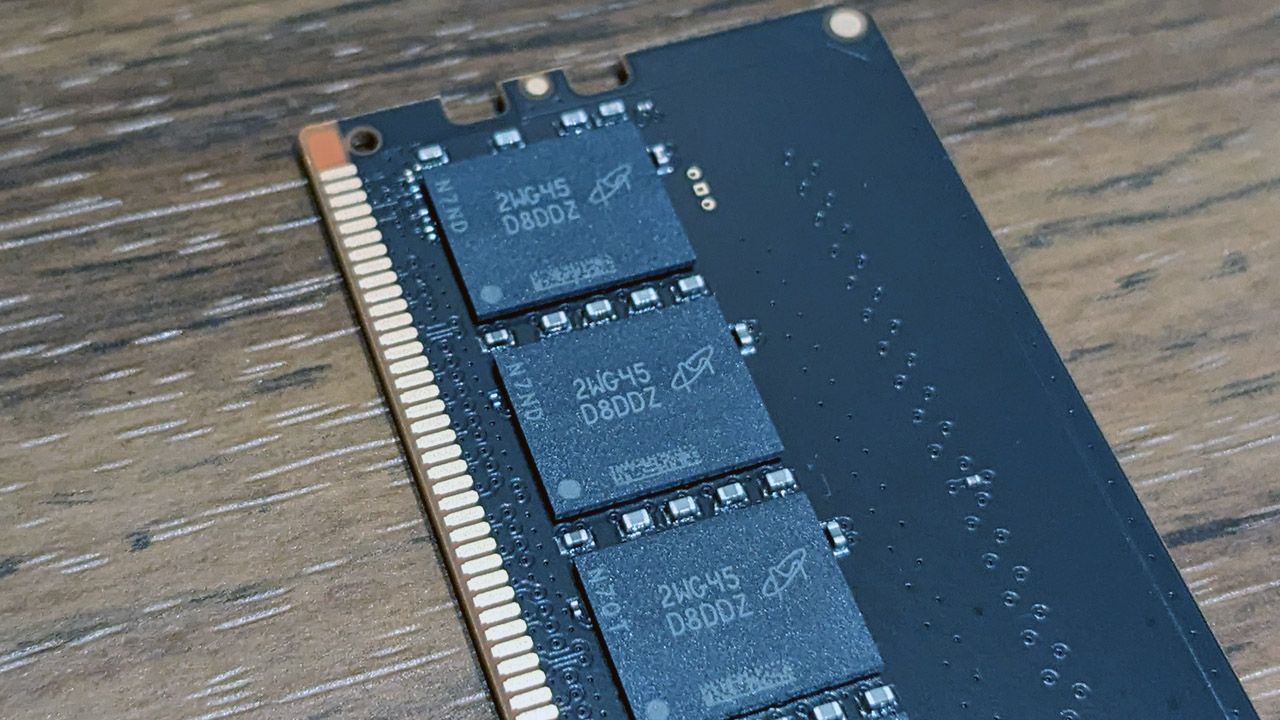
If you've tried to buy RAM for your PC in the last year or so, you've likely noticed a significant spike in prices. This surge is largely driven by the growing demand for memory in the AI sector, which has consumed a substantial portion of the global supply. However, AMD's head of Ryzen and Radeon, David McAfee, remains optimistic that DDR5 memory production could ramp up significantly by 2028, potentially easing the current memory crisis.
McAfee, AMD's global vice president and general manager of the client channel business, recently shared insights into the evolving memory landscape. While AMD has released a new CPU that supports DDR4, McAfee notes that DDR4 production has declined sharply over the past few years, with manufacturers shifting their focus to DDR5 and newer memory technologies. "The thing that gives me hope is that there is an enormous amount of capacity being built by memory manufacturers to bring more production online," McAfee said. "This new production will focus on DDR, LPDDR, HBM, and other advanced memory technologies."
According to McAfee, the shift away from DDR4 is unlikely to reverse. "I don't expect a lot of DDR4 production to come back into the world," he explained. "But a significant amount of capacity for newer memory technologies is coming online. We'll start to see this ramp take hold by the end of next year and into 2028. After that, it's just a matter of supply and demand dictating memory prices."
Despite the anticipated increase in production, the demand side of the memory market is currently quite unusual. The combination of server refresh cycles and the AI supercycle has created a demand that is difficult to match. McAfee acknowledges this challenge, stating, "Even with all this capacity coming online, the bigger question is whether it will be enough to satisfy the demands of the AI supercycle."
McAfee is not alone in his optimism. Kyung-Hyeon Kye, a former Samsung executive, predicts that a surge in Chinese memory production in the second half of 2027 will help restore supply balance. Micron, another major memory manufacturer, has confirmed that demand is "significantly in excess of our available supply for the foreseeable future" and suggests that its Tongluo-based semiconductor facility won't be able to support meaningful product shipments until at least 2028.
However, even with these plans, memory manufacturers face the risk of oversupply. Samsung and SK hynix have opted to "minimise the risk" of producing too much memory at the end of 2025, indicating that the memory crisis may extend beyond 2028. Both companies are investing in new fabrication facilities, with SK hynix expecting its Chengdu and Indiana HBM facilities to be operational by late 2028.
McAfee acknowledges the risks associated with overproduction. "Looking back at the history of memory manufacturers, they make billions during cycles where there's more demand than supply, but they can lose billions when there's more supply than demand," he said.
Even before the memory market stabilises, prices could continue to rise. Recently, Team Group's CEO warned that DRAM and SSD prices would increase in the coming years, noting that most of the memory produced between 2026 and 2027 already has customers. While the increased use of HBM memory may reduce the need for traditional memory from AI firms, this shift is unlikely to have an immediate impact on prices.
As companies work to catch up with demand, it's unlikely that prices will drop uniformly or quickly. This situation is further complicated by the potential for continued growth in AI development, which could further strain supply.
The memory market remains highly volatile, and predicting its future is a challenge. However, companies are striving to scale their production to meet the demands of AI while avoiding overexpansion that could lead to financial instability if the AI boom subsides. Until then, PC gamers and builders will have to deal with the higher costs of memory components driven by this technological growth.