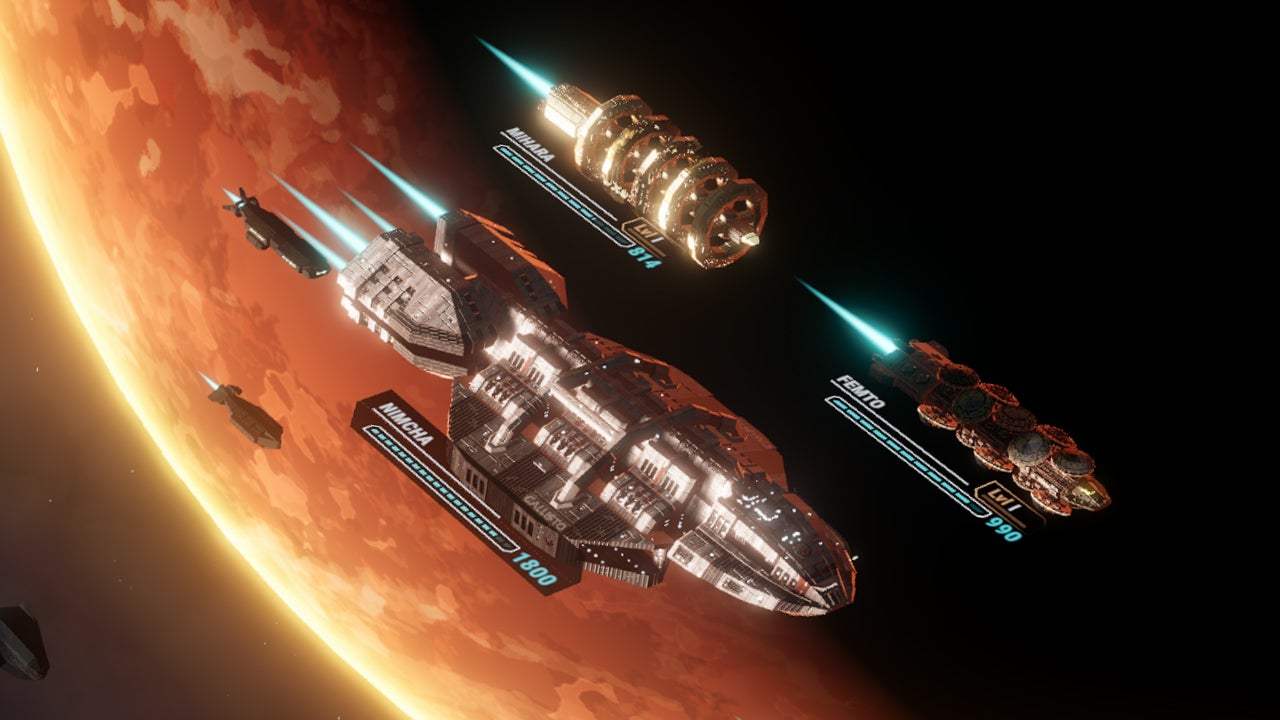
There is a specific, gnawing anxiety that defines the experience of Battlestar Galactica: Scattered Hopes. It is the same anxiety that made arguably the most famous episode of the 2004 TV series, "33," so compelling. In that episode, the relentless Cylons appeared like clockwork every 33 minutes, driving the crew to the breaking point. This roguelike strategy game captures that essence perfectly, borrowing the concept of a ticking clock and combining it with an unceasing barrage of missiles and crises.
By placing you in command of a small fleet on a desperate quest to link up with Galactica immediately after the destruction of Caprica, the game creates a tense edge for its strategic resource management and tactical combat. It is a title that demands attention, patience, and a willingness to manage chaos.
A Race Against the Clock
While you can play Scattered Hopes as a standalone title, it is definitely worth watching at least the first season of Battlestar Galactica before diving in. This isn't just because it is a classic sci-fi show in its own right; it helps you understand the mechanics that separate this game from similar titles.
Every faster-than-light jump you make in your Gunstar—a smaller version of a Battlestar leading a fleet of mostly unarmed civilian vessels—kicks off a race against the turn-based clock. You have a scant 10 turns to accomplish a daunting list of objectives before the Cylons arrive:
- Repair and upgrade your ships and crew.
- Collect essential resources.
- Manage the political friction between different factions of survivors.
- Handle an intentionally overwhelming number of crises.
Once the Cylons arrive, the pace shifts. You must avoid taking too much damage for two real-time minutes while your FTL engines spin up again. This cycle repeats, creating a loop of high-stakes preparation followed by frantic survival.
Visual Style and Atmospheric Tension
Even though you are not playing as Galactica or any of its original crew, the audio design does heavy lifting. The eerie theme music from the show goes a long way to establishing the authentic Battlestar Galactica vibe.
Visually, the art direction generally works toward that goal. While the game’s 16-bit style doesn't look as true to the source material as 2017's Battlestar Galactica Deadlock, it is interesting in its approach. It serves the game nearly as well as its clear space roguelike inspiration, the legendary FTL: Faster Than Light. What’s not to like about the bright-blue flash of a nuclear explosion in space?
However, the visual execution has its flaws. The exception occurs when the game zooms in on Cylon motherships at the beginning of each battle; the pixelated textures on 3D models get stretched in unflattering ways. On the flip side, the style is mixed with high-resolution portraits of randomly generated characters during frequent dialogue scenes. These portraits feature a subtle distortion effect that makes it look like the characters are breathing. While there is no voice acting, the tradeoff is a high variety of crews, which I appreciated after a few runs.
Tactical Combat and Fleet Management
Combat sequences in Scattered Hopes are a pretty straightforward real-time tactics game that you can pause at any moment. You can assign targets, use special abilities, and move ships out of the way of missiles and other attacks.
The skirmishes are relatively small-scale, meaning you never have more than five fighters on the map—usually it’s more like three. However, you also have the weapons of your Gunstar available to launch when you spot an opportunity to wipe out a group of clustered ships with a flak burst or a well-placed nuke. One of my favorites allows you to detonate enemy missiles remotely, letting you set off Cylon nukes as they pass by their own ships.
A fair amount of battlefield complexity emerges as your officers and fighters earn new traits from leveling up. You have to figure out how to optimize active and passive abilities, such as:
- Earning temporary speed boosts after a kill.
- Bouncing ballistic weapons from one target to another.
- Reflecting damage back at attackers.
The Limitations of Abstract Combat
On that note, I can't help but be a little disappointed that Scattered Hopes doesn't make any effort to replicate the show's flashy dogfighting. Instead, your Vipers, Mantises, and more are abstract representations that fly straight at their targets until they bump into them, then stop and duke it out until one or the other explodes. Meanwhile, artillery ships like Raptors have to hold completely still in order to bombard from afar, and support ships try to keep their distance.
Next to the cinematic approach of something like Sins of a Solar Empire 2 or Homeworld 3, that looks a little lame. However, I can understand the design choice: having everything flying every which way might make the action tough to follow when there are a couple of dozen Cylon ships and nuclear missiles screaming toward your Gunstar. You simultaneously have to keep your ships out of the blast radius of your own area-of-effect attacks.
Predictability as a Mechanic
There isn't a huge amount of variety from battle to battle, simply because the Cylons rely heavily on a handful of ship types. They mostly just jump in around the map and mindlessly charge your capital ships unless your fighters draw them away. You can count on plenty of easily swatted Raiders and their heavy counterparts, augmented by smaller numbers of artillery ships, missile launchers, stealth ships, hacker ships, minelayers, and the especially annoying evasive Dodgers.
This predictability—including the way the time and location of their arrival is precisely forecast—is the main thing that makes it possible to fend off so many of them with just a few ships of your own.
Despite this, there are at least a few meaningful differences between fights. Each Cylon mothership you square off against (which are mostly smaller cruisers, but Basestars show up for boss fights) gives its accompanying fighters certain bonuses, such as speed or damage boosts. Some can even neutralize your non-nuclear missiles. Occasionally, battlefields will also be littered with devastating minefields to avoid or asteroids that provide defensive bonuses you can use to your tactical advantage.
In every battle, though, you're always watching the two-minute timer tick down until your escape is possible, maintaining the relentless pressure that defines the Battlestar Galactica experience.