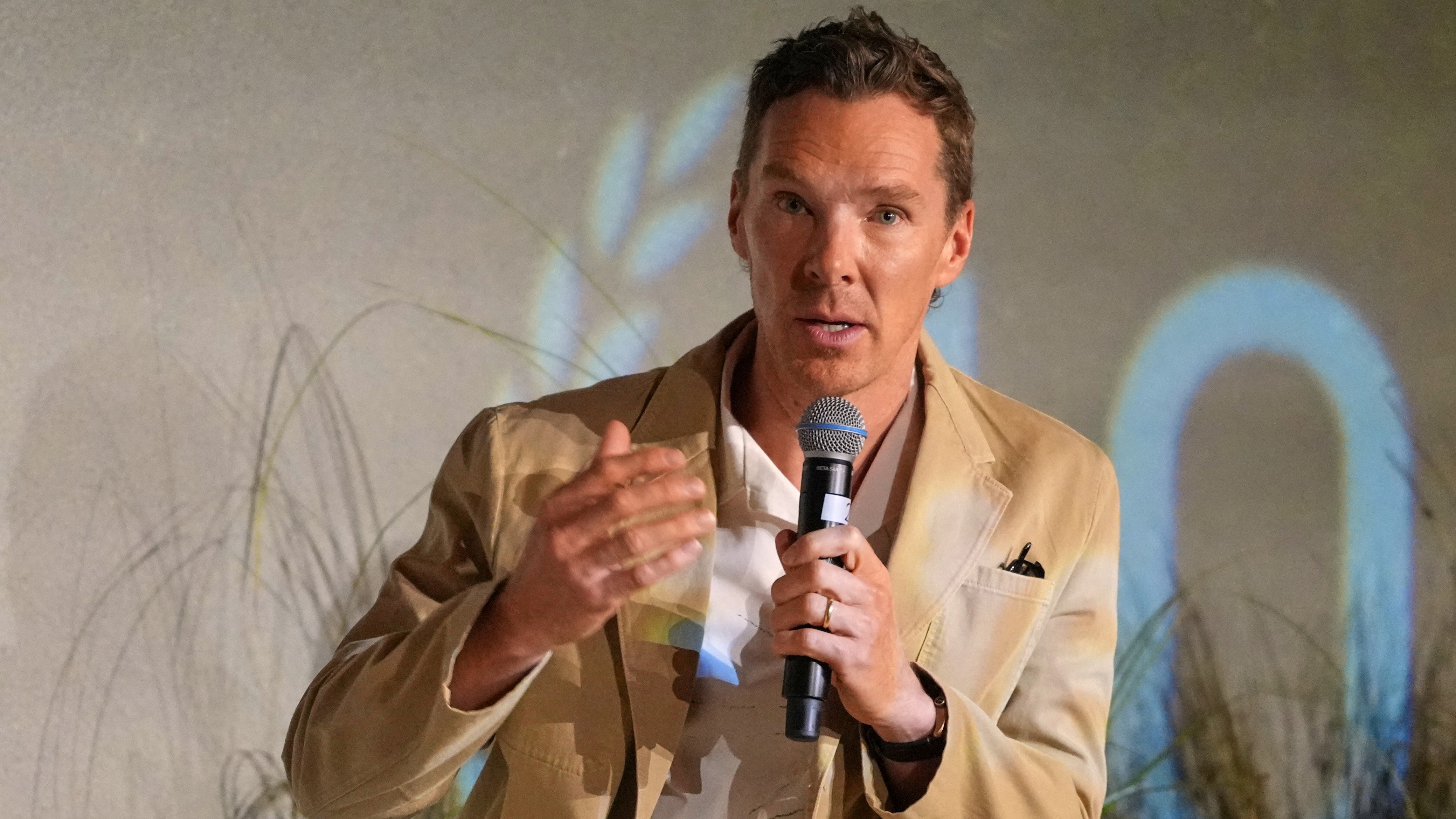
Benedict Cumberbatch, Alan Cumming and Benedict Wong have called on the UK government to intervene and block Paramount's proposed $110 billion Warner Bros. buyout.
The trio of Marvel stars, known for their roles as Doctor Strange, Nightcrawler and Wong, have published a joint article today in UK newspaper The Guardian, calling on the country's culture secretary to stop the deal in its tracks.
Paramount launched a hostile bid for Warner Bros. following interest from Netflix — though the streamer ultimately exited the acquisition process, leaving only Paramount to claim victory. After months of wrangling, Paramount's Warner Bros. offer is now working its way through the regulatory process in various countries. Last week, its final U.S. approval hit a major roadblock due to legal action from 12 states — prompting Paramount to hit a pause button that potentially places the sale in stasis for up to a year. This is despite the deal being waved through by the Justice Department.
But this pause could prove only a temporary hiccup, and the deal's progress elsewhere has been far more straightforward. Last week, the EU decided it would back the deal in Europe, while regulators in China, South Korea, Australia, Canada and Brazil have already given the buyout a green light. This leaves just three countries where the deal is still under formal review: Japan, India and the UK.
Now, Cumberbatch, Cumming and Wong have written to encourage UK culture secretary Lisa Nandy to follow through on recent comments that she was "minded to intervene" on its approval. The trio began by citing concerns over the likelihood of job losses if and when the deal is completed, and pointed to various past examples of mergers and "consolidation" leading to redundancies.
"We have watched, with growing alarm, what consolidation does to the breadth and depth of the work we produce," the actors wrote, noting that the UK film industry currently supports more than 180,000 jobs, generates £6.8 billion in production spend, and contributes around £12 billion to the country's economy.
"Independent film acquisitions at the leading independent film festival Sundance fell by half between 2019 and 2025. Award-winning documentaries – films that won Oscars and topped festival juries – have struggled to find commercial distribution because they touched subjects the remaining handful of buyers found inconvenient. Every merger of this kind narrows the funnel through which stories can reach audiences.
"That is precisely what makes the Paramount-WBD merger so dangerous," the actors continued, calling the UK's film industry a "cultural heritage we must protect."
"Paramount proposes to swallow Warner Bros Discovery in one of the largest leveraged buyouts ever attempted, loading the combined company with an estimated $84bn in debt," the letter continued. "To service it, executives have promised investors around $6 billion in 'synergies.' In plain English, that means redundancies, cancelled productions, fewer films commissioned and fewer risks taken.
"We have seen this before. When Discovery merged with WarnerMedia in 2022, it shelved finished films and cut thousands of jobs; when Skydance merged with Paramount last year, it laid off about 2,000 people. Now the same executives are making the same promise, and UK crews, producers, talent and audiences will pay when the bill comes due."
Beyond job losses, though, the actors expressed concern over the potential impact to news independence and impartiality they feel the merger could impact. Warner Bros., of course, owns CNN, which it is feared could suffer under Paramount CEO David Ellison and his father, Larry Ellison, who are major donors to the Trump administration.
"The job of the Department for Culture, Media and Sport goes further: to determine whether the merger is in the public interest. It most certainly is not," the article stated. "In her statement to British MPs, Nandy cited the need for a sufficient plurality of views in news media and a sufficient plurality of individuals controlling media enterprises. She has also highlighted the potential impact on streaming services, content homogenisation and children's television.
"One owner controlling this much of the news, and the truth, endangers the public in a way no ordinary consolidation does. When separate owners run separate newsrooms, a story judged inconvenient by one can still reach audiences through another. Fold those newsrooms into a single company, and one boardroom's commercial anxieties – or political debts – determine what millions of people see and what they never learn existed."
For now, it's unclear when the Paramount-Warner Bros. deal will close, or if it could still come undone by the regulatory process. With at least a few months to go as the antitrust lawsuit gets off the ground, Paramount's fight to complete the takeover process still has plenty of time to run yet — particularly so, if the UK launches a formal review.
Image credit: Kirsty Wigglesworth / POOL / AFP via Getty Images.
Tom Phillips is IGN's News Editor. You can reach Tom at [email protected] or find him on Bluesky @tomphillipseg.bsky.social