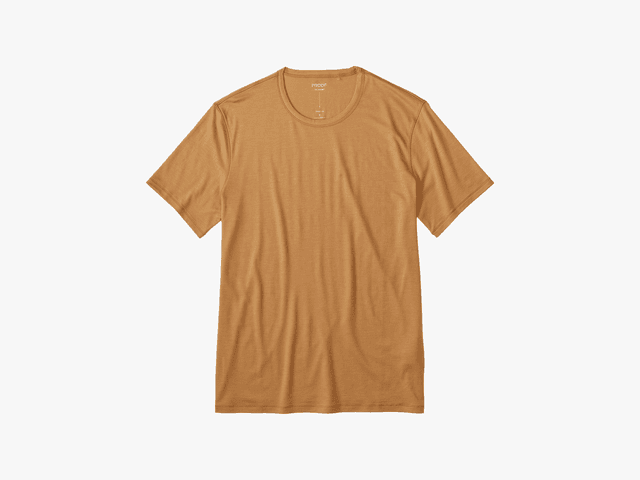
Imagine a single backpack containing everything required for a week of mountain trekking. On day four, you pull a slightly crumpled T-shirt from the bottom of the bag. Despite the humidity of the trail and miles of strenuous movement, the fabric remains remarkably fresh and free of heavy scents.
This is the fundamental promise of merino wool: a natural fiber capable of extreme thermoregulation and superior odor resistance. While cotton serves as the standard for casual wear, finding the best merino wool t-shirts offers a level of utility that makes them indispensable for travelers, hikers, and anyone looking to optimize their wardrobe.
Reliable Daily Drivers for Casual Wear
For those transitioning from cotton to wool, durability is often the primary concern. Pure merino can sometimes feel too delicate for the rigors of daily life or intense gym sessions.
The Proof 72-Hour T-Shirt from Huckberry addresses this by blending 87 percent merino wool with 13 percent nylon. This construction provides enough stretch for a workout while maintaining a soft, non-sporty aesthetic suitable for urban environments. It is an ideal entry point for those who want the benefits of wool without sacrificing structural integrity.
Similarly, the Wool & Prince Signature Tee functions as a highly effective alternative to the standard cotton crew neck. Utilizing a 7-percent merino and 22 percent nylon blend, this shirt avoids the "shiny" look that occasionally plagues lower-quality garments. It retains a casual, matte appearance that blends seamlessly into professional or social settings.
What to Look for in the Best Merino Wool T-Shirts
When selecting a versatile shirt, you should evaluate technical specifications rather than just brand names. Consider these key factors:
- Weight (GSM): Lower GSM (grams per square meter) is better for heat; higher GSM offers more warmth and durability.
- Fiber Blend: Nylon or elastane additions increase lifespan and stretch but may slightly reduce odor resistance compared to 100% wool.
- Micron Count: A lower micron count indicates a finer, softer fiber that is less likely to cause "itchiness."
Optimized for Travel and Rugged Terrain
Travelers prioritizing weight reduction often gravitate toward Unbound Merino. Their T-shirts utilize 100 percent superfine merino wool, which provides the maximum possible odor resistance. Because these shirts are lightweight and pack down into incredibly small volumes, they are perfect for one-bag travel enthusiasts.
However, because of the high wool content and low weight (190 gsm), these garments require more careful maintenance. You must prioritize hand washing and air drying to prevent damage.
For much more demanding environments, the Ibex Springbok Sport Tee stands out as a dedicated performance piece. This shirt is engineered with an 83 percent merino, 12 percent nylon, and 5 percent elastane blend, offering significant stretch for climbing or hiking. The inclusion of a UPF 35+ rating provides essential sun protection, while the forward-placed seams prevent chafing under backpack straps.
Premium Comfort and Luxury Finishes
In the upper echelon of merino apparel, luxury and softness take center stage. Taylor Stitch's The Merino Tee is arguably the most premium option available, featuring a 95 percent merino composition. This high wool percentage ensures that the shirt can be worn for several days without any noticeable degradation in freshness.
For women seeking a balance between performance and silkiness, the Artilect Utilitee offers a sophisticated solution. By blending Nuyarn merino with Tencel—a cellulose fiber derived from wood pulp—the shirt achieves a lightweight, breathable, and incredibly soft finish. This makes it versatile enough for high-output activities like rock climbing while remaining polished enough for everyday use.
As the industry moves toward more sustainable and durable textile engineering, the gap between "outdoor gear" and "lifestyle apparel" continues to close. The future of the merino T-shirt lies in these sophisticated blends that offer the best of both worlds: the natural intelligence of animal fiber and the ruggedness of modern synthetics.