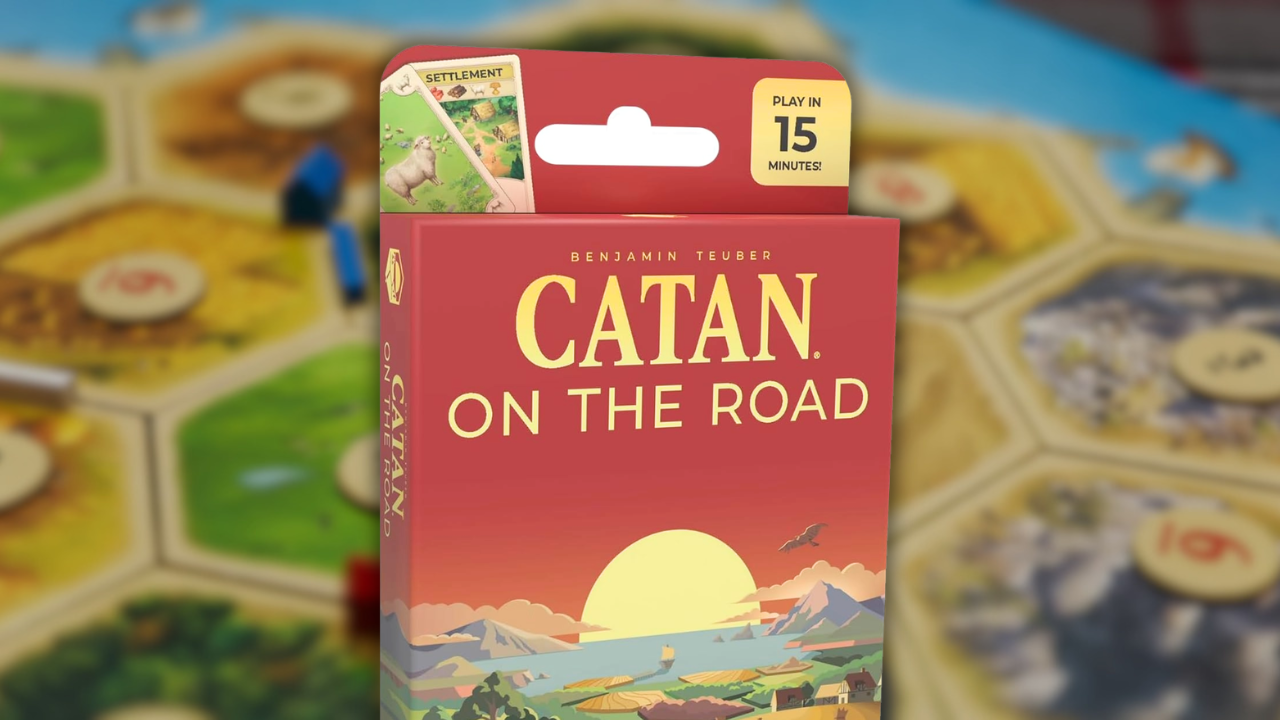
Most gamers are intimately familiar with Catan, the legendary board game that brought German-style design into the global mainstream. With over 40 million copies sold, its influence is undeniable. However, the franchise has spawned a dizzying array of spin-offs, ranging from the historically themed Catan: Histories to the niche Rocketman EXE version in Japan. The latest entry, Catan: On the Road, represents the smallest and most affordable addition to the family yet.
A Budget-Friendly Catan Experience
The first thing you notice about Catan: On the Road is its presentation. Packaged in a flimsy, hang-rail format similar to mass-market staples like Uno, it carries an MSRP of just $9.99. Given that this version was developed by Benjamin Teuber—son of the original creator Klaus Teuber—the price feels like an absolute bargain.
Inside the box, you will find:
- High-quality, sturdy playing cards
- Evocative artwork themed around building new civilizations
- A streamlined rule set for quick play
While the art is pleasant and the cards are smooth to shuffle, nothing about the physical components screams "premium." However, for a game designed for portability and quick sessions, the simplicity works in its favor.
How Catan: On the Road Plays
If you have played the original tabletop version, the core loop of Catan: On the Road will feel instantly familiar. Players collect resource cards to purchase building cards, aiming to be the first to reach seven victory points. The progression follows a familiar hierarchy:
- Settlements: Worth one victory point.
- Cities: Built atop settlements; worth two points and grant an extra resource per turn.
- Metropolis: Built atop cities; worth three points and grant two extra resources per turn.
The most striking departure is the total absence of a physical map. Instead of rolling dice to determine resource production based on board placement, players simply draw cards randomly from the deck.
New Mechanics and Strategic Shifts
Because there is no board to facilitate "blocking" opponents, the game shifts its focus toward card management and social interaction. The mechanics have been overhauled to compensate for the lack of a map:
- Roads: These function similarly to ports, allowing you to cash in groups of matching resources for different types.
- The Robber: Rather than a piece on a board, building a settlement triggers an event card. Half of these are robbers, forcing anyone with more than seven cards to discard half their hand.
- Knights: These buildings help players retain more resources when hit by the robber and offer a two-point bonus if you collect more than your opponents.
The lack of a map makes the game feel less strictly strategic than the original, but it introduces a frantic, high-speed energy. With only five building cards available in the queue at any time, players must constantly pivot their strategy based on what is available.
Trading and Interaction
One of the standout features of this Catan: On the Road experience is how it handles player interaction. In the original game, trading can often feel miserly or forced. Here, trading is incentivized; whenever a successful trade occurs, the accepting player receives a bonus resource card from the top of the deck.
This creates a lively environment filled with verbal jousting and enthusiastic bargaining. While you can still refuse to trade with a leader, the "positive" nature of the mechanic keeps the game moving at a brisk pace.
However, not every change is a perfect upgrade. The removal of the dice means players can no longer play the probability curve—a staple of the Catan identity. Additionally, because resources are drawn randomly and trading is so efficient, the robber feels somewhat "toothless." Players rarely struggle to stay under the seven-card limit, making the Knight cards feel more like a secondary path to victory points rather than a vital defensive tool.
Despite these minor gripes, Catan: On the Road successfully captures the essence of building a thriving civilization from humble beginnings. It is a compressed, energetic version of the classic formula that trades deep spatial strategy for fast-paced social maneuvering.