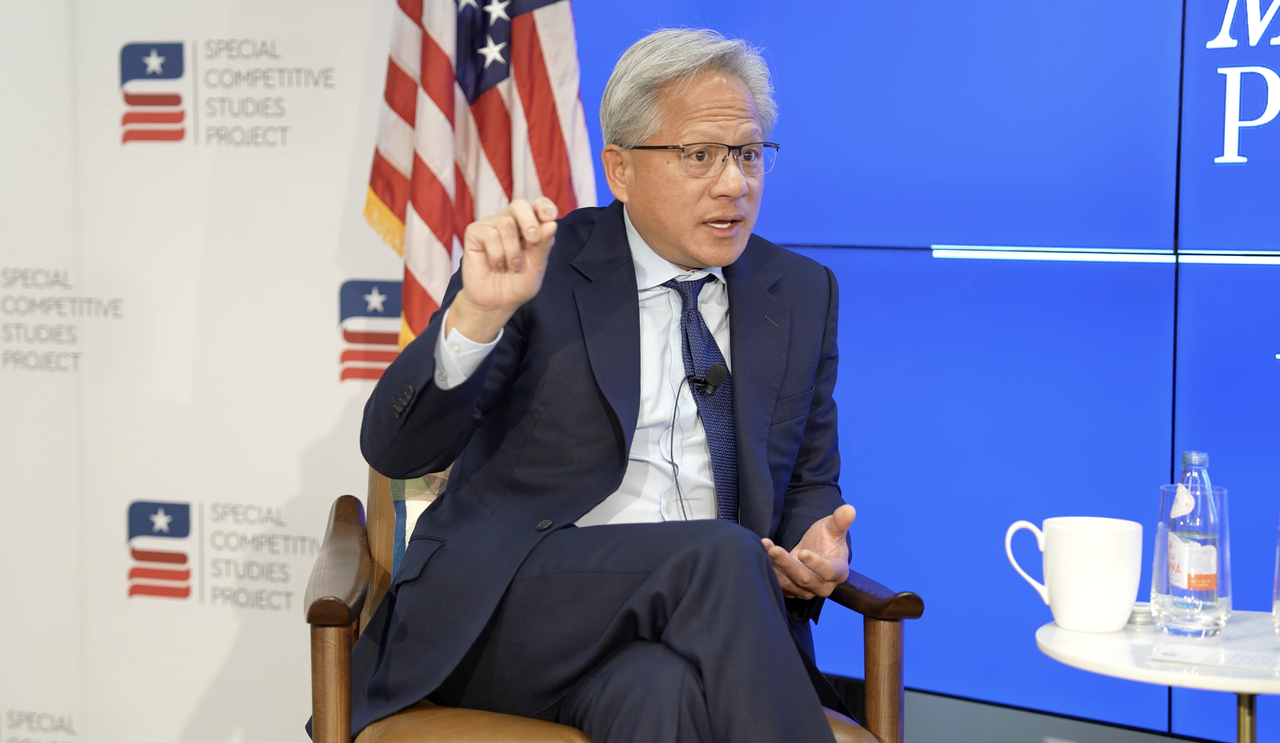
Nvidia CEO Jensen Huang is sounding the alarm regarding the company's diminishing presence in the Chinese market. Speaking on the Special Competitive Studies Project podcast, Huang revealed a startling decline in hardware dominance, stating, "We have now dropped to zero" regarding Nvidia's market share in China's AI hardware sector.
The tech giant's leader believes that current trade restrictions are counterproductive, arguing that the US should be allowed to export AI chips to China as aggressively as possible to maintain global leadership.
The Strategic Risk of Withdrawing from China
Huang argues that abandoning a market as massive as China is a strategic blunder that has already yielded negative results. According to the Nvidia CEO, the current policy of restricting high-end technology exports has "largely backfired."
He suggests that while export controls might have seemed justifiable initially, the US needs a more flexible approach. "Maybe it made sense at the time, but I think the policy really needs to be dynamic, and it needs to stay with the times," Huang remarked. His core argument is that the potential economic upside of selling advanced AI chips to China outweighs the risks associated with providing China access to American technology.
Why the US Needs to Export AI Technology "Like Crazy"
Comparing the current era to the Industrial Revolution, Huang emphasizes that the United States must remain the global frontrunner. To ensure the US leads this new technological wave, he proposes a strategy of massive exports to create an "incredible trade imbalance" in America's favor.
However, building a sustainable lead in the AI hardware market requires more than just chip sales. Huang describes the AI industry as a "layer cake" consisting of five critical levels:
- Energy production
- AI chips
- Infrastructure (such as data centers)
- AI models
- AI applications
Challenges to the Export-Driven Strategy
While Huang's pitch for aggressive exporting is clear, significant gaps in the strategy remain. He acknowledges that the US is currently lagging in certain sectors, most notably energy production, which is vital for powering the massive data centers required for AI.
Furthermore, there is a lack of clarity on how flooding China with the best available hardware won't simply provide them with the tools to eventually surpass the US in the medium term. While "making hay while the sun shines" may benefit Nvidia’s bottom line, it remains to be seen if such an aggressive export strategy provides a sustainable long-term advantage for American technological supremacy.