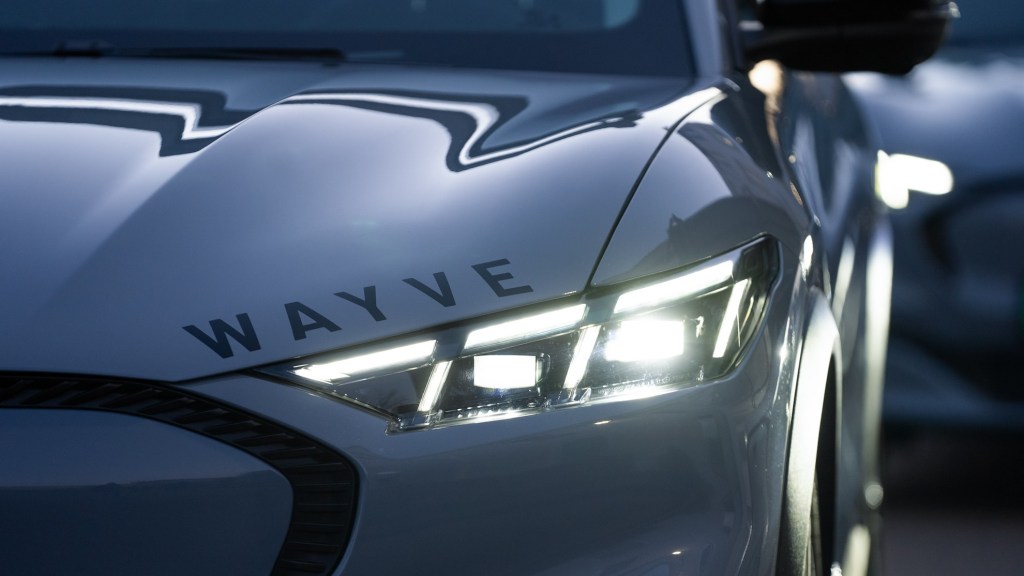
The Silicon-Agnostic Revolution: Why AMD, Arm, and Qualcomm Are Betting on Wayve
A paradox now defines the race to autonomous vehicles: the companies manufacturing the silicon brains of the future are pouring capital into a startup that explicitly refuses to rely on their specific chips. While traditional automotive narratives assume a tight coupling between hardware and software, three titan chipmakers—AMD, Arm, and Qualcomm—are placing $60 million into UK-based Wayve. This massive investment signals a strategic pivot toward an architecture designed to be agnostic to the underlying silicon, marking a new era for self-driving tech startups.
This collaboration highlights how flexibility and supply chain resilience have become more valuable than proprietary integration. By backing Wayve, these industry leaders are betting on an end-to-end neural network that functions independently of sensor types or compute providers. The result is a system that prioritizes adaptability over optimization for a single piece of hardware, born from years of navigating unpredictable disruptions in the semiconductor sector.
Strategic Alliances Beyond Capital: Building a Secure Future
The involvement of AMD, Arm, and Qualcomm's venture arm marks a distinct shift from the "walled garden" approach that characterized earlier autonomous driving efforts. Historically, chipmakers like Nvidia and Tesla sought to sell hardware alongside their custom software stacks, locking automakers into specific ecosystems. Wayve challenges this model by allowing the software to run seamlessly on diverse compute platforms, meaning an automaker can swap chip suppliers between production models without rewriting the core AI.
This $60 million injection is merely an extension of Wayve's massive $1.2 billion Series D round, which already secured backing from automotive heavyweights like Mercedes-Benz, Nissan, and Stellantis. The new chipmaker investors join a roster that includes returning backers Nvidia, Microsoft, and Uber, creating a coalition that spans the entire value chain from silicon to ride-hailing operations.
The strategic logic behind this diverse investor base is clear:
- Supply Chain Security: By aligning with multiple chip architects, Wayve ensures automakers can avoid bottlenecks if one vendor faces production delays.
- Hardware Agnosticism: The system's ability to run on existing OEM chips reduces the need for expensive new hardware upgrades in vehicle fleets.
- Global Scale: Partnerships with global silicon leaders facilitate deployment across different regional markets and regulatory environments.
Uber has even committed an additional $300 million contingent on deploying robotaxis equipped with Wayve's technology in London, signaling that the commercial viability of these partnerships is being tested immediately. Nissan, for instance, plans to integrate Wayve's system into its advanced driver-assistance systems (ADAS) starting in 2027, while Mercedes-Benz and Stellantis are preparing to utilize the tech in future models.
The Path to "Eyes Off" Autonomy: A New Standard for Mobility
Wayve is marketing two distinct tiers of automation that serve as entry points for this broader ecosystem. The first is an "eyes on" assisted-driving system requiring driver intervention, designed for immediate production integration. The second, more ambitious product is an "eyes off" fully automated driving system capable of handling all driving tasks in defined environments, the holy grail required for true robotaxi networks.
The co-founder and CEO Alex Kendall emphasized that embodied AI can only scale if automakers retain design choice regarding their hardware partners. This philosophy resonates deeply with a global automotive industry currently reeling from chip shortages and geopolitical tensions affecting semiconductor supply lines. By proving that high-level autonomy does not require exclusive reliance on a single silicon provider, Wayve is positioning itself as the neutral infrastructure layer for the next generation of mobility.
As the technology matures, the question shifts from whether autonomous driving is possible to how quickly it can be deployed across heterogeneous vehicle fleets. The convergence of chipmakers and software startups under this unified strategy suggests that the industry is finally ready to prioritize system-level flexibility over hardware lock-in. If Wayve succeeds in standardizing AI drivers across different architectures, the path toward ubiquitous, safe self-driving vehicles may finally clear the most significant hurdle: the rigidity of the supply chain itself.