Christopher Nolan has firmly defended his upcoming epic The Odyssey against accusations of historical inaccuracies, particularly after fans pointed out that Agamemnon’s armor bore a striking resemblance to Batman’s suit. The director addressed these concerns in a recent profile with Time magazine, arguing that the film’s aesthetic choices are grounded in feasible Bronze Age technology and the interpretive lens of Homeric tradition.
The Odyssey, officially described as a "mythic action epic," is an adaptation of Homer’s foundational saga. The film boasts a star-studded cast including Matt Damon, Tom Holland, Anne Hathaway, Robert Pattinson, Lupita Nyong’o, Zendaya, and Charlize Theron. However, since the first look at Damon as Odysseus, the project has faced scrutiny regarding its historical fidelity.
The "Batman" Armor Controversy
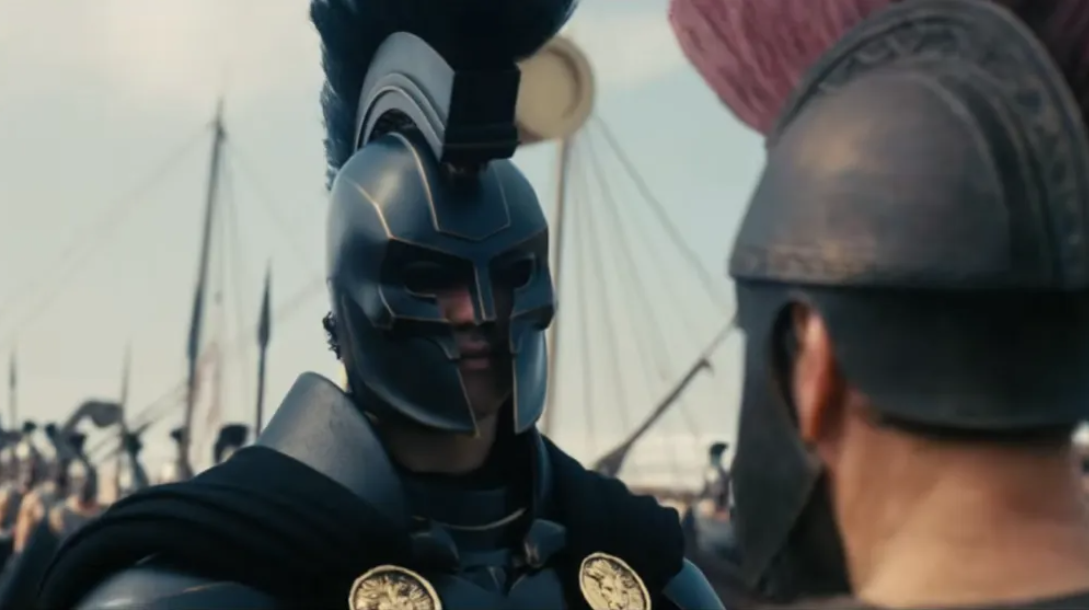
The debate over historical accuracy intensified in December last year when the debut trailer revealed Agamemnon’s imposing, all-black armor. Critics and fans alike took to social media to mock the design choices, with many pointing out the anachronistic vibe.
One commenter jokingly noted: “Had no idea Ancient Greeks used Batman helmets and sailed in Viking ships. Seriously, how hard is it to look at the picture of what the real thing looked like?”
Other criticisms highlighted the impracticality of the color palette for the setting:
- "Nothing says Ancient Greece quite like wearing black and brown... Kinda crazy to wear those dark colors in one of the sunniest places in the world."
- "It looks like a bunch of dudes cosplaying ancient Greece in Wales."
- "A little colour wouldn’t hurt you, Nolan."
Beyond the color scheme, some viewers criticized the texture of the costumes, describing Agamemnon’s armor—played by Benny Safdie—as looking "flimsy" and "plastic." One critic summarized the sentiment, stating, “I think the issue people have isn’t really about historical accuracy and more about the costumes looking boring as s**t.”
Nolan’s Defense: Fragmentary Records and Material Feasibility
Nolan’s defense rests on two main pillars: the limited nature of archaeological evidence and the theatrical intent of the costume design. He noted that The Odyssey is set at the end of the Bronze Age, a period of societal collapse in the Mediterranean basin during the late 13th to early 12th century BC. According to Nolan, our knowledge of this era is based on "very fragmentary archeological records."
He insisted that Agamemnon’s dark armor is historically feasible. “There are Mycenaean daggers that are blackened bronze,” Nolan explained. “The theory is they probably could have blackened bronze in those days. You take bronze, you add more gold and silver to it and then use sulfur.”
Furthermore, Nolan clarified that the choice was not just about realism but about character hierarchy. With costume designer Ellen Mirojnick, the goal was to communicate Agamemnon’s elevated status relative to other characters through the use of expensive materials.
Nolan also pointed to the origins of the Homeric epics themselves. He argued that Homeric characters were initially depicted “in the manner of people living in Homer’s time,” roughly 400 to 500 years after the collapse of the Late Bronze Age. This creates a strong case for portraying the story through the lens of the audience that first received it, rather than strict archaeological reconstruction.
Speculation: Past vs. Future
While The Odyssey features mythical elements like a giant one-eyed monster and enchanting bird-women, parallels have been drawn between Nolan’s approach here and his 2014 film Interstellar. Interstellar used real-world science to depict interactions with black holes, yet it still faced complaints regarding its physics.
Nolan applied a similar philosophical stance to the historical accuracy debates surrounding The Odyssey. He compared the uncertainty of the ancient past to the uncertainty of the future depicted in Interstellar.
“For Interstellar, you’re looking at, ‘What is the best speculation of the future?’ When you’re looking at the ancient past, it’s actually the same thing. ‘What is the best speculation and how can I use that to create a world?’” Nolan said.
He emphasized that while critics may disagree with creative liberties, the intent is never to dismiss the source material frivolously. “Hopefully they’ll enjoy the film, even if they don’t agree with everything. We had a lot of scientists complain about Interstellar. But you just don’t want people to think that you took it on frivolously.”
Release Date and Additional Context
The Odyssey is scheduled to hit theaters on July 17, 2026. As production continues, fans and critics alike will be watching to see if Nolan’s bold aesthetic choices resonate with audiences or continue to spark debate. For more insights, readers can explore IGN's feature on Christopher Nolan's The Odyssey, which discusses the film's linguistic choices, including why characters speak plain old American English.