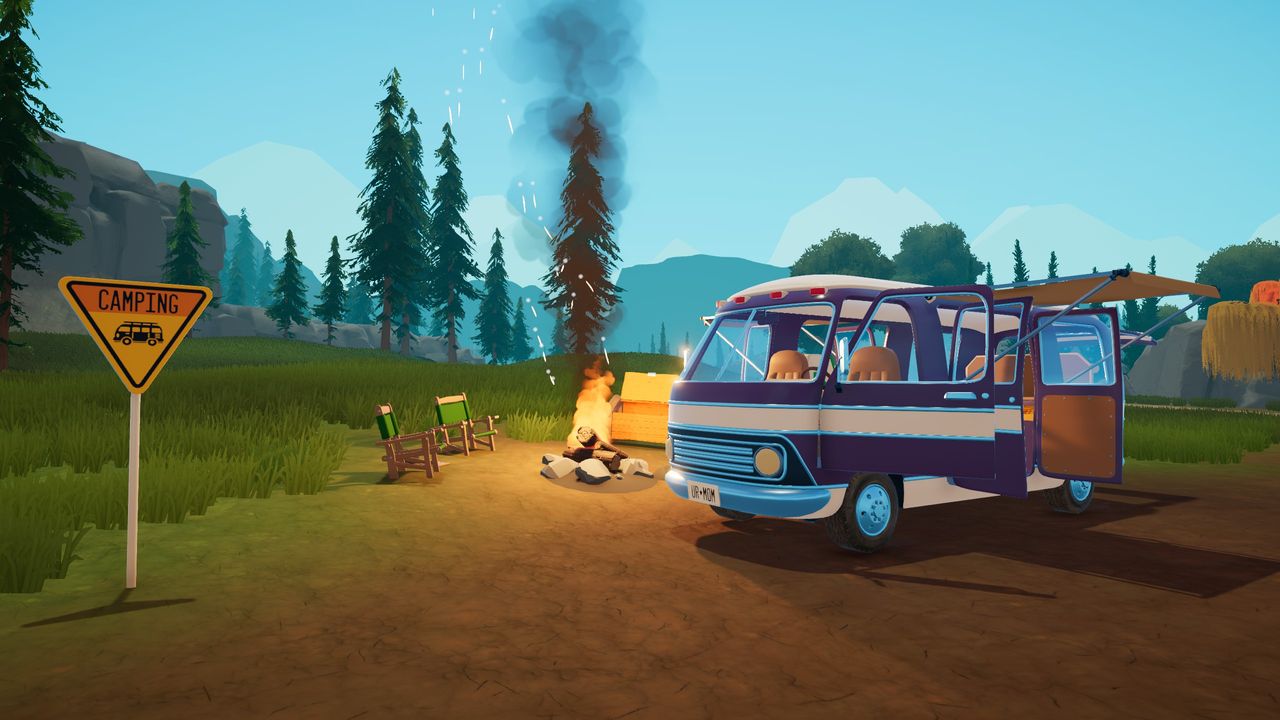
The concept behind Outbound is undeniably charming. Driving around in a cozy camper van, decked out with decor and doo-dads, feels like the ultimate fantasy for fans of the genre. Scouring the map for resources, blueprints, and collectibles to build a sustainable, portable empire offers a fresh twist on the traditional crafting loop.
On paper, it seems like one of the most "Mollie" games to exist. However, execution is where the vehicle stalls. While the premise is strong, the game forgets a fundamental imperative for a solid co-op crafting experience: freedom.
The Trap of Linear Progression
I can stomach a tutorial and some hand-holding if it serves a purpose. Using quests to direct players isn’t inherently bad, but in crafting games, I only enjoy a tutorial if it gets me set up quickly before unleashing me upon the world to do whatever I want.
Outbound feels afraid to let you run off and get on with things. For a game about hitting the open road, it feels awfully claustrophobic. The gameplay loop often devolves into a frustratingly linear checklist:
- Drive to a specific location.
- Grab a specific resource.
- Craft a specific item.
- Drive to another location to repeat the process.
This structure doesn’t ease up as playtime increases, creating a sense of being on rails rather than exploring. Contrast this with the early days of Minecraft; while it made you gather and craft to show fundamentals, it dropped you into the world almost immediately to let you forge your own path. Outbound keeps the player tethered to a script, stifling the very creativity the genre relies on.
Environmental Disconnect and Pacing Issues
Beyond the structural issues, the world itself struggles to captivate. The starting map feels smaller than expected, and the landscape lacks the resplendent flora and fauna needed to break up the monotony. The environment feels static, failing to provide the visual reward for exploration.
There is also a notable disconnect in the game’s environmental ethics. Initially baffled by the inability to cut down live trees, I realized players must rely solely on already fallen logs. This commitment to an eco-friendly direction is admirable, yet it feels undermined by the inclusion of stacking cairns as a collectible, considering ongoing debates about their negative ecological impact on wildlife.
Furthermore, the mechanical pace is hindered by friction. Constantly hopping in and out of the van becomes a huge pace-breaker. The cycle of driving for a few seconds, jumping out, maneuvering to grab items, and then becoming overencumbered forces a slow trudge back to the van. You must close doors and restart the engine, turning what should be a fluid experience into a tedious chore.
The Line Between Cozy and Boring
Cozy games walk a delicate line between a warm, leisurely experience and sheer dullness. Outbound’s wheels have cruised over into the latter. It commits the biggest crime a genre of this type can: it is simply boring.
The survival-esque meters feel underutilized, appearing more tacked on as a genre "necessity" rather than an integrated challenge. The world does not feel alive enough to drive the desire to explore further out. After just a couple of hours looping around the same few tasks, the initial excitement fades, leaving the player out of fuel and out of patience. For Outbound to truly succeed, it needs more work under the hood to balance its linear structure with the open-ended freedom that defines the best crafting experiences.