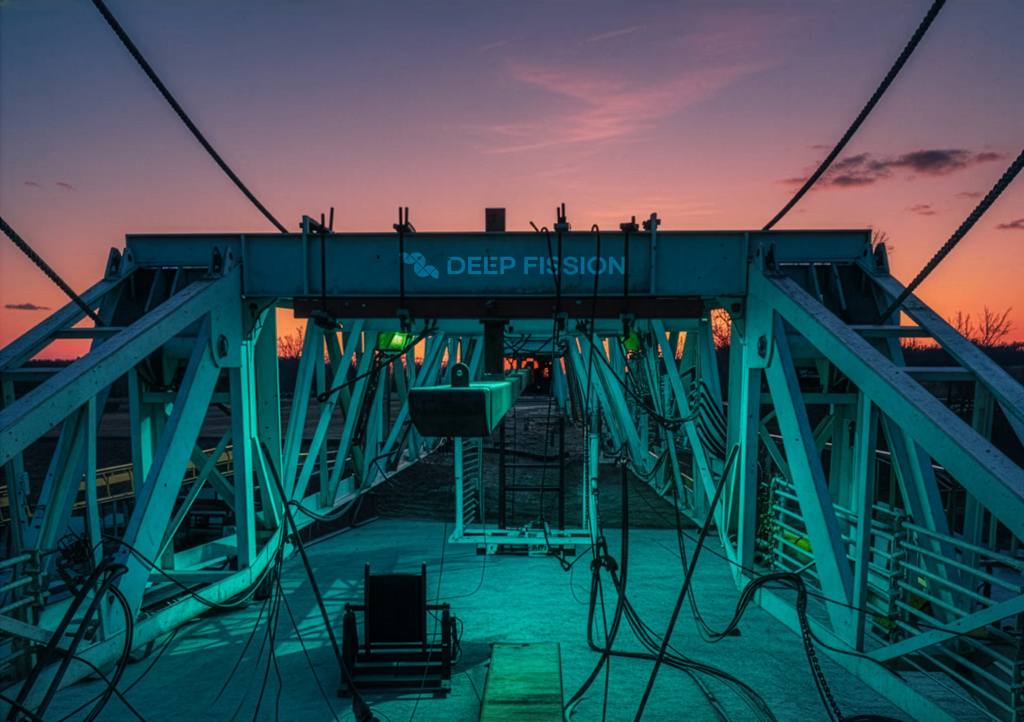
Deep Fission Announces Second Public Listing Amid Skepticism
Deep Fission, a prominent nuclear startup focused on advanced fission technology, announced its plans for another public listing recently, this time via an Initial Public Offering (IPO). The company is seeking funding through a SPAC (Special Purpose Acquisition Company) vehicle again, aiming to raise $157 million and potentially reach a market valuation of $1.66 billion at launch. This decision has inevitably drawn questions about the viability and strategic sense behind its renewed push into the public markets.
The broader energy sector currently faces headwinds with demand relatively stagnant compared to pre-pandemic levels, leading some critics to wonder if Deep Fission’s focus on a high valuation could be justified or merely reliant on financial engineering. The core of the debate surrounds nuclear SPACs, which bypass traditional equity financing to inject capital quickly but often face scrutiny regarding transparency and operational readiness. While this structure allows companies like Deep Fission to avoid immediate valuation pressure, it also raises eyebrows about investor confidence in unproven technology.
Here are some key points fueling the discussion:
- The significant amount raised via SPAC ($30 million net) mirrors a trend where several nuclear startups pursue these financing routes.
- Achieving a $1.66 billion valuation hinges on future milestones, particularly successful development and deployment of its compact reactor design.
- Competing against AI-driven energy solutions highlights the need for Deep Fission to prove its technology's efficiency gains are achievable.
Deep Fission’s strategy involves leveraging this funding model to support continued R&D and potentially construction efforts. Its goal is an ambitious one: a reactor that could redefine power generation, offering compact options ideal for data centers and remote locations if proven successful. However, critics argue the high valuation masks substantial technical risks associated with developing next-generation reactors and navigating their long construction timelines.
The upcoming debut on Nasdaq will be crucial; it represents both opportunity and challenge. Will institutional investors respond to Deep Fission’s engineering roadmap? Or does its reliance on reverse mergers signal a continued struggle to secure buy-in based purely on operational progress rather than hype? Ultimately, the path of this second public listing for Deep Fission may serve as another example in the ongoing tension between technological ambition and market realities within the clean energy sector.