A seamless transition occurs between a human-recorded indie track and an oracularly perfect, mathematically optimized synth pop melody, leaving no trace of the shift in texture or timbre. This sonic ambiguity is becoming the new standard for digital music consumption. While the ear may struggle to detect generative algorithms, the data behind the scenes tells a much more disruptive story regarding the rise of AI-generated songs.
The Exponential Surge of AI-generated Songs
The sheer volume of automated content hitting streaming platforms has reached a critical inflection point. According to recent data released by Deezer, AI-generated songs now constitute 44% of all new music uploaded to the platform daily. This is not a slow creep but a vertical ascent in synthetic production.
In January 2025, the company recorded only 10,000 AI-driven tracks per day; by early 2026, that figure had ballooned to roughly 75,000. This influx translates to more than two million automated tracks entering the ecosystem every month.
However, a massive disconnect exists between the volume of uploads and actual listener engagement. While the supply of synthetic music is skyrocketing, its consumption remains marginal, hovering between 1% and 3% of total streams on the platform. This discrepancy suggests that much of the surge is driven by automated processes rather than organic human discovery.
Protecting Human Artistry: Deezer's Defensive Strategy
The economic implications of this trend are already being felt through what industry leaders call payment dilution. The sheer noise of high-frequency, low-value uploads threatens to siphon royalties away from established human artists. To combat this, Deezer has identified that 85% of these AI-driven streams are classified as fraudulent and are subsequently demonetized by the service.
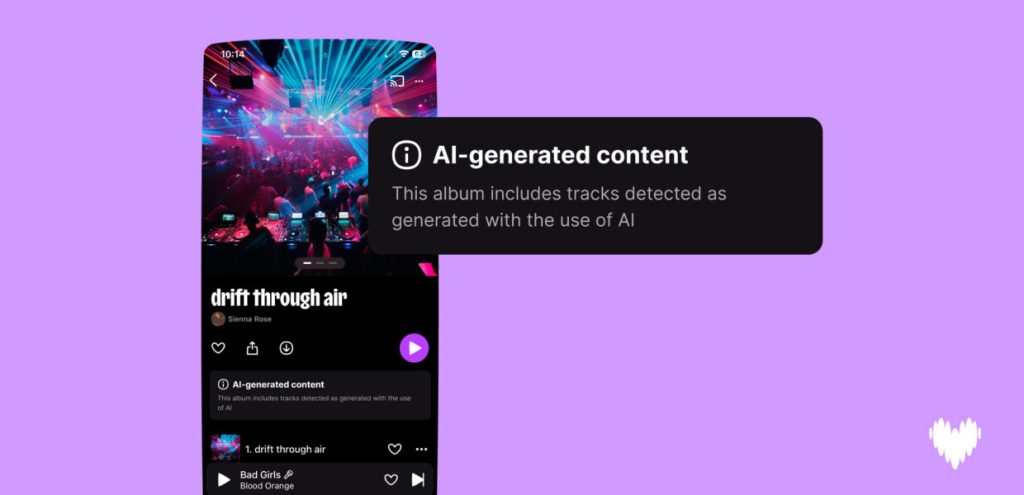
As the floodgates open, streaming platforms are moving beyond simple detection toward active suppression. Deezer has implemented a multi-layered strategy to ensure that synthetic "noise" does not degrade the user experience or the integrity of the music economy. The company's approach focuses on visibility and storage rather than outright deletion.
Key technical interventions currently in place include:
- Algorithmic exclusion: AI-generated tracks are automatically stripped from recommendation engines to prevent them from polluting discovery feeds.
- Editorial removal: Synthetic content is prohibited from appearing in curated human-led playlists.
- Resolution degradation: The platform has announced it will no longer store high-resolution versions of tracks identified as AI-generated, effectively limiting their sonic footprint.
- Fraudulent stream detection: Aggressive monitoring to identify and demonetize the artificial inflation of play counts.
Industry Fragmentation and Standards
While Deezer has taken a hardline stance, the broader industry remains fragmented. The French service Qobuz has announced similar plans to tag AI content, but giants like Spotify and Apple Music continue to rely on more passive measures, such as quality filters or reliance on distributors to manage transparency.
A Crisis of Authenticity in the Streaming Era
The technological ability to mimic human artistry is outpacing our psychological ability to detect it. A recent survey conducted by Deezer revealed a startling statistic: 97% of participants were unable to distinguish between fully AI-generated music and tracks produced by human musicians. This loss of the "ear test" creates a vacuum of authenticity that could fundamentally alter how we value recorded media.
The tension is already manifesting in the global charts. Recently, an AI-generated track reached the top of the iTunes charts across multiple major markets, including the United States, the United Kingdom, and Canada. This event has reignited debates regarding the legitimacy of digital rankings.
Public sentiment appears to be shifting toward a demand for transparency:
- 80% of surveyed listeners want AI music clearly labeled.
- Over 50% believe that purely synthetic tracks should not compete in the same charts as human-made music.
The industry is approaching a critical crossroads. As generative models become more sophisticated, the distinction between "tool" and "creator" will continue to blur. The long-term stability of the streaming model depends on whether platforms can implement transparency protocols that protect the economic rights of human creators without stifling technological evolution.