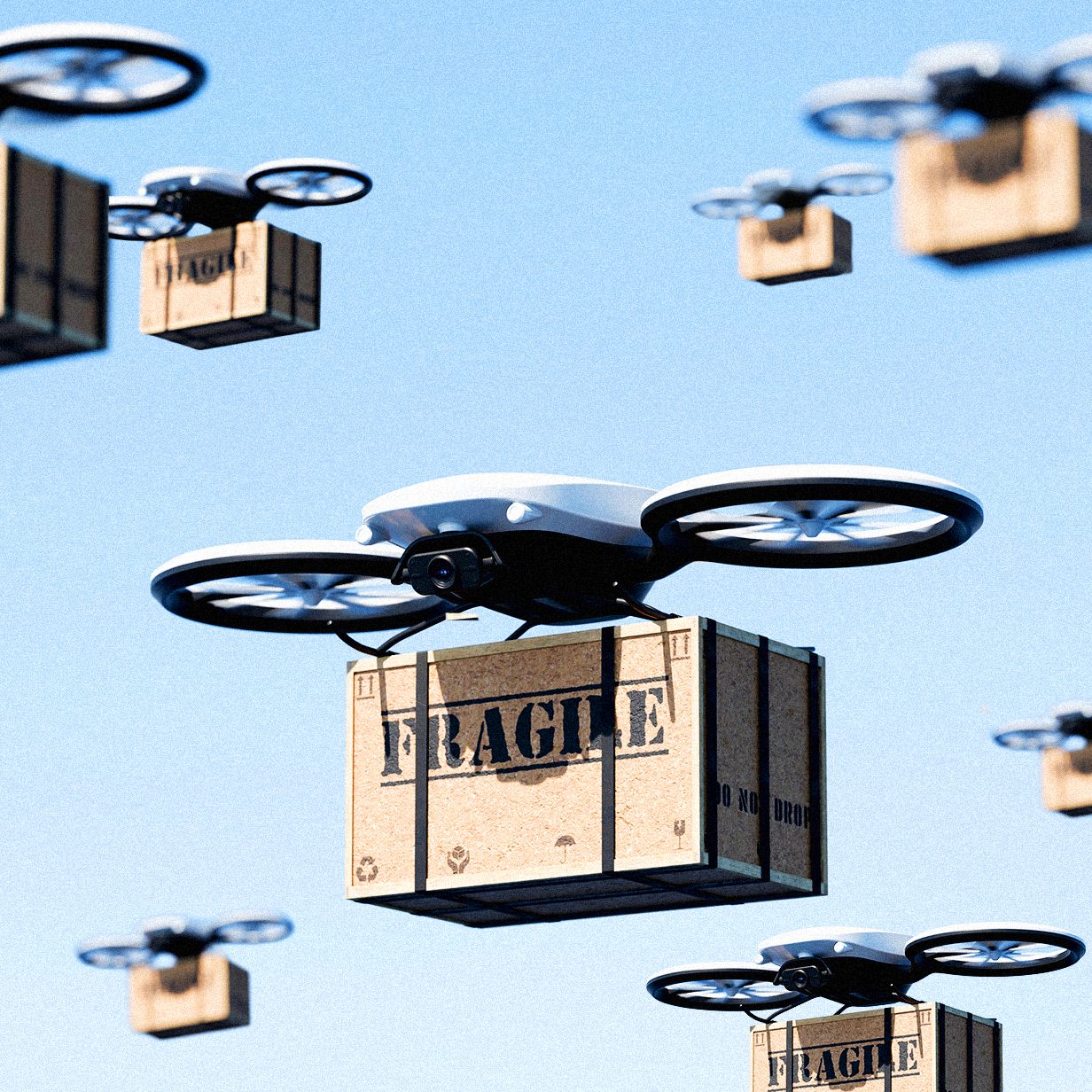
The skies over Manhattan are no longer just for helicopters. A six-propeller drone recently glided silently above the East River, delivering critical medical supplies to a city hospital in a groundbreaking test of city delivery drones. Run by Skyports in partnership with local agencies, this initiative asks a pressing question: can airborne cargo outpace ground transport in a dense urban environment? As the pilot takes off, the answer remains elusive, but the experiment is already reshaping how we think about urban logistics.
The NYC Drone Pilot Explained
This isn't a vague concept anymore. The current phase focuses on controlled, fixed corridors running from the tip of Manhattan to a Brooklyn pier, deliberately avoiding residential areas. The goal is to establish a repeatable framework before expanding capabilities. Here is how the pilot operates under strict guidelines:
- Routes: Fixed corridors from Manhattan to Brooklyn, keeping a safe distance from homes
- Frequency: Targeting one to two flights per hour during the testing window
- Payloads: Starting with lightweight paper documents, later shifting to pharmaceuticals and other nonhazardous goods
- Regulatory Oversight: Managed by FAA-certified pilots, weekly NYPD permits, and ongoing community board consultations
Navigating Safety, Noise, and Community Concerns
Airspace congestion is the primary hurdle. New York’s airspace already handles three major international airports, dozens of heliports, and nearly 9,000 helicopter flights every single month. To mitigate collision risks, the drone program enforces strict altitude caps and fixed flight paths. Noise is another critical metric, with registered drones emitting sounds roughly equivalent to a lawnmower or vacuum cleaner between 60 and 100 decibels. Despite these measures, early 311 complaints have already surfaced regarding city delivery drones, mirroring resident frustrations in Texas where drone hums were compared to leaf blowers disturbing pets and local wildlife.
Why This Matters for Urban Logistics
The real test lies in utility. Medical supply transport represents the most compelling use case right now. Researchers at Purdue University have highlighted how airborne transport could bypass gridlocked streets entirely, potentially cutting down response times during critical emergencies. Stephan Pezdek from the Port Authority stresses that the pilot must rigorously evaluate speed, reliability, and public acceptance against traditional ground carriers. If the data supports viability, this specific corridor could establish a blueprint for other global megacities wrestling with identical spatial and traffic constraints.
The Road Ahead for City Delivery Drones
Federal and municipal policies are currently shifting to accommodate this new reality. The FAA is actively exploring streamlined permitting for beyond-visual-line-of-sight operations, a regulatory shift that would dramatically accelerate commercial adoption. Meanwhile, local authorities are drawing hard lines: unauthorized drone flights remain strictly illegal, reinforcing that these test flights are tightly bound experiments. As both technology and legislation mature, expect a broader rollout targeting high-value logistics corridors where city delivery drones demonstrably outperform trucks and bikes.
The Verdict on Urban Air Mobility
Whether this pilot delivers transformative results or exposes unforeseen complications hinges on rigorous measurement across safety protocols, noise pollution, regulatory compliance, and community sentiment. The airspace above New York may soon host more than just rotary-wing aircraft; it could become a critical artery for a new generation of urban supply chains. Success will ultimately depend on technical precision, but also on earning public trust and integrating responsibly into the existing city ecosystem.